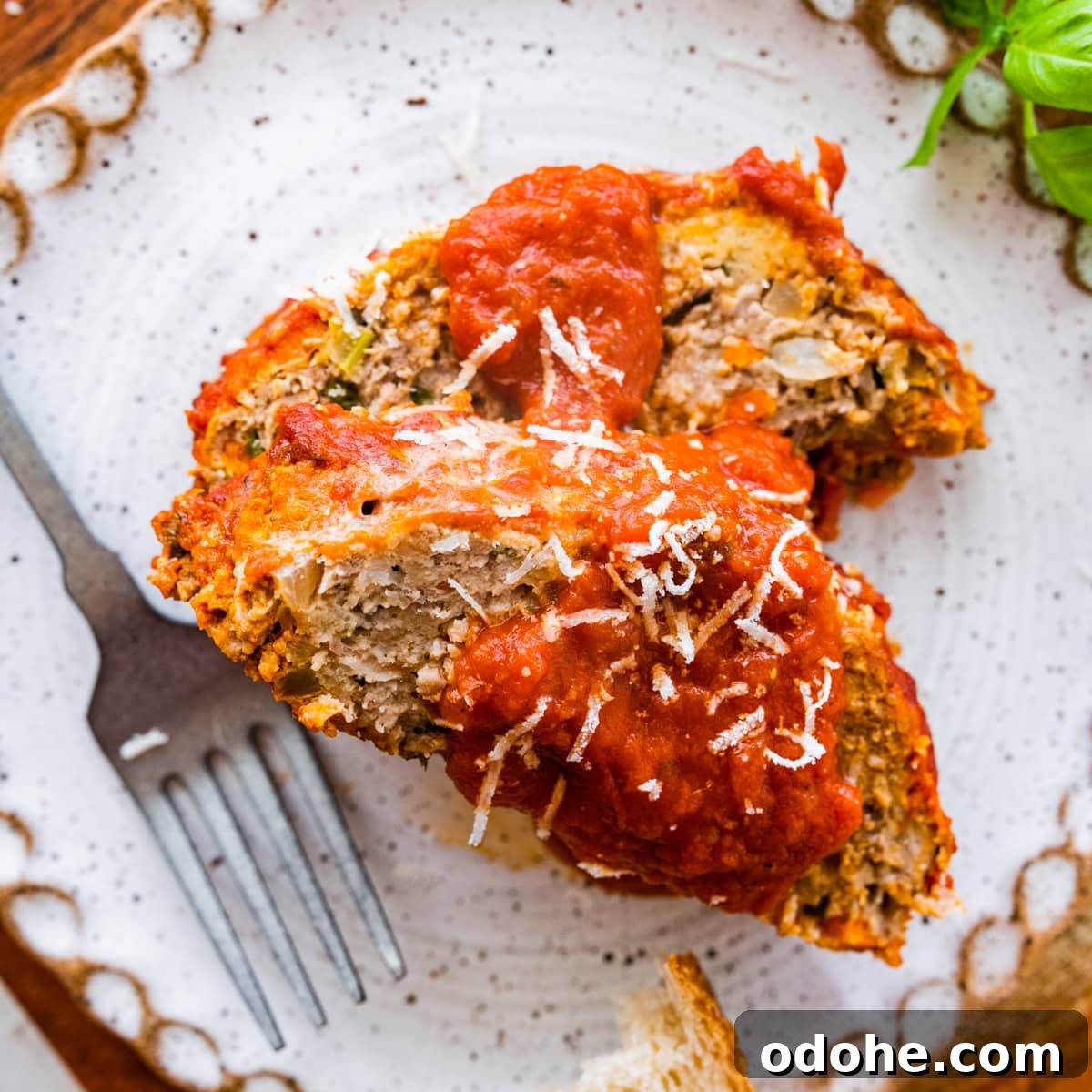
Cozy, cheesy, and full of Italian character, this authentic Italian Meatloaf (polpettone, essentially a giant meatball) is baked in tomato sauce for an extra-juicy, comforting dinner. With simple, pantry-friendly ingredients and rustic charm, it’s a family-friendly recipe that’s easy to make and satisfying to serve.
You might also enjoy my classic polpette Italian meatballs. Serve this meatloaf with creamy polenta or crusty no-knead bread for a true Italian comfort meal.
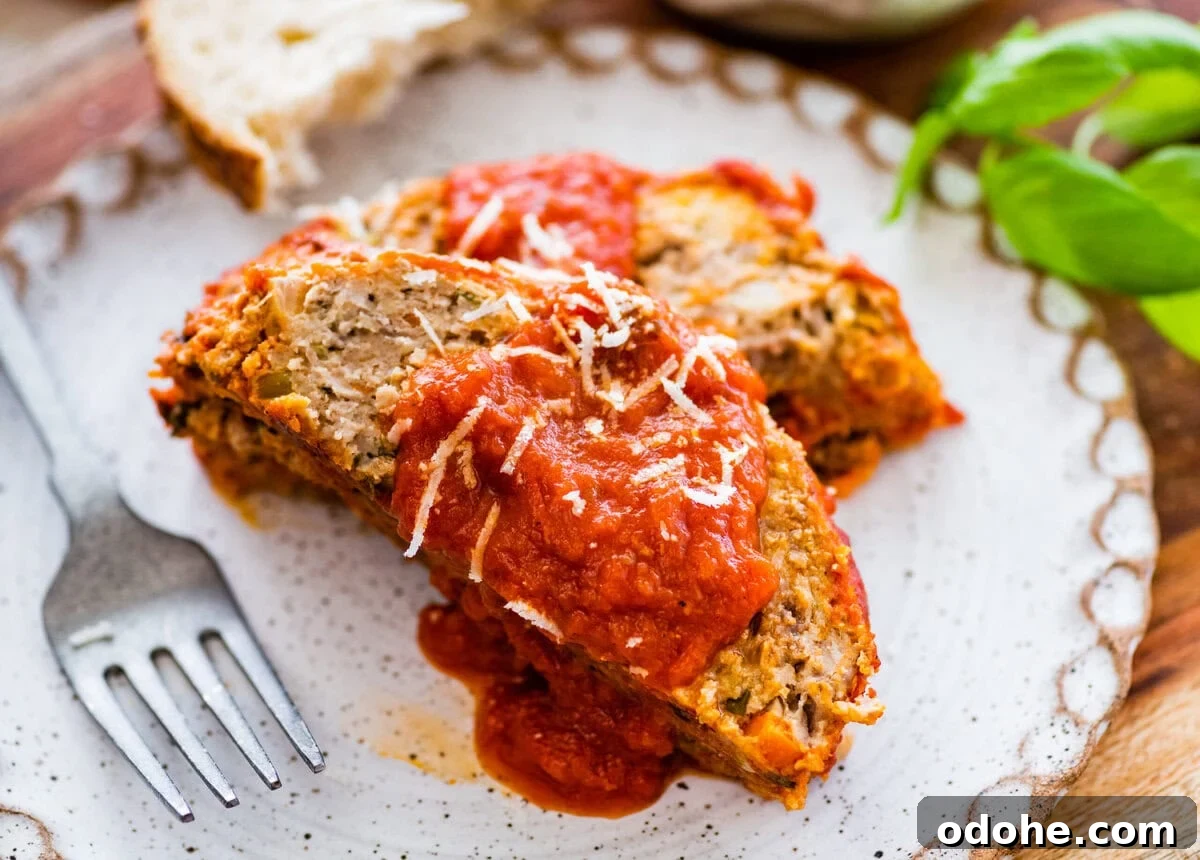
Why you’ll love this family favorite!

This is not an ordinary meatloaf — it’s tender, flavorful, and truly what I consider the best meatloaf you’ll ever taste. It’s a recipe my Nonna from Sardegna made on Sundays: slow-baked in sauce until tender, deeply flavored, and comforting.
Every time I make it, I’m reminded that the best meals are simple, made with care, and shared with loved ones.
Made With Amore,

Table of Contents
- Why you’ll love this family favorite!
- Simple Ingredients
- Substitutions and Variations
- How To Make Italian Meatloaf
- Recipe Tips
- FAQ’s
- Make-Ahead Storage and Reheating
- What to Serve with Italian Meatloaf?
- Italian Meatloaf Recipe
Simple Ingredients
This classic meatloaf relies on wholesome, familiar ingredients that combine for rich, authentic flavor.
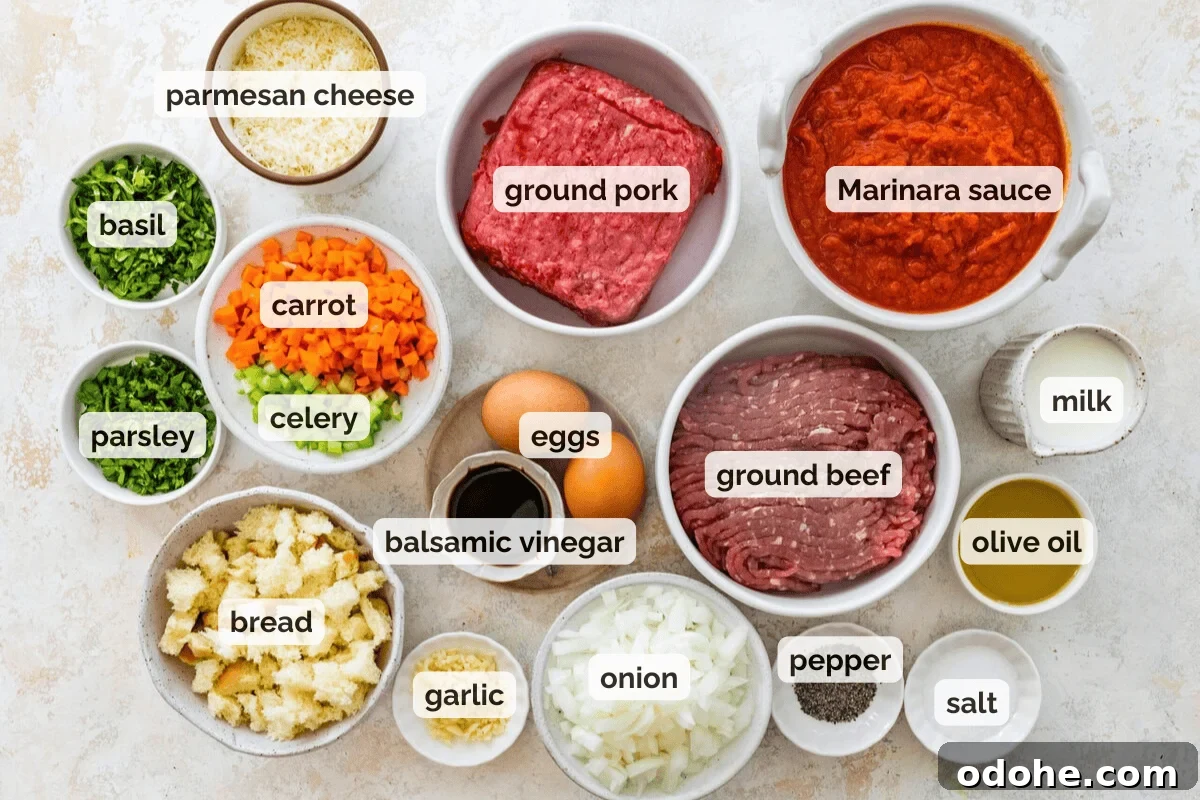
- Onion, carrot, and celery – the classic soffritto base for sweetness and depth.
- Garlic – fresh, aromatic, and savory.
- Olive oil – for sautéing and adding richness.
- Ground beef and pork – a balanced blend for juicy texture and flavor.
- Day-old bread soaked in milk (panade) – ensures a tender, moist loaf and works better than dry breadcrumbs.
- Eggs – bind the mixture so it slices cleanly.
- Fresh parsley and basil – brighten the meat mixture with fresh herb flavor.
- Balsamic vinegar – a touch of acidity and sweetness to enhance the meat.
- Parmigiano-Reggiano – salty, nutty, and essential for an authentic Italian finish.
- Salt and black pepper – basic seasoning to taste.
- Marinara or sugo al pomodoro – for baking and serving; a flavorful tomato sauce makes all the difference.
See the recipe card below for exact quantities and timings.
Substitutions and Variations
- Meat swaps: Try combinations that include veal, turkey, or mild Italian sausage for added seasoning and richness.
- Cheese options: Parmesan is classic; Pecorino Romano is a sharper alternative. Add mozzarella or provolone in the final minutes of baking for a melty topping.
- Herb alternatives: If you prefer, add oregano or thyme in addition to or instead of basil and parsley.
- Sauce choices: A basic marinara is traditional, but a tomato-cream sauce can make it more luxurious.
- Vegetable boost: Finely chopped spinach, mushrooms, or zucchini can be folded into the mix for extra nutrition and moisture.
- Portion sizes: Shape into individual loaves or large meatballs for faster cooking and easy serving.
- Gluten-free option: Use gluten-free bread or cooked rice soaked in milk as the panade.
- Holiday twist: Wrap the loaf in thin pancetta slices before baking for a savory crust and festive presentation.
How To Make Italian Meatloaf
Below is a concise photo-driven overview of the preparation. The full instructions are available in the recipe card further down. You don’t need a loaf pan because the meatloaf bakes directly in the sauce.
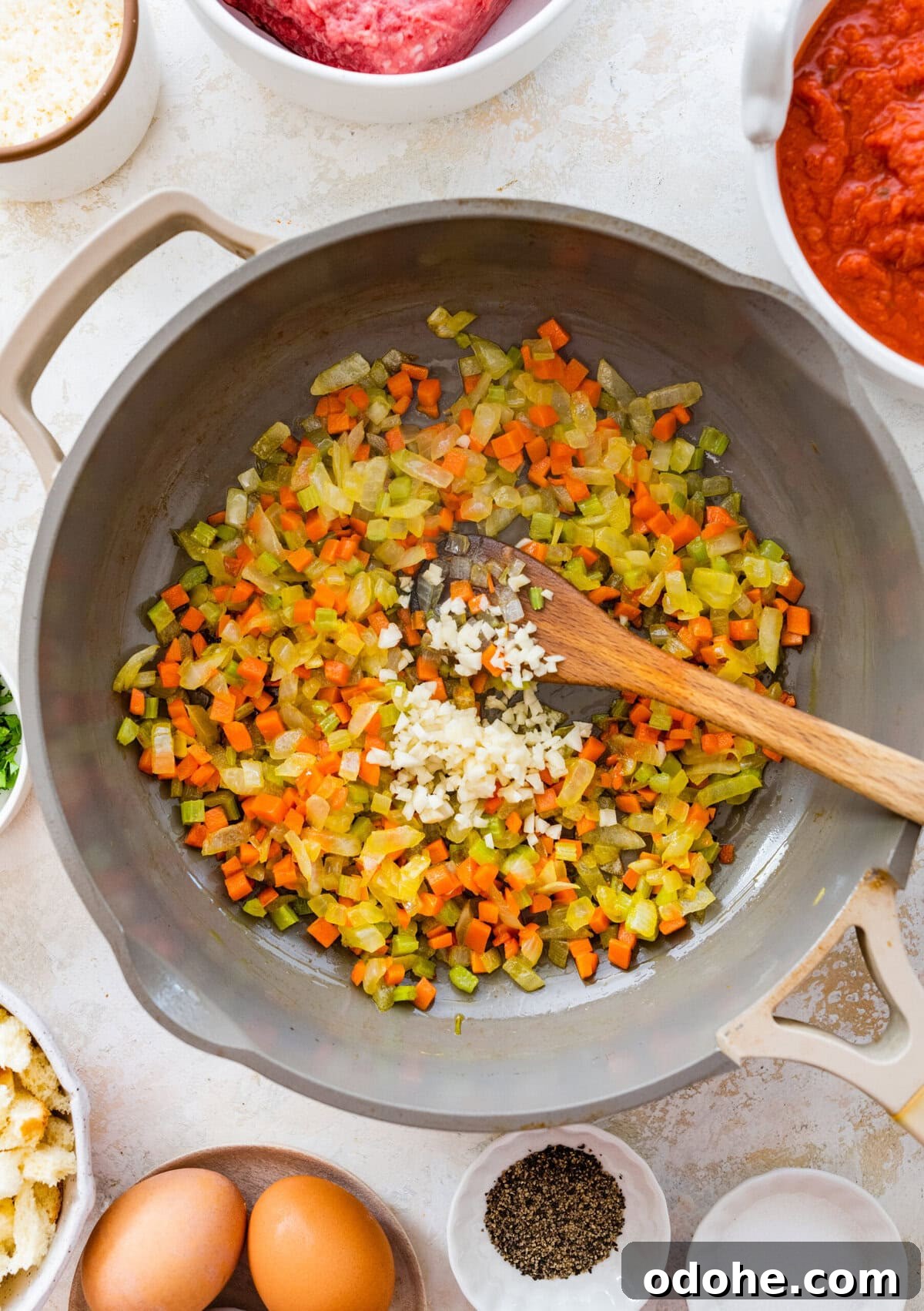
Step 1 – Sauté the vegetables: Warm olive oil in a skillet over medium heat. Add onion, carrot, and celery and cook until softened, about 5–6 minutes. Stir in garlic and cook for one more minute, then remove from heat and cool slightly.
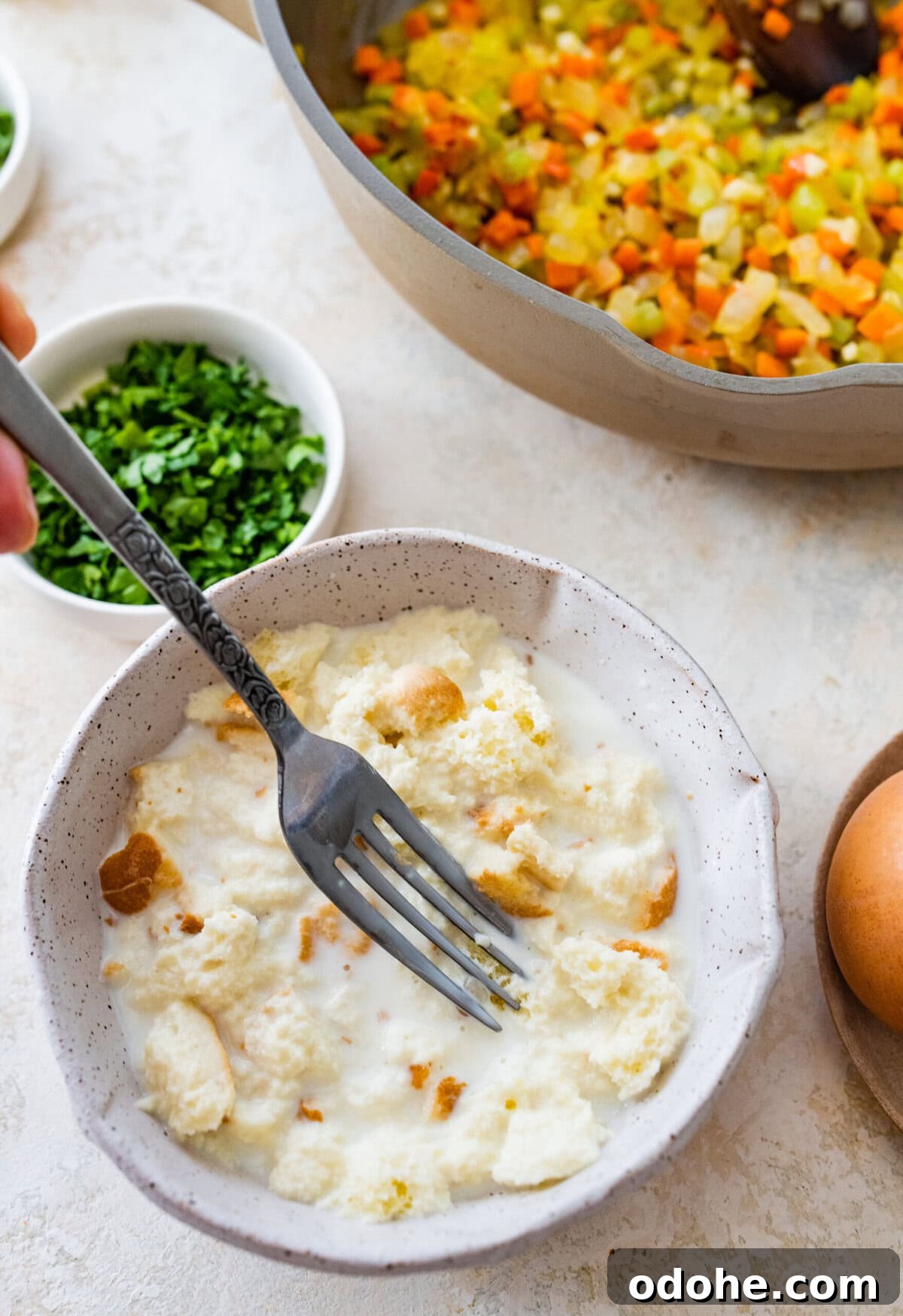
Step 2 – Prepare the panade: Combine torn day-old bread with milk in a bowl, let it soak until soft, then mash lightly with a fork.
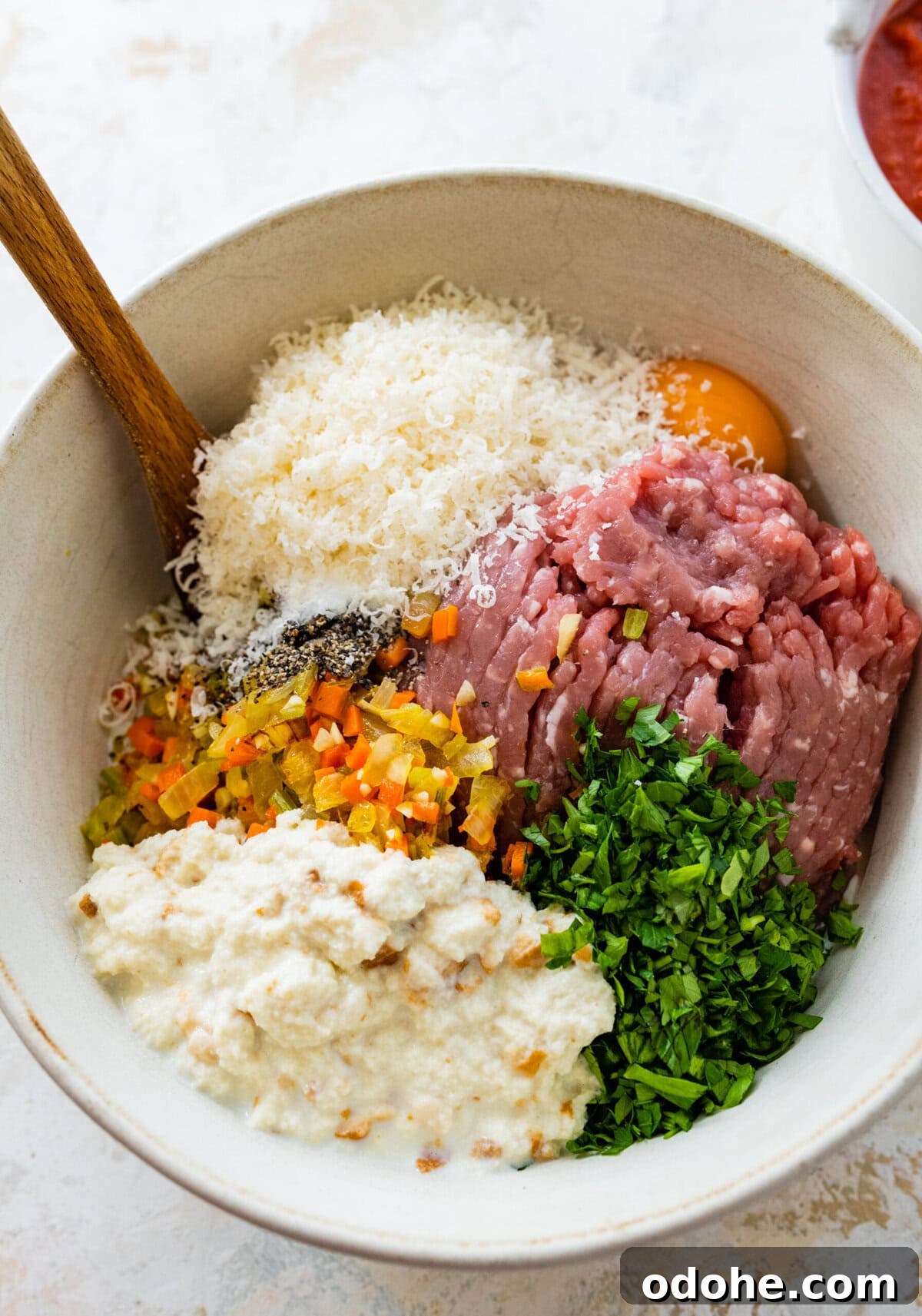
Step 3 – Mix the meatloaf: In a large bowl, combine the ground meats with the cooled vegetables, eggs, parsley, basil, balsamic vinegar, salt, and pepper. Add the soaked bread and grated Parmigiano.
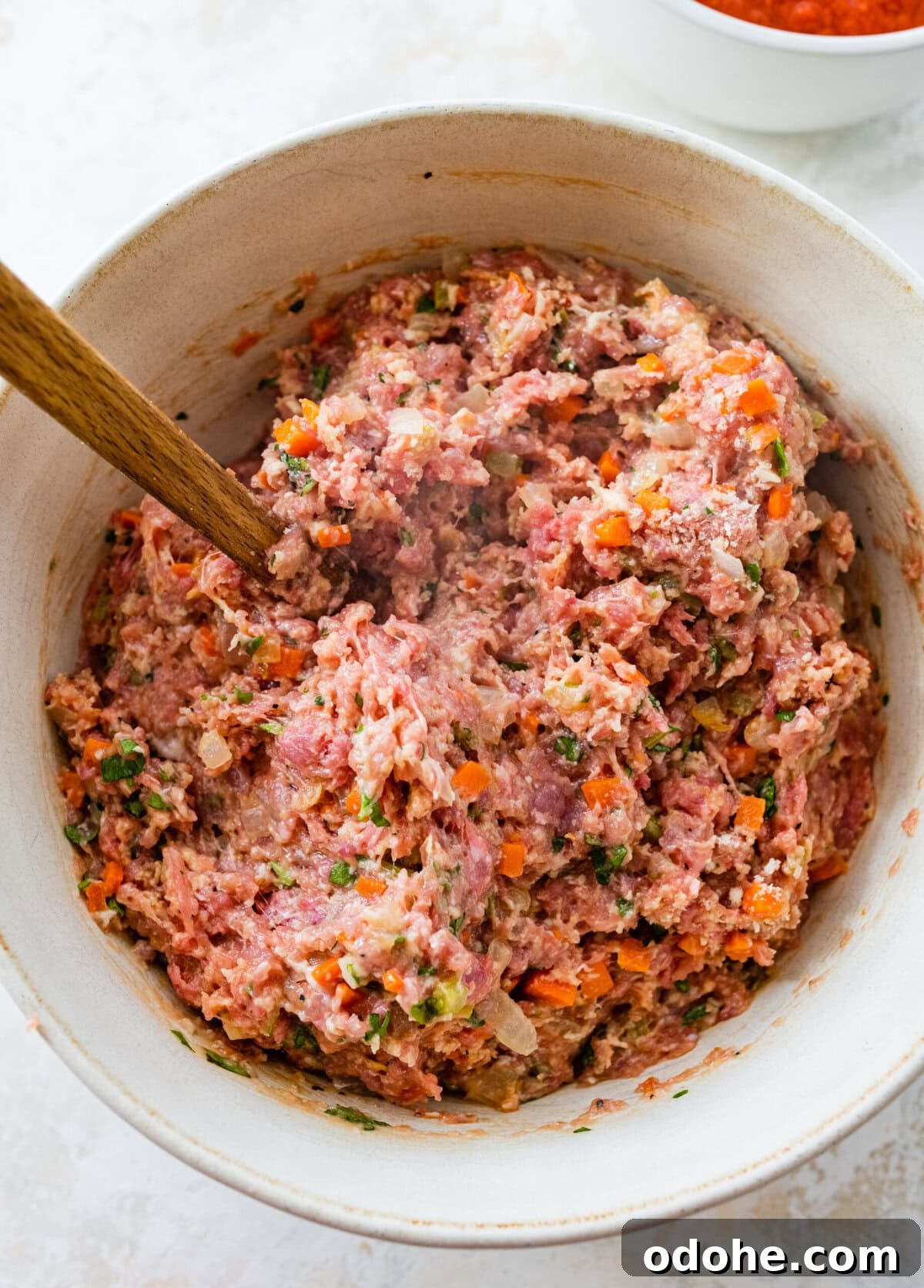
Step 4 – Combine gently: Mix just until everything is combined—avoid overworking the mixture to keep the loaf tender.
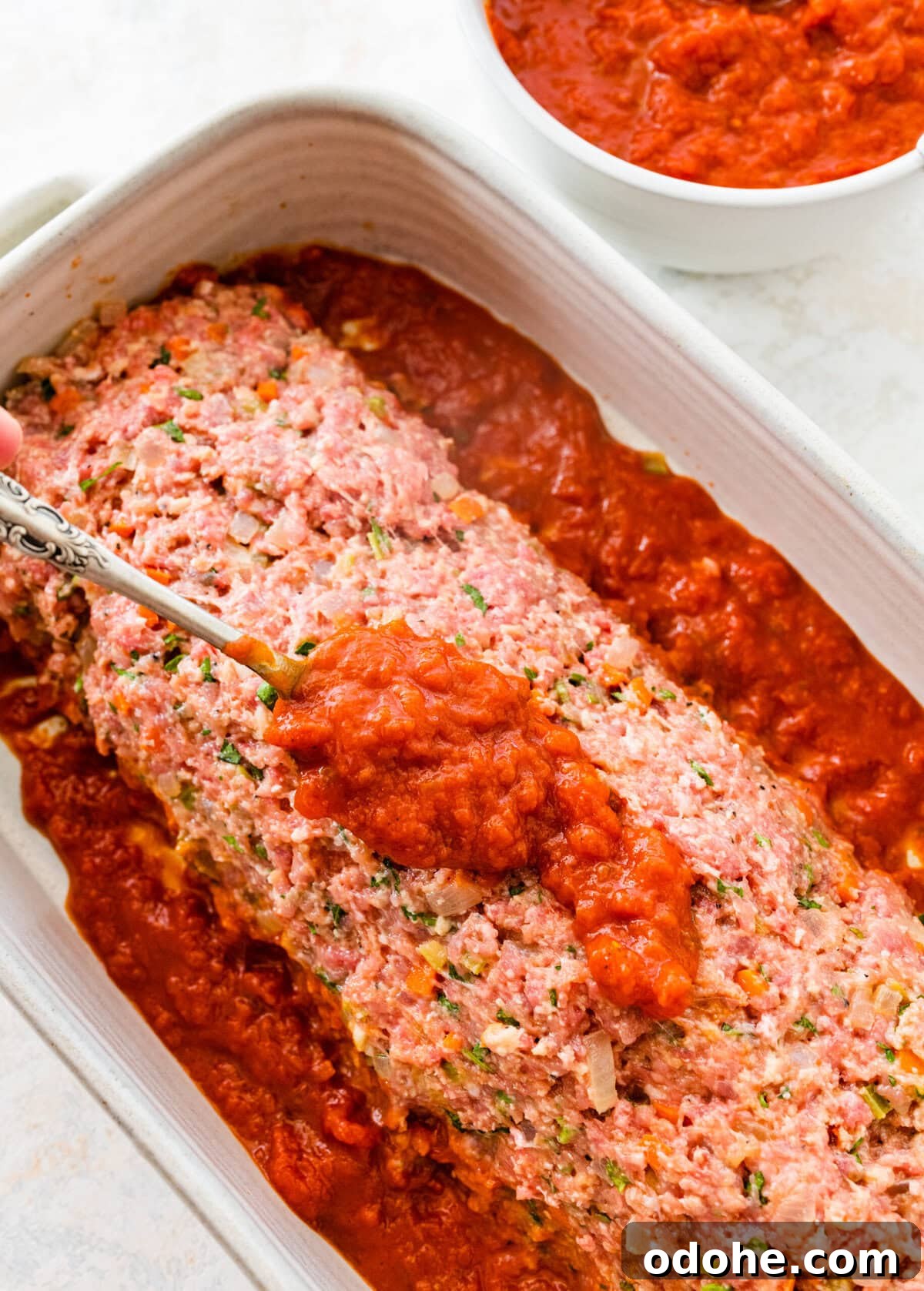
Step 5 – Prepare the baking dish: Preheat the oven to 375°F (190°C). Spread half of the marinara on the bottom of a 9×13-inch baking dish, place the shaped loaf on top, and spoon the remaining sauce over the loaf.
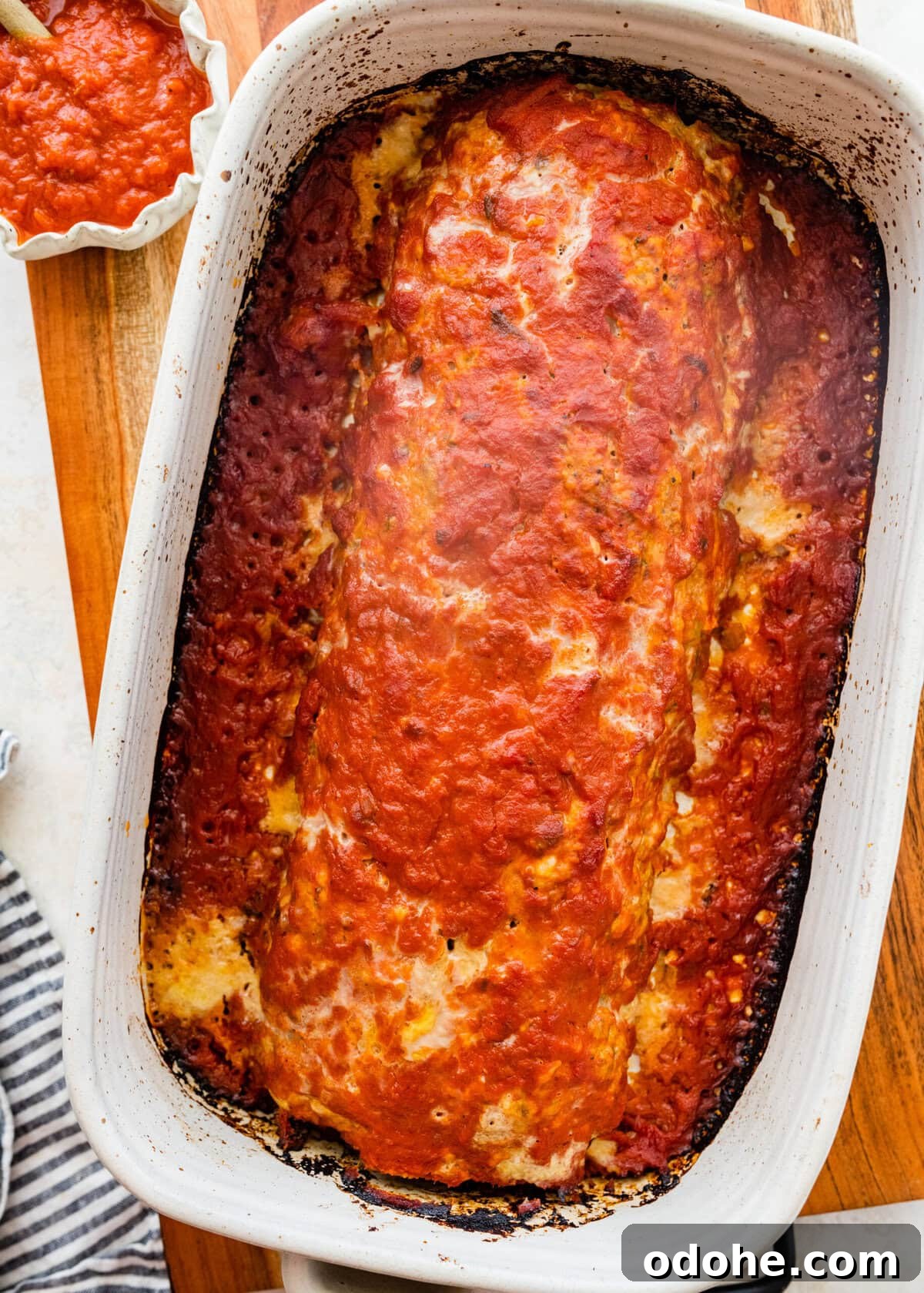
Step 6 – Bake: Bake uncovered for about 50 minutes, or until the internal temperature registers 160°F (71°C). If the top browns too quickly, tent loosely with foil.
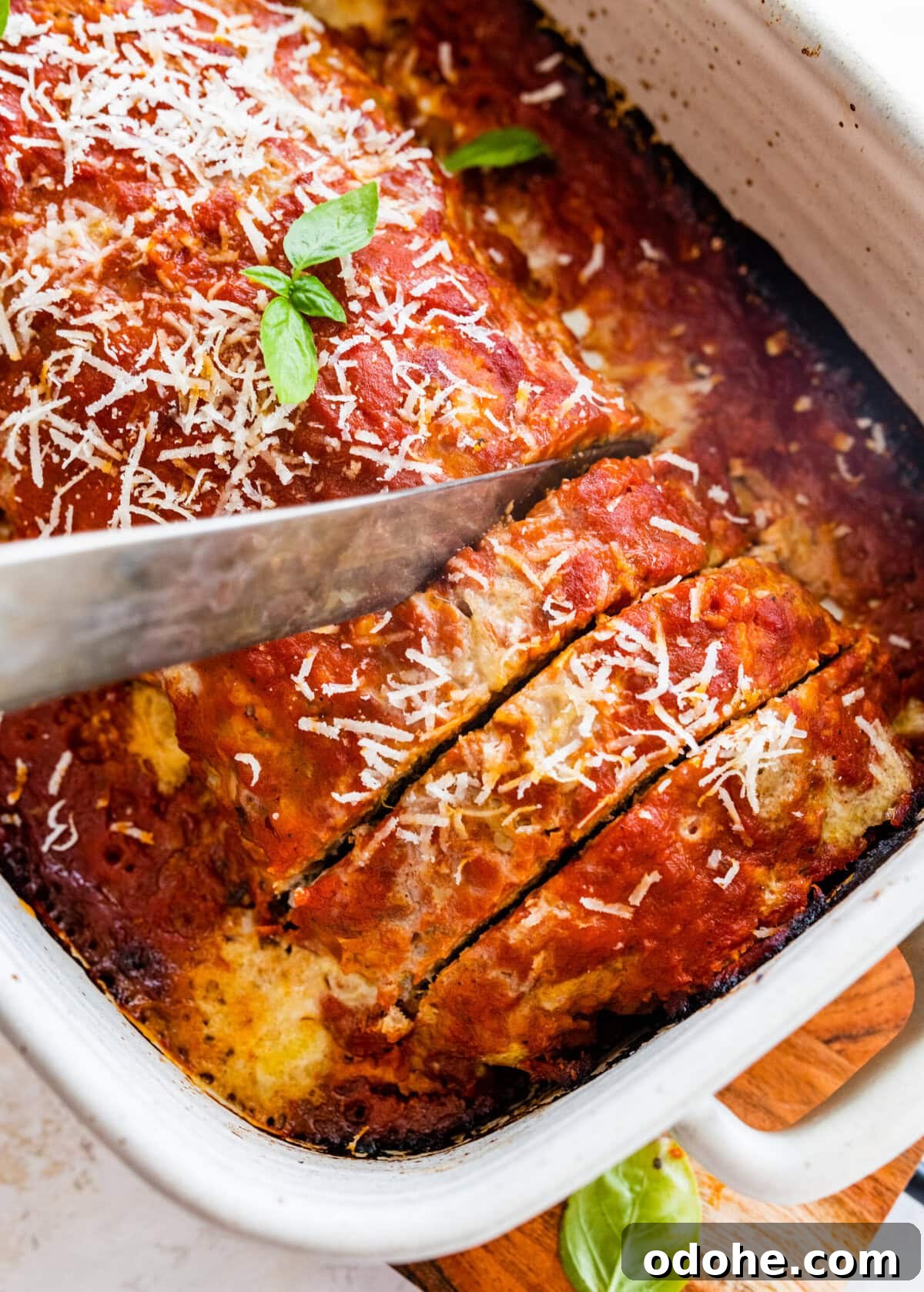
Rest and serve: Allow the meatloaf to rest for 10 minutes before slicing. Optionally grate a little extra Parmigiano over the top. Serve hot with extra sauce spooned over each slice alongside polenta, pasta, or crusty bread.
My Pro Tip
Recipe Tips
- Make ahead: Assemble the meatloaf up to 1 day in advance, cover, and refrigerate. Let it rest at room temperature for 20 minutes before baking.
- Storing: Keep leftovers in an airtight container in the fridge for up to 4 days; they often taste even better the next day.
- Freezing: Wrap baked or unbaked meatloaf tightly for up to 3 months. Thaw overnight in the refrigerator.
- Reheating: Warm slices in a 325°F oven, covered with foil, until heated through. Add a spoonful of sauce before reheating to maintain moisture.
FAQ’s
American meatloaf commonly uses ketchup or barbecue-style glazes and dry breadcrumbs. Italian meatloaf (polpettone) uses soaked bread for moisture and is baked in tomato sauce, with a more herb-forward, cheesy, and rustic flavor.
Not usually. Baking uncovered allows the sauce to reduce slightly and the loaf to brown. If it starts to get too dark, tent it loosely with foil for the final minutes.
Make-Ahead Storage and Reheating
- Make Ahead: Assemble up to 1 day ahead and refrigerate. Bake from cold, adding about 10 minutes to the cooking time, or bake fully and store.
- Storing Leftovers: Keep slices in an airtight container with a little sauce over each piece; refrigerate up to 4 days.
- Freezing: Freeze whole or sliced with parchment between pieces for up to 3 months; thaw overnight.
- Reheating: Reheat covered in a 325°F oven until warmed through. For faster reheating, warm slices in a skillet with sauce or in the microwave with a damp paper towel.
What to Serve with Italian Meatloaf?
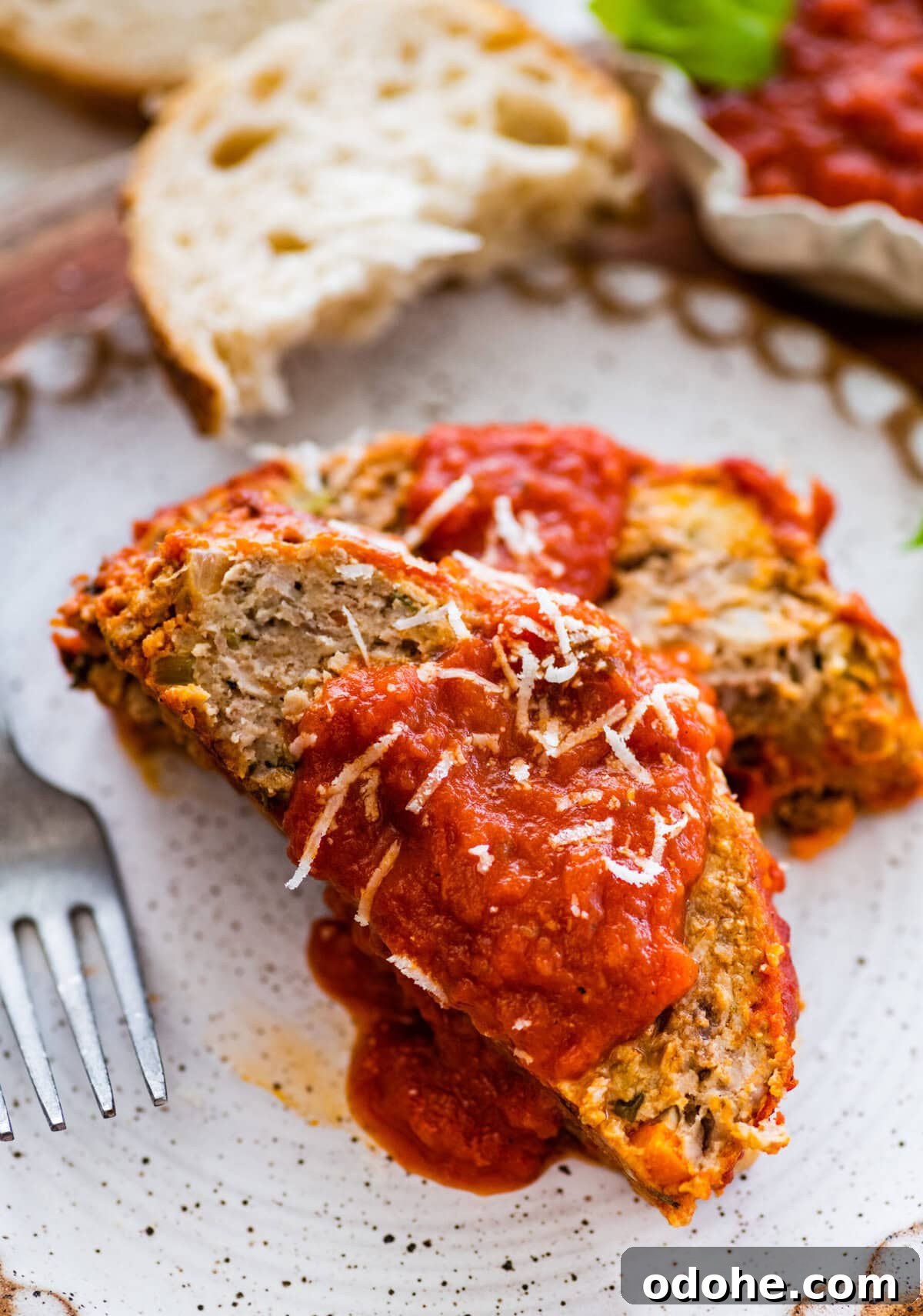
Classic pairings include mashed potatoes, roasted vegetables like Tuscan broccoli, or a bowl of creamy polenta. Leftover slices also make excellent sandwiches on crusty Italian bread.
Crispy Oven Roasted Potatoes
Lemon Arugula Salad in Parmesan Cups
Creamy Italian Polenta
Easy Italian Pear Cake
💙 MADE THIS RECIPE AND LOVED IT? 💙 Please leave a star rating and a comment — I love hearing from you! Tag your photos on social media if you’d like to share.
Italian Meatloaf Recipe
Ingredients
- 1 recipe homemade sugo al pomodoro, or 4 cups store-bought marinara sauce
- 1 medium yellow onion, petite diced
- 1 carrot, petite diced
- 1 stalk celery, petite diced
- 3 garlic cloves, finely chopped
- 2 tablespoons olive oil
- 2 large eggs
- ¼ cup finely chopped fresh parsley
- ¼ cup chopped fresh basil
- 1 teaspoon salt
- ½ teaspoon freshly ground black pepper
- 1 tablespoon balsamic vinegar
- 1 pound ground beef
- 1 pound ground pork
- 1 ½ cups day-old bread, torn into small pieces
- ½ cup whole milk
- 1 cup grated Parmigiano-Reggiano
Instructions
Sauté the vegetables
-
Heat olive oil over medium heat. Add onion, carrot, and celery and cook until softened, about 5–6 minutes. Stir in garlic and cook 1 minute more. Remove from heat and cool slightly.
Prepare the panade
-
Combine torn day-old bread with milk in a bowl. Let soak until soft, then mash gently with a fork.
Mix the meatloaf
-
In a large bowl combine ground beef, ground pork, cooled vegetables, eggs, parsley, basil, balsamic vinegar, salt, and pepper.
-
Add the soaked bread and Parmigiano, then mix gently until just combined—do not overwork.
Prepare the baking dish
-
Preheat oven to 375°F (190°C). Spread half the marinara in a 9×13-inch baking dish, place the shaped meatloaf on top, and spoon the remaining sauce over the loaf.
Bake
-
Bake uncovered about 50 minutes, or until the internal temperature reaches 160°F (71°C). If the top browns too quickly, tent loosely with foil.
Rest and serve
-
Let the meatloaf rest 10 minutes before slicing. Grate extra Parmigiano on top if desired.
-
Serve warm with extra sauce spooned over each slice. Pair with polenta, pasta, or crusty bread.
Notes
- Make Ahead: Assemble the meatloaf up to 1 day ahead, cover, and refrigerate. Let sit 20 minutes at room temperature before baking if desired.
- Storing: Refrigerate leftovers in an airtight container for up to 4 days.
- Freezing: Wrap baked or unbaked loaf tightly and freeze up to 3 months. Thaw overnight.
- Reheating: Reheat covered in a 325°F oven until warmed through; add a spoonful of sauce to keep slices moist.
Nutrition
Nutrition information is automatically calculated and should be used as an approximation.