Updated 3/29/25
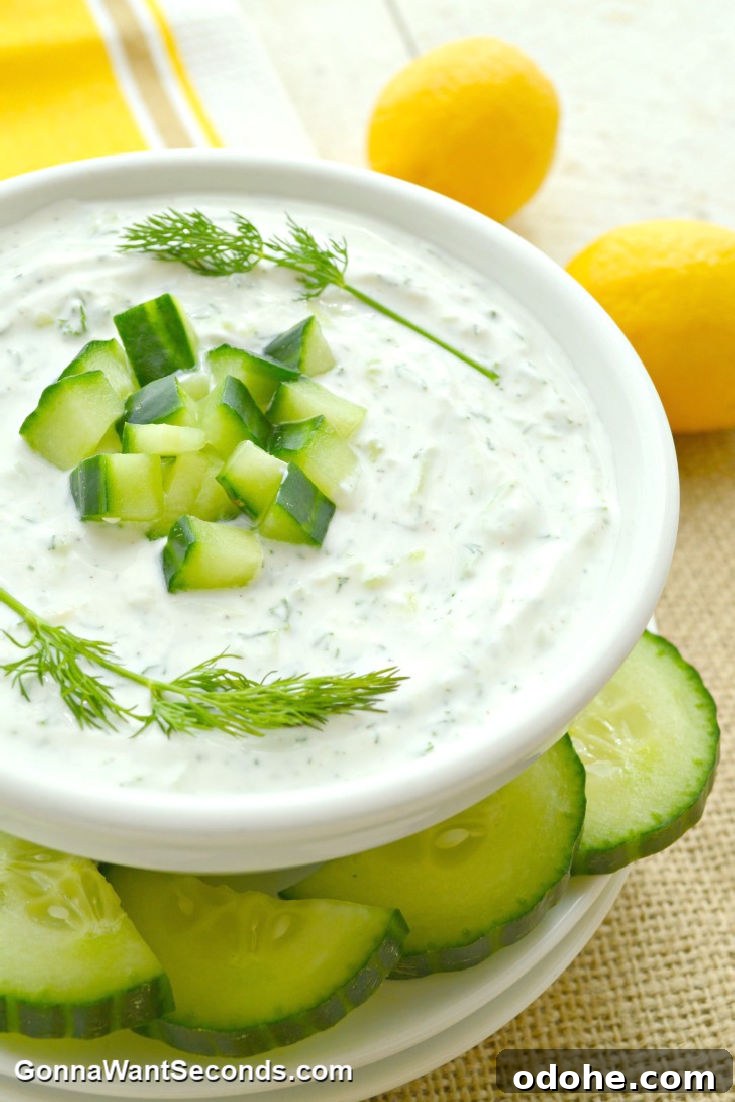
Our homemade tzatziki sauce is a creamy yogurt-and-cucumber dip made with strained yogurt, grated cucumber, olive oil, garlic, lemon juice, salt, and fresh herbs. It’s perfect as a healthy dip, a sauce for grilled meat, or a spread for wraps and sandwiches. Thick, rich, and bright with garlic, lemon, and dill, this tzatziki is full of fresh Mediterranean flavor.
Tzatziki is a staple of Greek and Mediterranean cooking—light, refreshing, and versatile. I wasn’t familiar with it growing up, but after marrying into a family who ate Mediterranean food regularly, I quickly became a fan. My mother-in-law’s cooking and family recipes introduced me to the wide range of simple, fresh flavors that make this cuisine so satisfying.
Traditional serving: Tzatziki is commonly served with Greek souvlaki—grilled meat on skewers wrapped in warm pita with fresh vegetables. Original versions in Greece used thick yogurt from sheep or goat milk, which pairs beautifully with grilled meats and breads. Today, cow’s milk Greek yogurt is most common, and every household has its own small variations; the result is always delicious.
How to Use Tzatziki
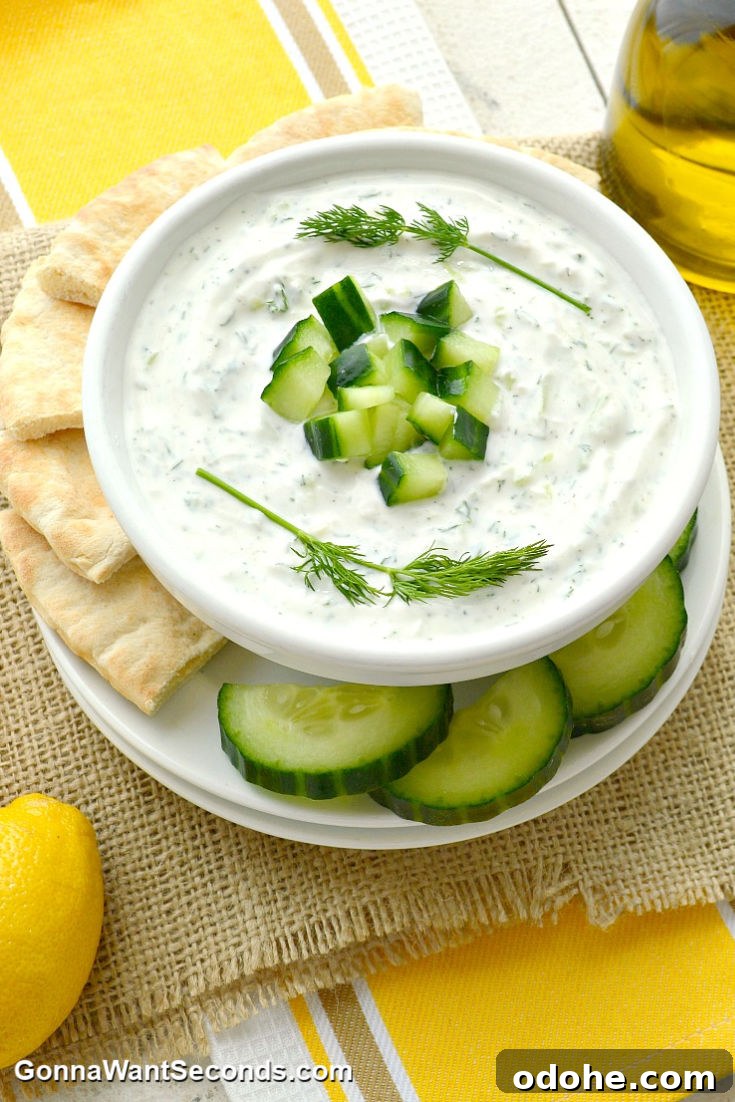
Homemade tzatziki is easy to prepare and incredibly versatile. It works as a cooling dip for vegetables and pita, a sauce for gyros and grilled meats, or a spread for sandwiches. Use it with chicken gyros, Greek chicken, falafel, shish kabobs, fish, lamb, or roasted vegetables—the tangy yogurt and herbs add moisture and bright flavor. It’s also a flavorful, lower-fat alternative to mayonnaise on sandwiches.
One of my favorites is dipping pita or crisp veggies into tzatziki alongside lamb chops or grilled chicken. It’s also a quick, protein-rich snack when paired with fresh pita or romaine leaves. Tzatziki contributes calcium and probiotics when made with good yogurt, making it both tasty and nutritious.
Homemade vs Commercial
While store-bought tzatziki exists, the homemade version is far superior. Freshly grated cucumber, real garlic paste, and bright lemon juice make a noticeable difference. The homemade sauce is thicker, creamier, and fresher tasting than most commercial options.
Tzatziki Sauce Ingredients
- Greek Yogurt: Use plain, unflavored yogurt. Full-fat yields the richest sauce, but nonfat or low-fat work if you prefer. Authentic tzatziki uses strained yogurt (Greek-style). If you only have regular yogurt, strain it to achieve a thicker consistency, but don’t overstrain into a yogurt cheese.
- Cucumber: Peel, seed, and grate or finely dice. Shredded cucumber is most traditional. Salt the cucumber, let it sit 20–30 minutes, then squeeze it dry in a clean towel to prevent a watery sauce.
- Garlic: Fresh garlic pressed into a paste blends best. To make a paste: mince the garlic, sprinkle with a little table salt, then smash and scrape it with the blunt side of a knife until smooth.
- Salt and Black Pepper: Base seasonings—adjust to taste.
- Dill: Fresh dill is recommended; a small amount of fresh mint can be added if desired.
- Lemon Juice: Fresh lemon juice brightens the sauce.
Tzatziki Tips
Add mint: A light sprinkle of dried or fresh mint and a drizzle of olive oil is a common restaurant touch and a lovely addition.
Make ahead: For best flavor, prepare tzatziki the day before serving and refrigerate overnight. This allows the garlic to mellow and the flavors to meld. If served immediately after mixing, the garlic can taste sharp.
There’s some debate about herbs—some recipes use only dill, some none, and others include mint. My family recipe uses dill; I personally prefer a generous amount of fresh dill for brightness.
Sour cream? Traditional tzatziki does not include sour cream. Lemon zest? Not traditional but a pleasant optional addition.
Paleo or low-carb alternative: Skip the pita and serve tzatziki with fresh vegetables or romaine leaves for dipping.
Storing, Freezing, Make-Ahead
- Refrigerator: Store leftovers in an airtight container for 3–4 days.
- Freezing: Not recommended; freezing changes texture.
- Make-ahead: Best prepared a day ahead so flavors mellow and meld.
How to Make Tzatziki
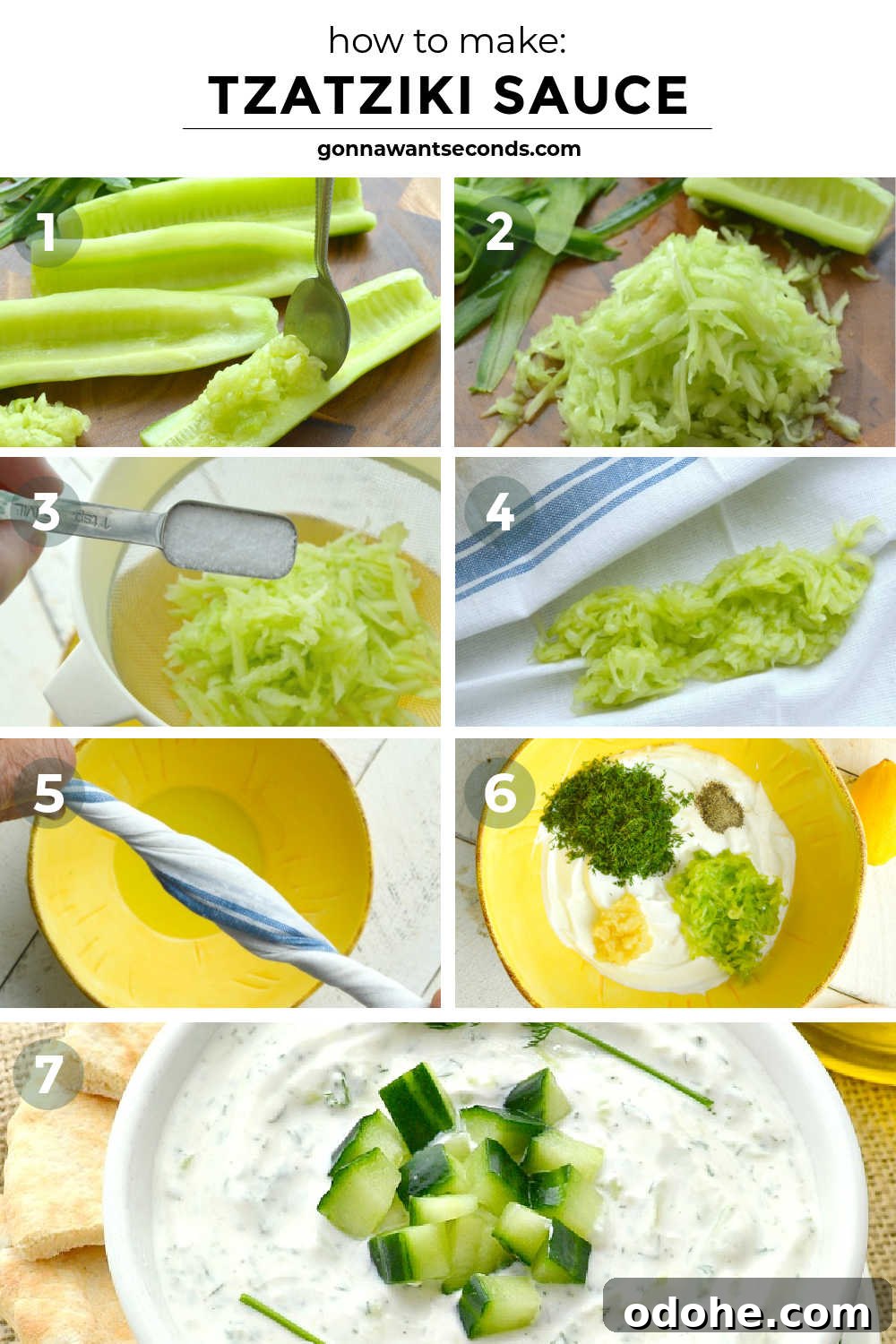
- Peel the cucumber, slice it lengthwise, and scoop out the seeds.
- Grate the cucumber using a box grater.
- Sprinkle the grated cucumber with salt and let it sit for 20–30 minutes.
- Place the cucumber on a clean kitchen towel or cheesecloth, twist to wring out as much liquid as possible, and discard the excess moisture.
- Combine the squeezed cucumber with the yogurt in a medium bowl.
- Make a garlic paste from minced garlic and a pinch of salt, then add it to the bowl.
- Stir in lemon juice, chopped fresh dill, a teaspoon of salt (adjust to taste), and a pinch of black pepper. Mix until evenly combined.
- Cover and refrigerate overnight for the best flavor. Stir again before serving and adjust seasoning if needed.
Make it ahead: Refrigerating overnight improves texture and flavor by allowing the garlic to mellow and the ingredients to blend.
Serving Ideas
- Spread on sandwiches or wraps instead of mayonnaise.
- Serve with grilled meats—gyros, chicken, lamb, or kebabs.
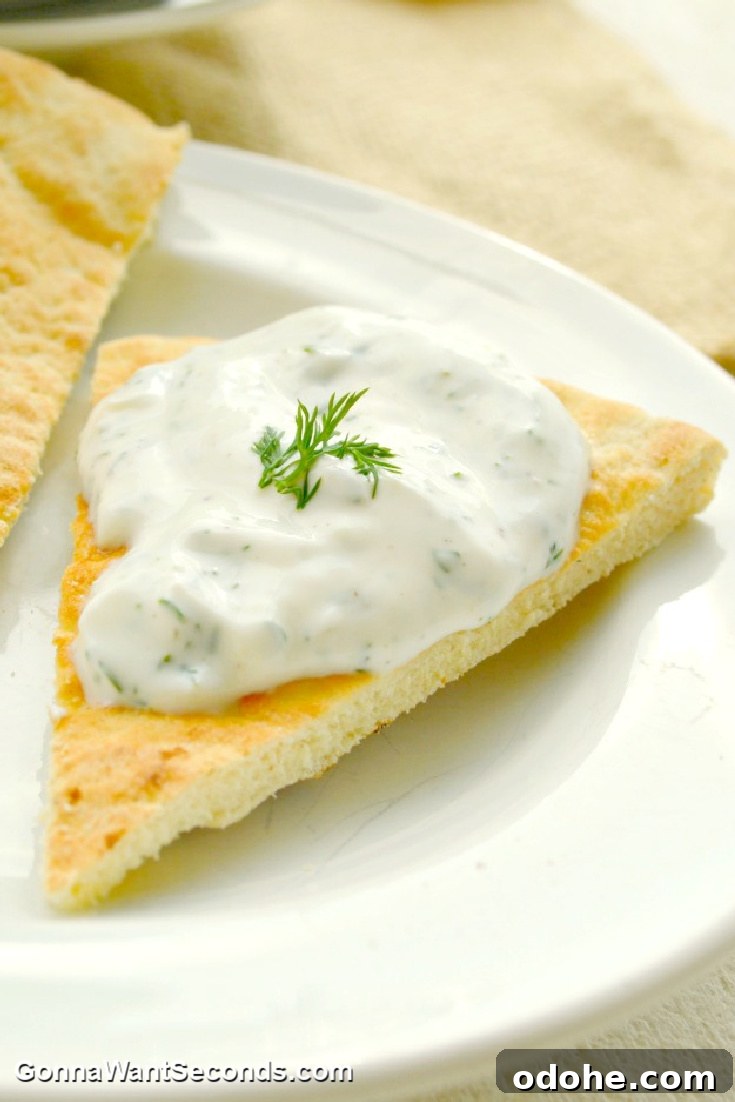
- Use as a dip for pita, pita chips, or fresh vegetables.
- Stir into salads or spoon over roasted Mediterranean vegetables for extra tang and moisture.
Recipe Summary
Ingredients
- 16 ounces plain Greek yogurt
- 1/2 English cucumber
- 4 large cloves fresh garlic
- Salt, to taste
- Pinch to 1/4 teaspoon black pepper
- 3 tablespoons fresh dill, finely chopped
- 1 tablespoon fresh lemon juice
Instructions
- Peel the cucumber, remove seeds, and grate. Sprinkle with 1 teaspoon salt and let stand 30 minutes. Press to remove excess liquid and wring the cucumber in a clean towel.
- Place drained cucumber in a medium bowl and add the yogurt.
- Make a garlic paste from the 4 cloves and add it to the bowl.
- Add 1 teaspoon salt, black pepper, chopped dill, and lemon juice. Stir until well combined.
- Cover and refrigerate overnight. Stir before serving and adjust seasoning.
Nutrition (approx.)
Serving: 2 cups | Calories: 161 kcal | Carbohydrates: 14 g | Protein: 24 g | Fat: 1 g | Calcium: ~277 mg
Did you make this recipe? I’d love to hear how it turned out and what you served with it.
Source: Gonna Want Seconds