Make one of the world’s best sausages with this clear, practical guide to Spanish and Mexican chorizo. Learn how to choose meat, season and smoke chorizo, plus times, temperatures and wood recommendations for both fresh Mexican-style and cured Spanish chorizo.
- The two chorizos
- Choosing the meat
- Preparing the sausage
- Smoked Spanish Chorizo
The word “chorizo” covers many regional sausages. In Spain it generally describes cured sausages seasoned with smoked paprika and garlic, which gives them a bright red color. In Latin America the term is used more broadly for a wide variety of fresh, cooked or cured sausages that can differ significantly from Spanish chorizo.
The two chorizos
There are hundreds of chorizo varieties. Even in Spain you’ll find many regional styles. For clarity, this guide focuses on the two most common types encountered internationally: Mexican chorizo (a fresh, spicy sausage that must be cooked) and Spanish chorizo (a cured, ready-to-eat sausage).
Mexican chorizo
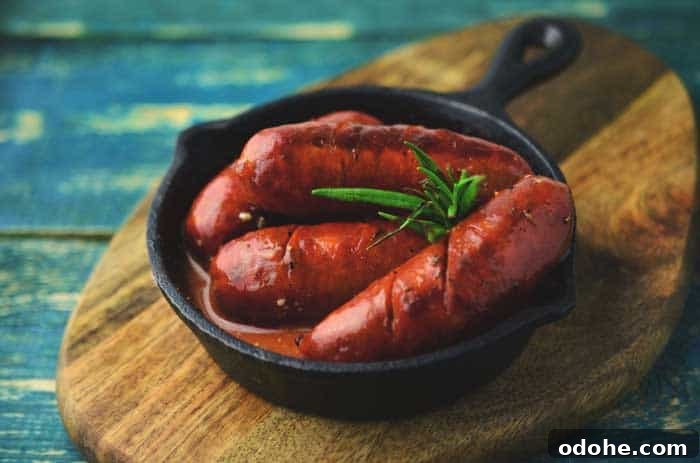
Mexican chorizo is typically made from pork, though beef or other meats are sometimes used. It is a raw, heavily seasoned sausage that must be cooked before eating. It’s often sold loose (for crumbling and frying) or stuffed into casings.
Most commonly, you’ll remove it from the casing and crumble it in a pan to use in tacos, burritos, nachos, scrambled eggs and many other dishes. Its bold seasoning makes it extremely versatile.
Spanish chorizo
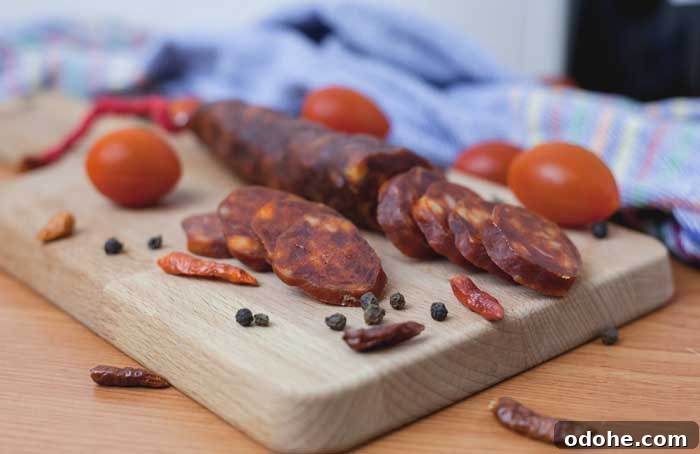
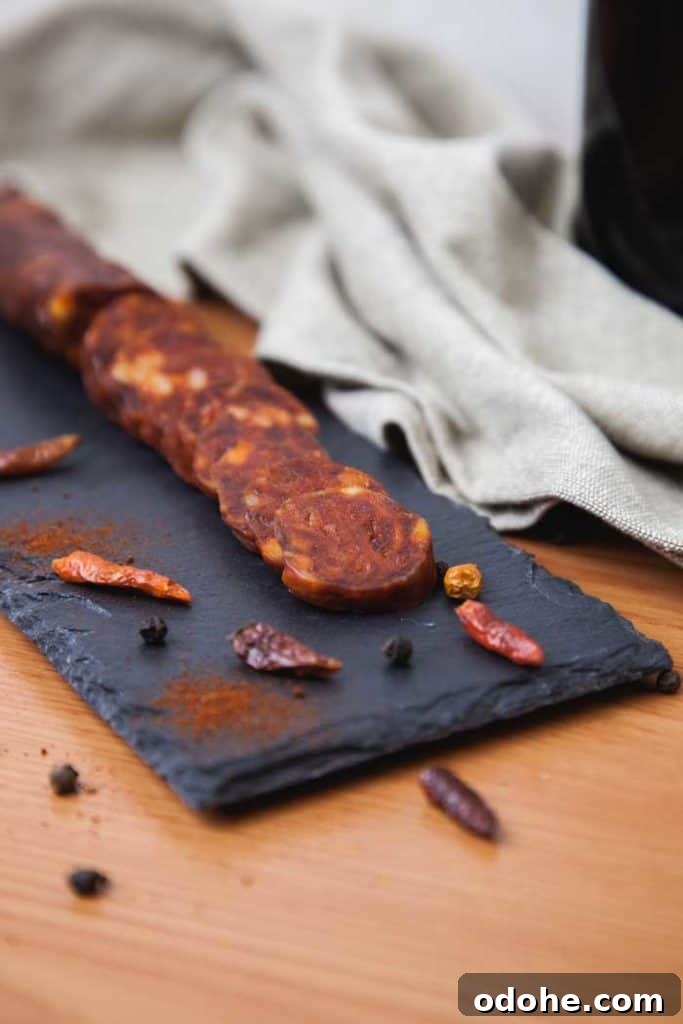
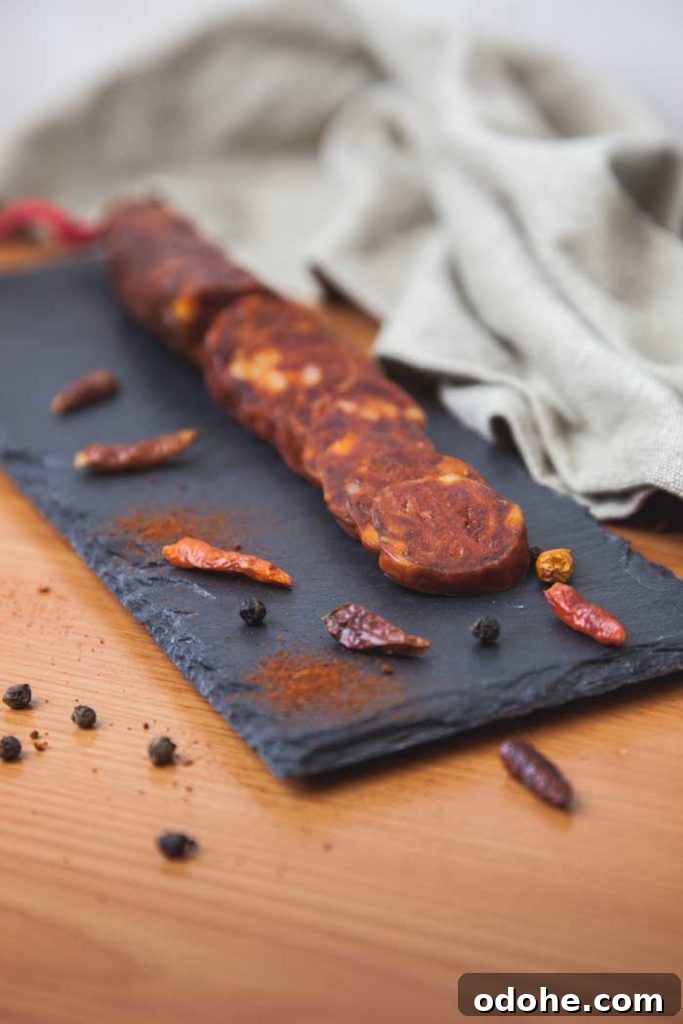
Spanish chorizo is a cured, dried sausage made from pork and pork fat. It is usually available in two main flavor profiles—mild/sweet and spicy—depending on whether sweet or hot smoked paprika is used. Because it is cured, Spanish chorizo can be eaten without additional cooking and has a dense, firm texture. It also adds deep flavor and color when included in stews and braises.
Choosing the meat
When making chorizo at home, controlling the meat and fat quality is a major benefit. For both Mexican and Spanish chorizo, aim for about 25% fat and 75% lean meat. Mexican-style can be a touch fattier—up to 27–30% fat—if you prefer a richer, juicier result. Your butcher can provide trimmed fat if needed.
You don’t need expensive cuts; chorizo was traditionally a value-focused product made with less-prized pieces. Pork shoulder is an ideal choice because it balances meat and fat naturally. If using separate lean cuts and fat, adjust quantities to maintain the target ratio.
Preparing the sausage
Below are streamlined recipes and procedures for both Mexican and Spanish chorizo. In both cases rinse and soak natural casings before stuffing.
Mexican chorizo
Ingredients and method (approximate):
- 2 lbs pork shoulder (or 1.5 lb lean + 0.5 lb fat)
- 1 tbsp paprika
- 1 tsp cayenne pepper
- 1 tbsp garlic powder
- 1 tbsp ground cumin
- 1 tsp ground coriander
- 1/4 tsp ground cloves
- 1/2 tsp ground cinnamon
- 1 tsp oregano
- 1/2 tsp thyme
- 1 tsp salt
- 1/2 tsp ground black pepper
- 3 tbsp apple cider vinegar
Dice and briefly freeze the meat so it grinds easily. Grind coarsely (about 8 mm). Combine ground meat with the spices and vinegar—mix thoroughly until slightly sticky. Stuff into hog or sheep casings and keep links a manageable size for cooking.
Pat links dry with a paper towel and hang in a cool place for about one hour before smoking. Choose a mild fruitwood like apple or a classic hardwood such as oak to complement the paprika and chiles. Smoke at a low temperature, around 200°F, until the internal temperature reaches 150°F—about two hours depending on size and smoker. After smoking, the sausage can be grilled, fried, or crumbled into recipes.
Spanish chorizo
Spanish chorizo is a dry-cured product that requires more time and controlled smoking. This simplified process still assumes access to a smoker and basic curing supplies. Yields about 2.75 lbs of sausage.
Ingredients and method (approximate):
- 2.5 lbs pork shoulder (or 2 lbs lean + 0.5 lb fat)
- 2 tbsp cold water
- 1 tbsp smoked paprika
- 1 tbsp mild chili powder
- 2 tsp corn syrup or golden syrup
- 2 tsp salt
- 1 tsp cayenne (adjust to taste)
- 1/2 tsp garlic powder
- 1/2 tsp curing salt (use as directed on product)
Grind meat through a 5mm plate and chill. Mix dry seasonings with cold water and corn syrup to form a paste, chill for an hour, then combine with the meat and knead until sticky and evenly seasoned. Stuff into hog or sheep casings, forming about 12 uniform links. Refrigerate overnight.
Weigh and mark one link so you can monitor weight loss later. Set up the smoker for an initial cold-smoking/drying stage: hang the sausages and dry until the skin is dry to the touch, then cold-smoke with vents open for ~2 hours. Raise smoker temperature to around 170–175°F and continue smoking until the internal temperature reaches 160°F (about one hour more). Remove the marked link and weigh it: a finished chorizo should have lost about 25–35% of its starting weight; if not, continue drying/smoking until the desired loss is reached.
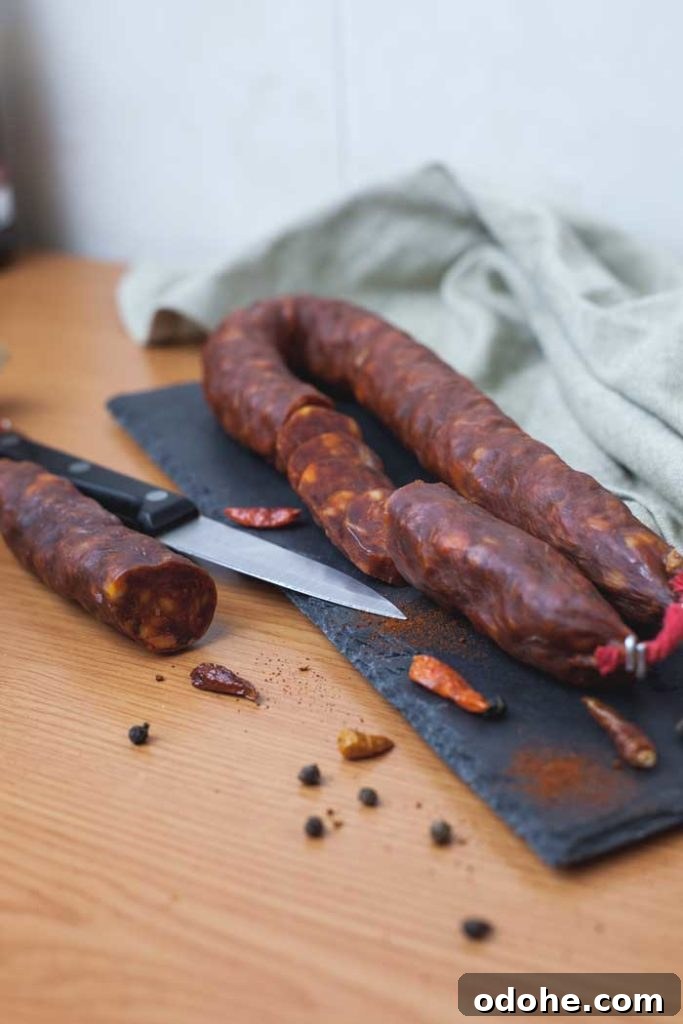
After smoking, hang the sausages to rest and cool for a short period before refrigerating. Once settled, slice and serve as-is or use in cooked dishes. Properly cured Spanish chorizo keeps its flavor and texture and can be used in tapas, stews or sliced on a charcuterie board.
Both styles offer excellent results at home when you control meat quality, seasoning balance and smoking parameters. Mexican chorizo is quick and versatile for immediate cooking; Spanish chorizo takes more time but yields a shelf-stable, intensely flavored cured sausage.

Smoked Spanish Chorizo
Equipment
-
Meat grinder
-
Hog casings
Ingredients
- 2 ½ lbs pork shoulder
For the dry seasoning
- ¼ cup fermento
- 1 tbsp smoked paprika
- 1 tbsp mild chili powder
- 2 tsp corn syrup
- 2 tsp kosher salt
- 1 tsp cayenne pepper
- ¾ tsp garlic powder
- ½ tsp pink curing salt
Instructions
-
Cut pork shoulder into cubes and process through a meat grinder using a 5mm plate. Transfer ground meat to a large mixing bowl and chill in the refrigerator.
-
Combine dry seasoning ingredients (except corn syrup) in a small bowl. Add 2 tbsp cold water and corn syrup, mixing until a paste forms. Chill the paste for 1 hour.
-
Remove meat and seasoning paste from the refrigerator. Mix the paste thoroughly into the pork and knead for a few minutes to distribute the paste evenly.
-
Stuff sausage into stuffer barrel using hog casings. Form 12 uniformly sized links arranged in a horseshoe shape.
-
Weigh one sausage and mark it; you will weigh the same sausage later to measure weight loss during curing.
-
Refrigerate the sausages overnight to allow the flavors to settle.
-
Set up smoker for cold-smoking with a maximum of 140°F. Hang the sausages and let them dry until the skin is dry to the touch. Cold-smoke with vents open for about 2 hours.
-
Raise smoker temperature to about 170°F and smoke for an additional hour, targeting an internal temperature of 160°F. Weigh the marked sausage and aim for approximately 25% weight loss; continue drying if needed.
-
Remove sausages from the smoker and hang to dry for an hour.
-
Serve immediately or refrigerate and enjoy later.