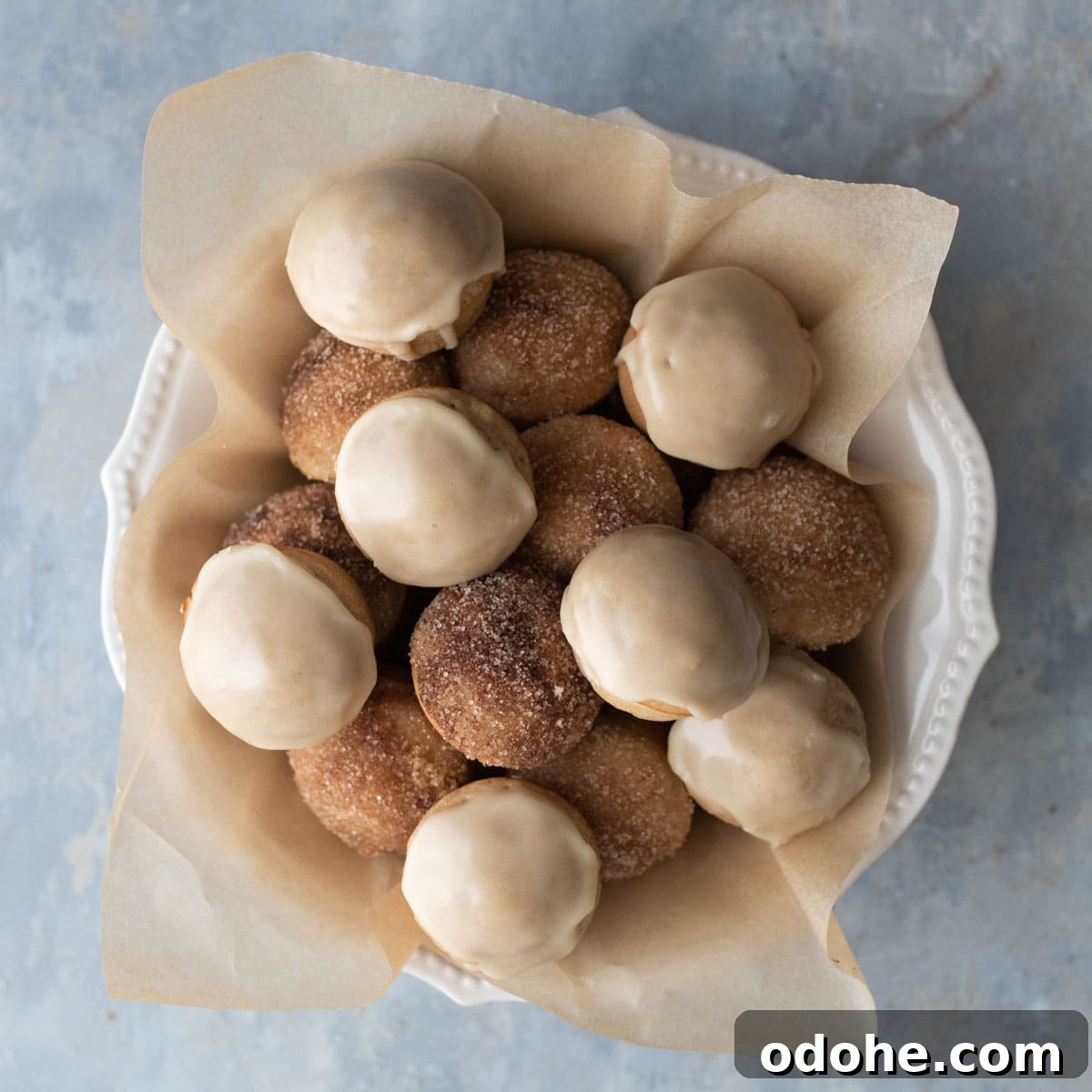
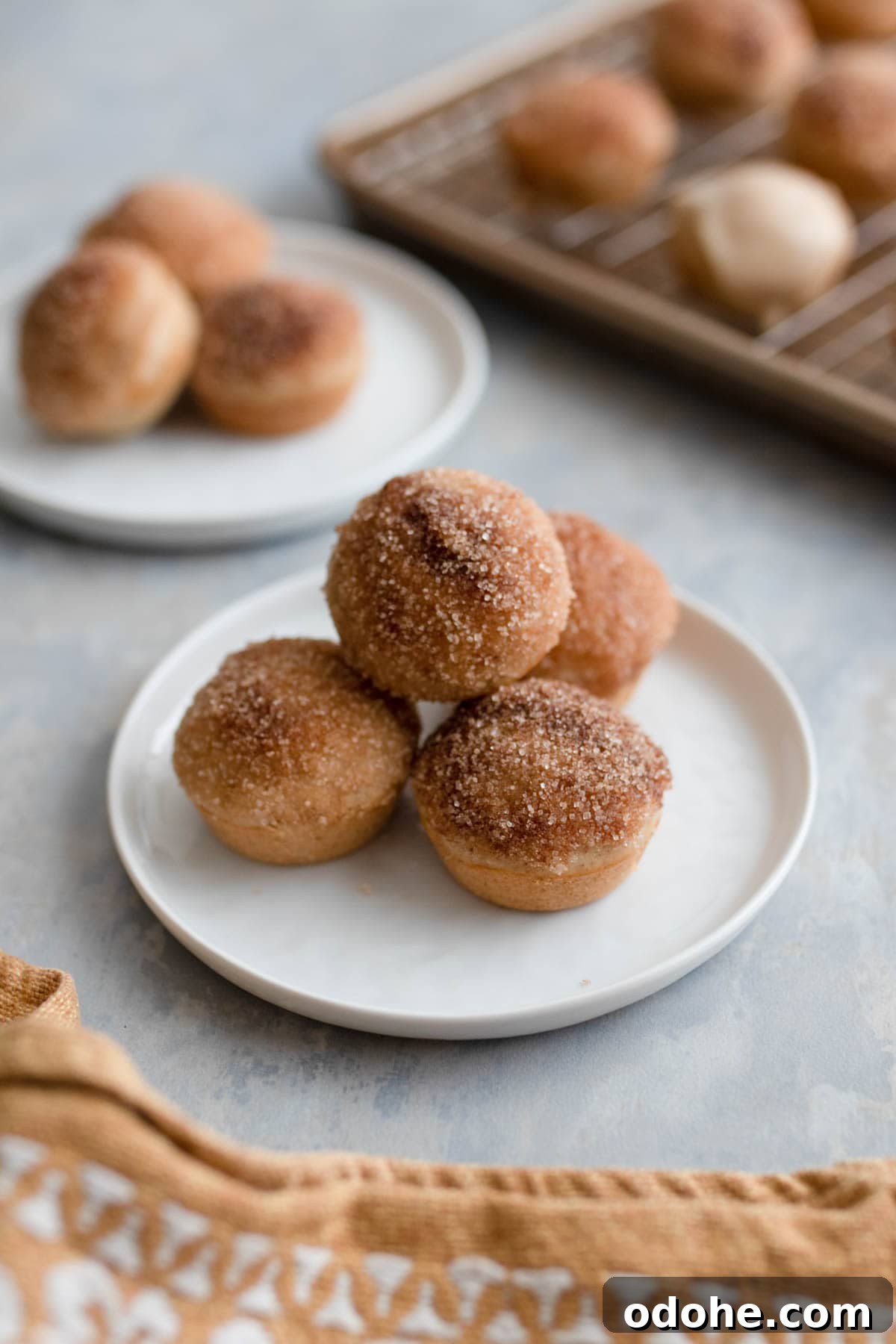
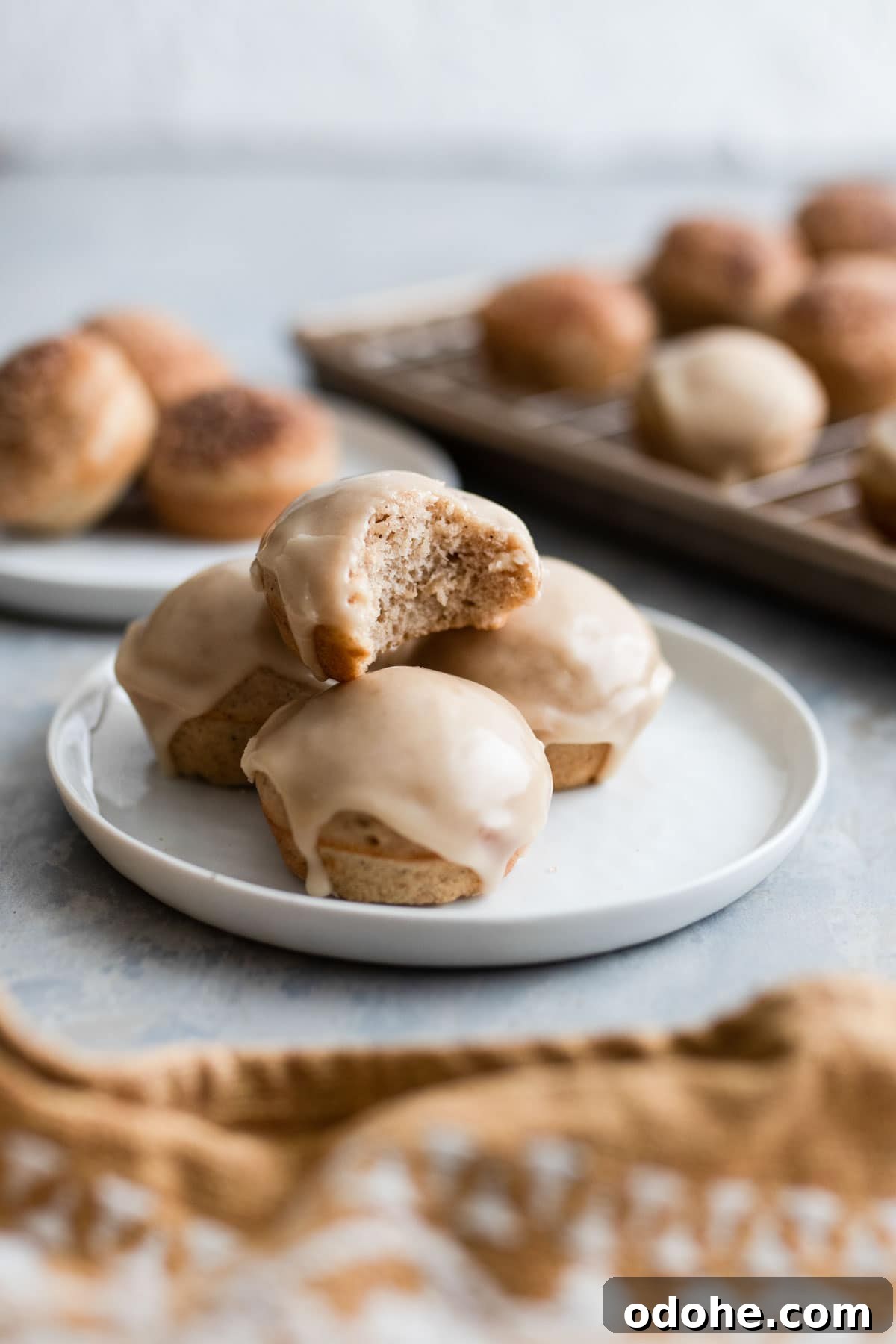
These baked donut holes are light, fluffy, and simple to make—no frying required. The tender dough pairs beautifully with two classic finishes: a buttery cinnamon-sugar coating or a smooth vanilla glaze. Both toppings are quick to prepare and let you customize the treats for breakfast, brunch, or dessert.
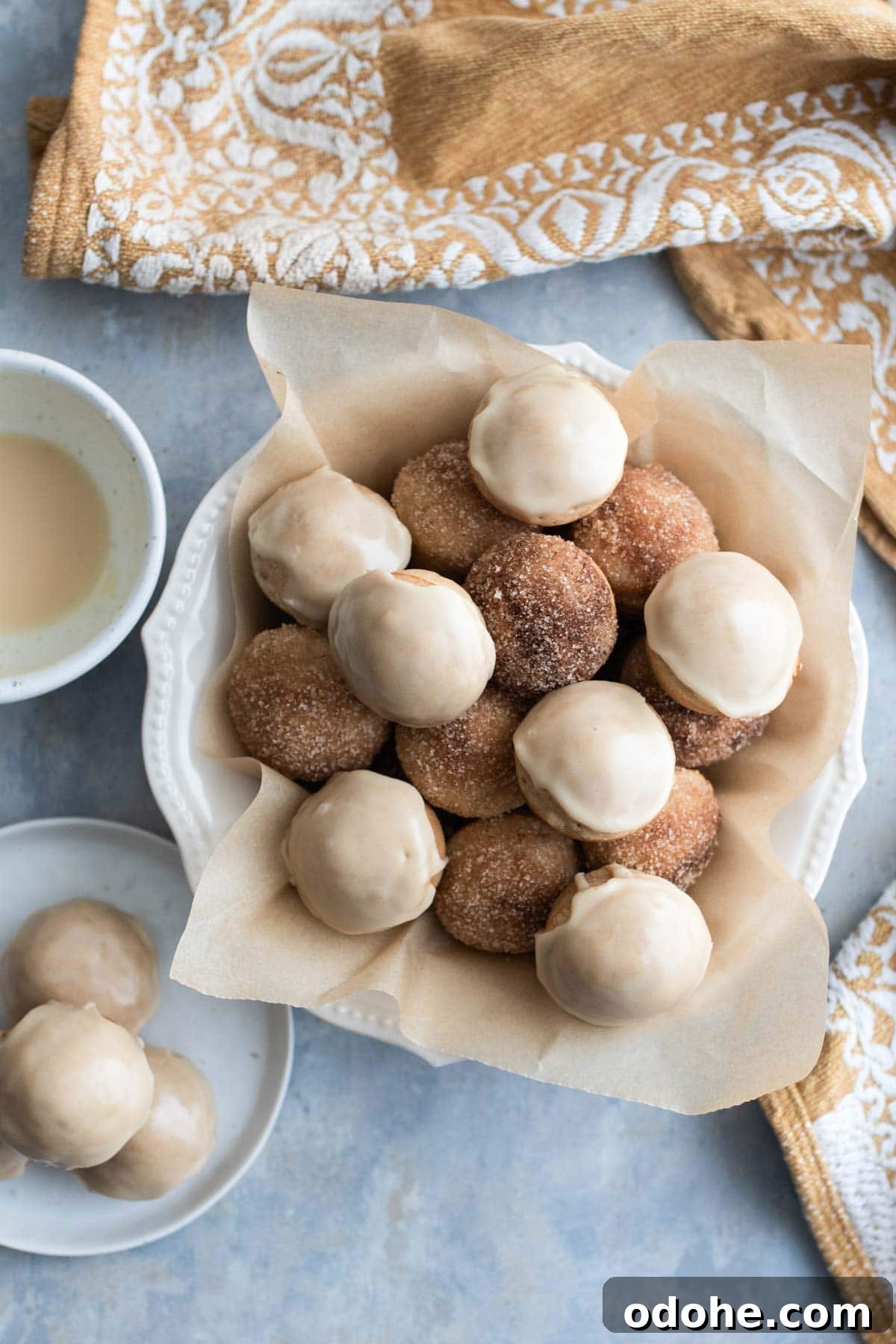
No special donut-hole pan is necessary—use a mini muffin tin instead. Compared with traditional fried donuts, these are faster, less messy, and lower in calories while still offering great flavor and a soft, cakey texture.
For a seasonal twist, the batter can be adapted to make apple-cider donut holes for autumn. This recipe is versatile: you can easily swap flours to make a gluten-free version or choose a dairy-free milk substitute to suit dietary needs.
Table of Contents
- Why You’ll Love Baked Donut Holes
- Ingredients
- Gluten Free Option
- Step by Step Instructions
- How to Make Apple Cider Donut Holes
- Glazed or Cinnamon Sugar?
- Recipe Tips
- Storage Suggestions
- What to Serve with Baked Donut Holes
- Frequently Asked Questions
- Brunch Recipes
- Baked Donut Holes Recipe
Why You’ll Love Baked Donut Holes
These baked donut holes deliver all the comforting flavors of classic donuts without the fuss of deep frying. They’re yeast-free, quick to assemble, and forgiving to bake—perfect for a casual weekend breakfast or a last-minute brunch.
- Customizable – Finish them with cinnamon sugar, a simple glaze, or use apple cider in the batter for fall flavor. The recipe adapts well to gluten-free flours.
- Healthier than fried – Baking reduces oil use and cuts calories compared with fried donuts.
- Less mess – No splattering oil and easier cleanup.
- Kid-friendly – Use a mini muffin pan and let kids help dip and coat the finished donut holes.
Ingredients
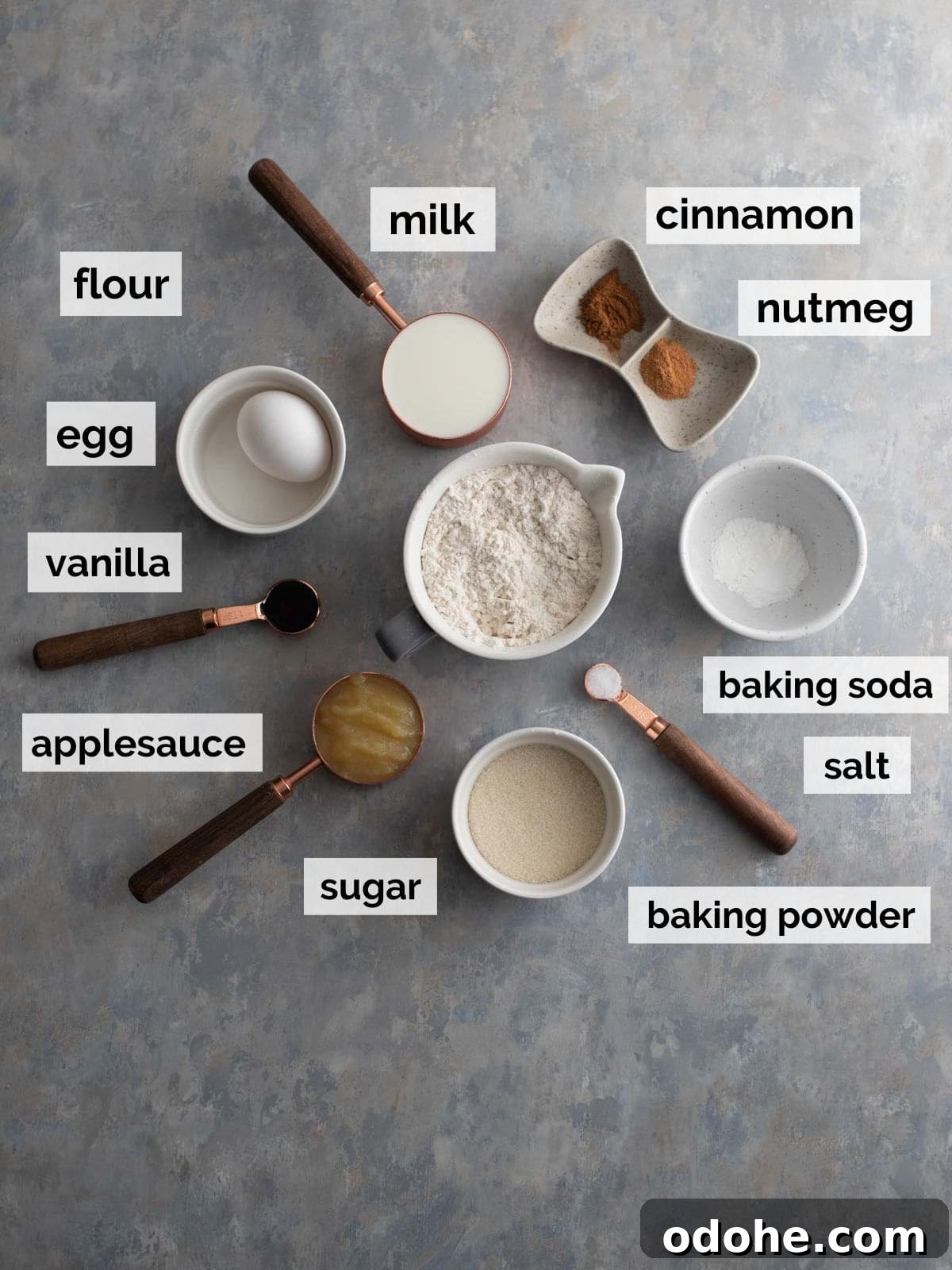
- All-purpose flour – Standard baking flour works well. For gluten-free, see suggestions below.
- Sugar – Granulated white sugar for the batter and additional sugar for the cinnamon coating.
- Unsweetened applesauce – Adds moisture and a tender crumb.
- Milk – Whole milk gives good richness; plant-based milks or a reduced apple cider reduce dairy or boost flavor.
- Egg – One large egg; you can substitute with extra applesauce for an egg-free option.
- Baking powder and baking soda – Ensure they are fresh for optimal rise.
- Seasonings – Ground cinnamon, nutmeg, vanilla extract, and a pinch of salt.
Cinnamon sugar topping – melted butter, granulated sugar, and ground cinnamon.
Glaze topping – powdered sugar combined with 2–3 teaspoons milk or apple cider and a little vanilla.
Gluten Free Option
To make these gluten free, combine equal parts oat flour and brown rice flour (for example, 2/3 cup oat flour + 2/3 cup brown rice flour for this recipe) or use a commercial 1:1 gluten-free baking flour. The gluten-free version can take a few additional minutes to bake—watch for light browning around the edges.
Step by Step Instructions
Follow these simple steps for tender, evenly baked donut holes.
Step 1 – Mix dry ingredients
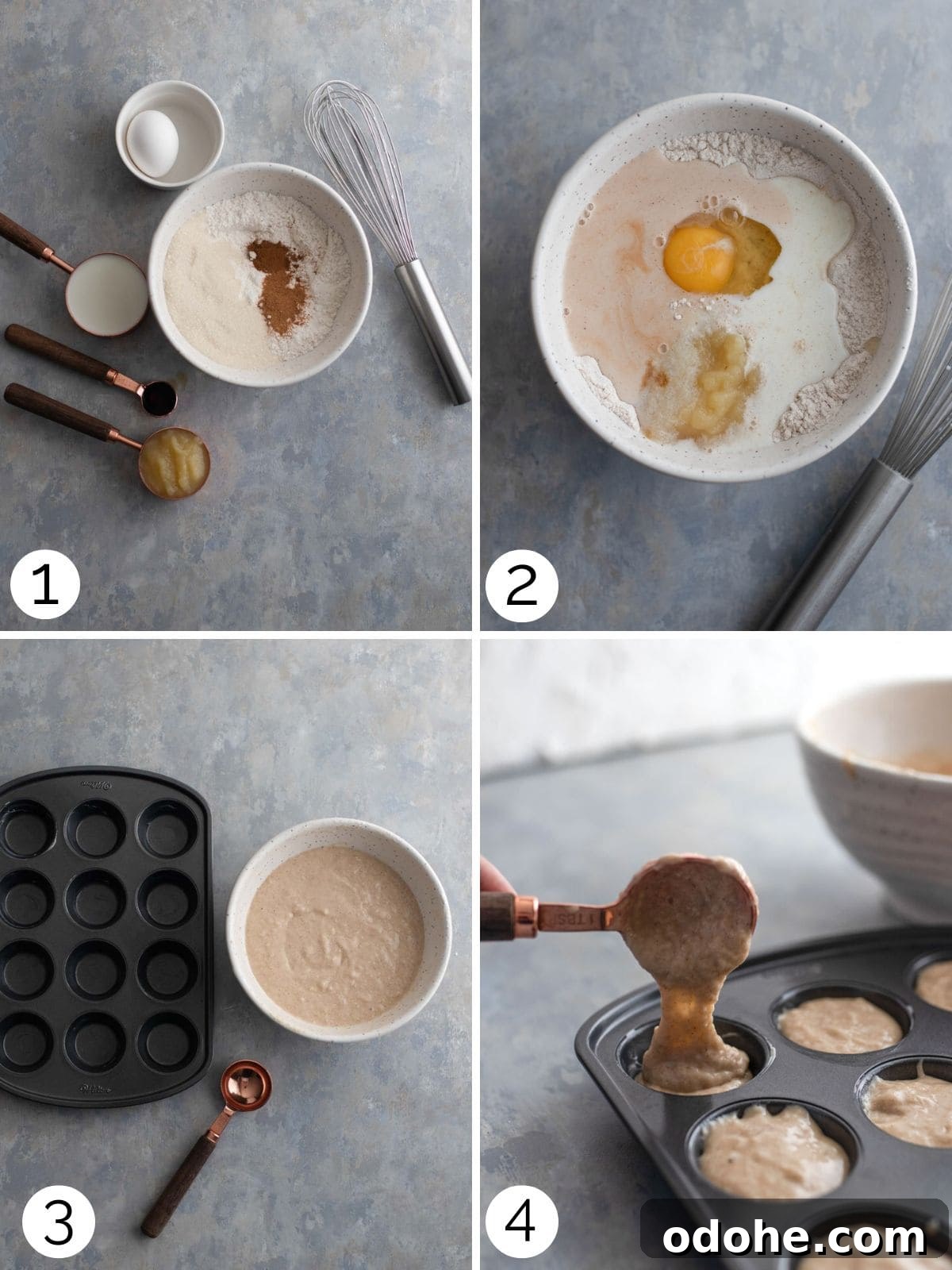
Preheat the oven to 400°F (204°C). Grease a 24-count mini muffin pan or a donut hole pan. In a large bowl, whisk together the flour, sugar, baking powder, baking soda, cinnamon, nutmeg, and salt.
Step 2 – Add wet ingredients
Add the egg, milk, applesauce, and vanilla to the dry mix and stir until just combined. Do not overmix; a few small lumps are fine to keep the dough light.
Step 3 – Fill the pan and bake
Spoon the batter into the prepared pan, about 2–3 teaspoons per cavity, filling each cup. Bake at 400°F for 7–12 minutes, depending on your oven, until the tops are puffed and lightly browned at the edges. Transfer to a cooling rack and let rest 5 minutes before removing from the pan.
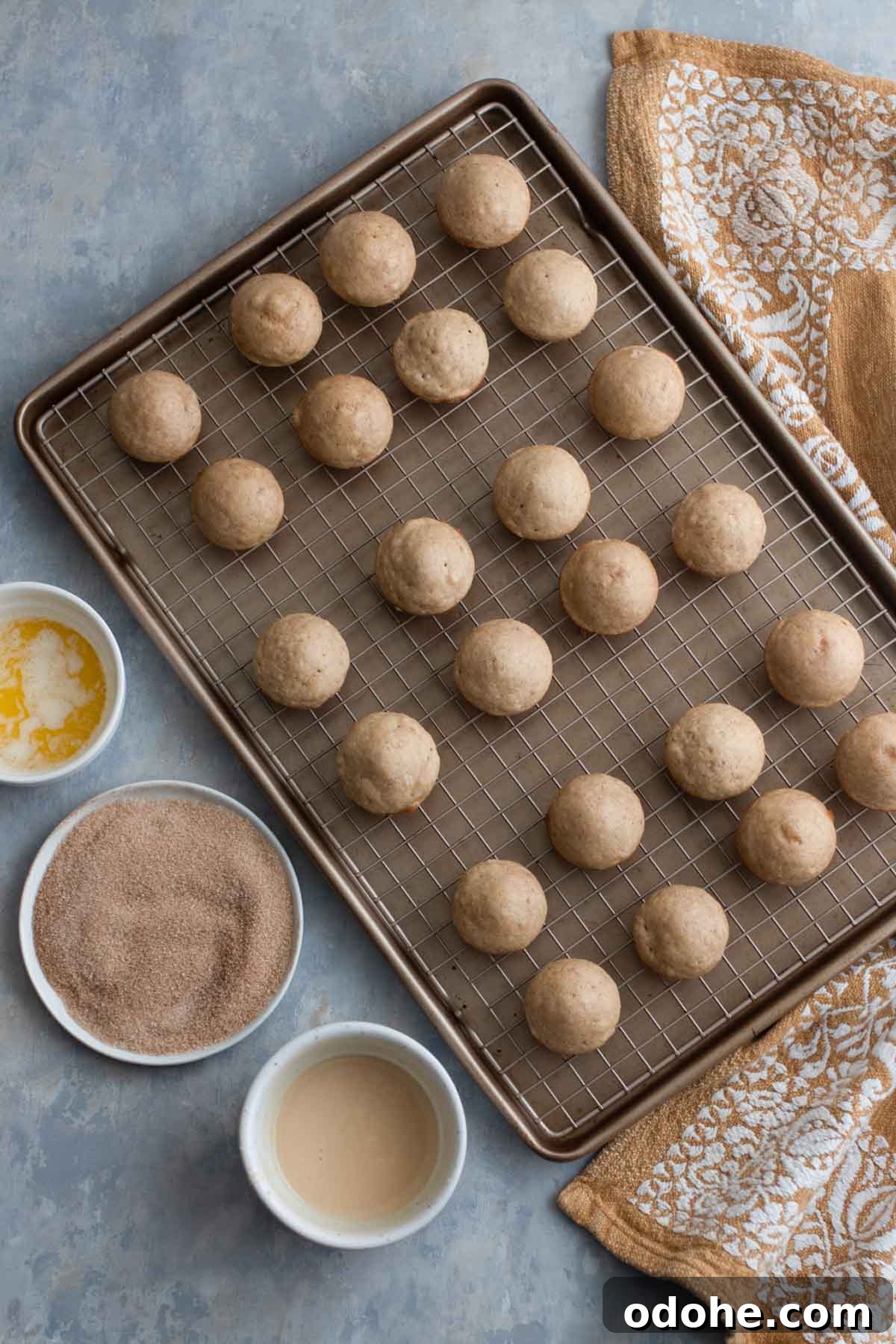
Step 4 – Prepare the toppings
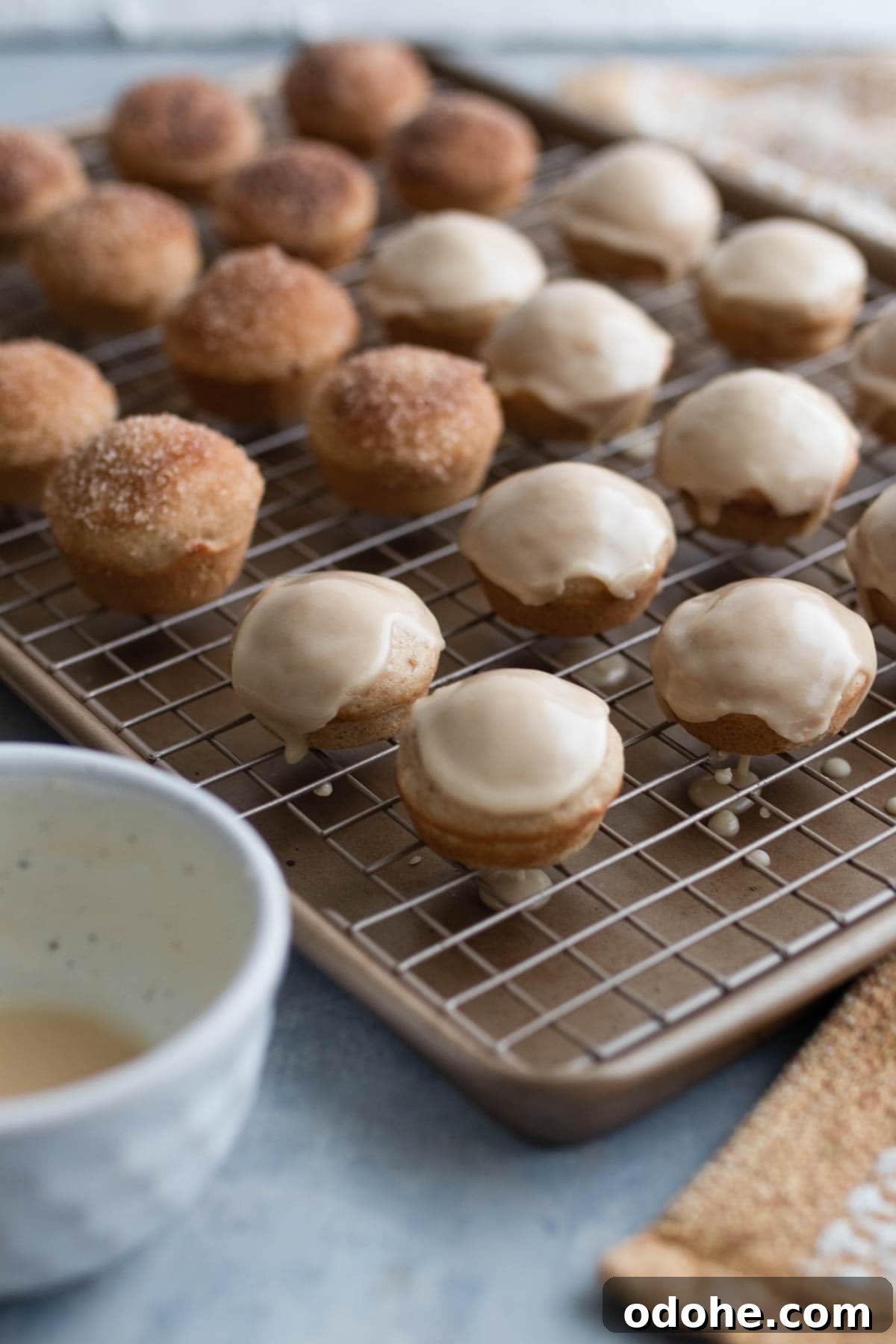
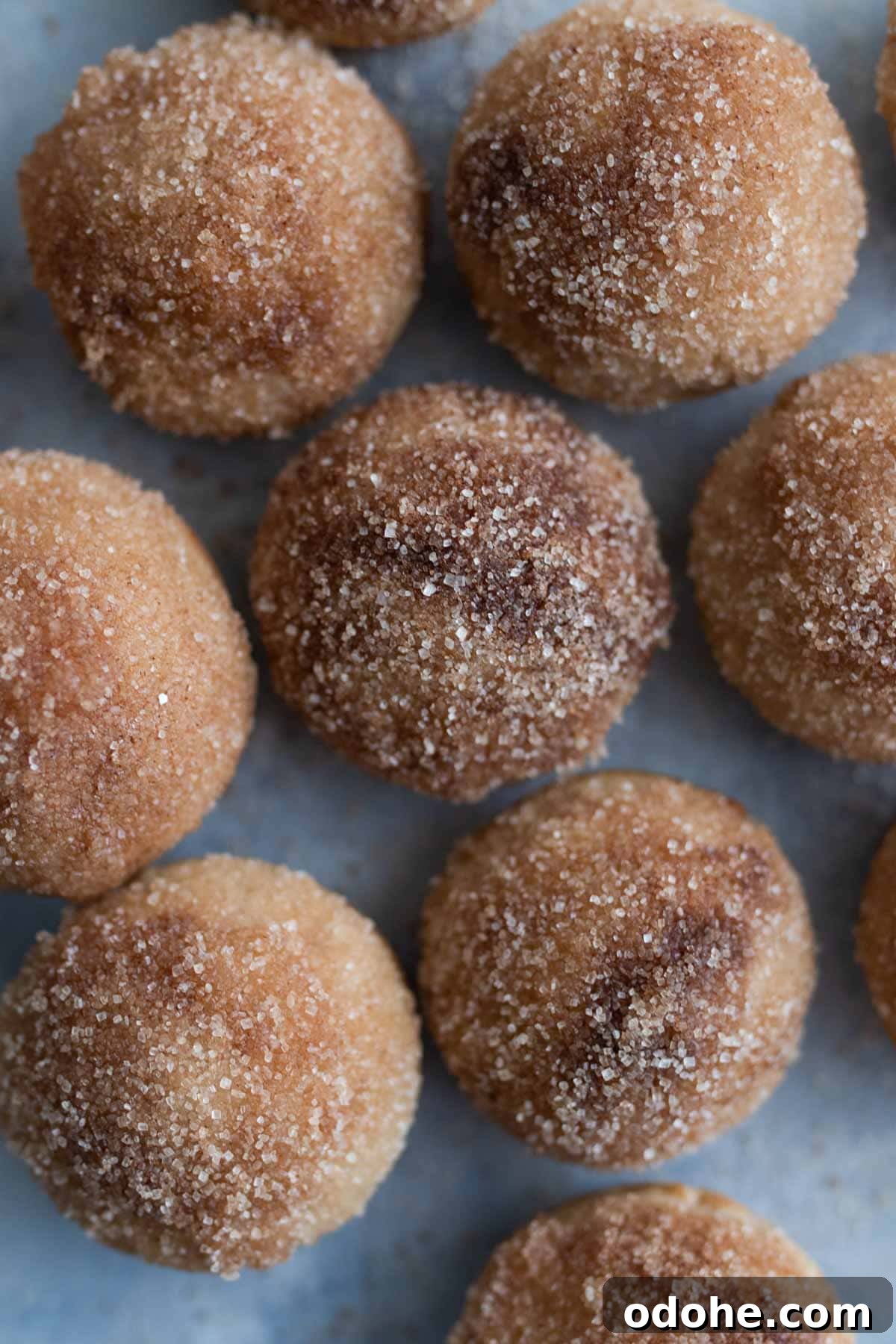
For the cinnamon-sugar coating, melt the butter and place it in a shallow bowl. In a separate bowl combine sugar and cinnamon. Dip warm donut holes in melted butter and roll them in the cinnamon sugar until evenly coated.
For the glaze, whisk powdered sugar with 2–3 teaspoons of milk or apple cider and 1/2 teaspoon vanilla until smooth and slightly runny. Dip the top of each cooled donut hole into the glaze, then set on a rack to allow the glaze to firm up.
How to Make Apple Cider Donut Holes
To add warm apple-cider flavor: simmer 1 1/2 cups apple cider with 2 whole cloves over medium-low heat until reduced to about 1/2 cup (roughly 20 minutes). Remove the cloves and chill the reduction. Use 1/2 cup of this cider in place of the milk in the batter and increase the cinnamon to 3/4 teaspoon and nutmeg to 1/4 teaspoon for a cozy, spiced result.
Glazed or Cinnamon Sugar?
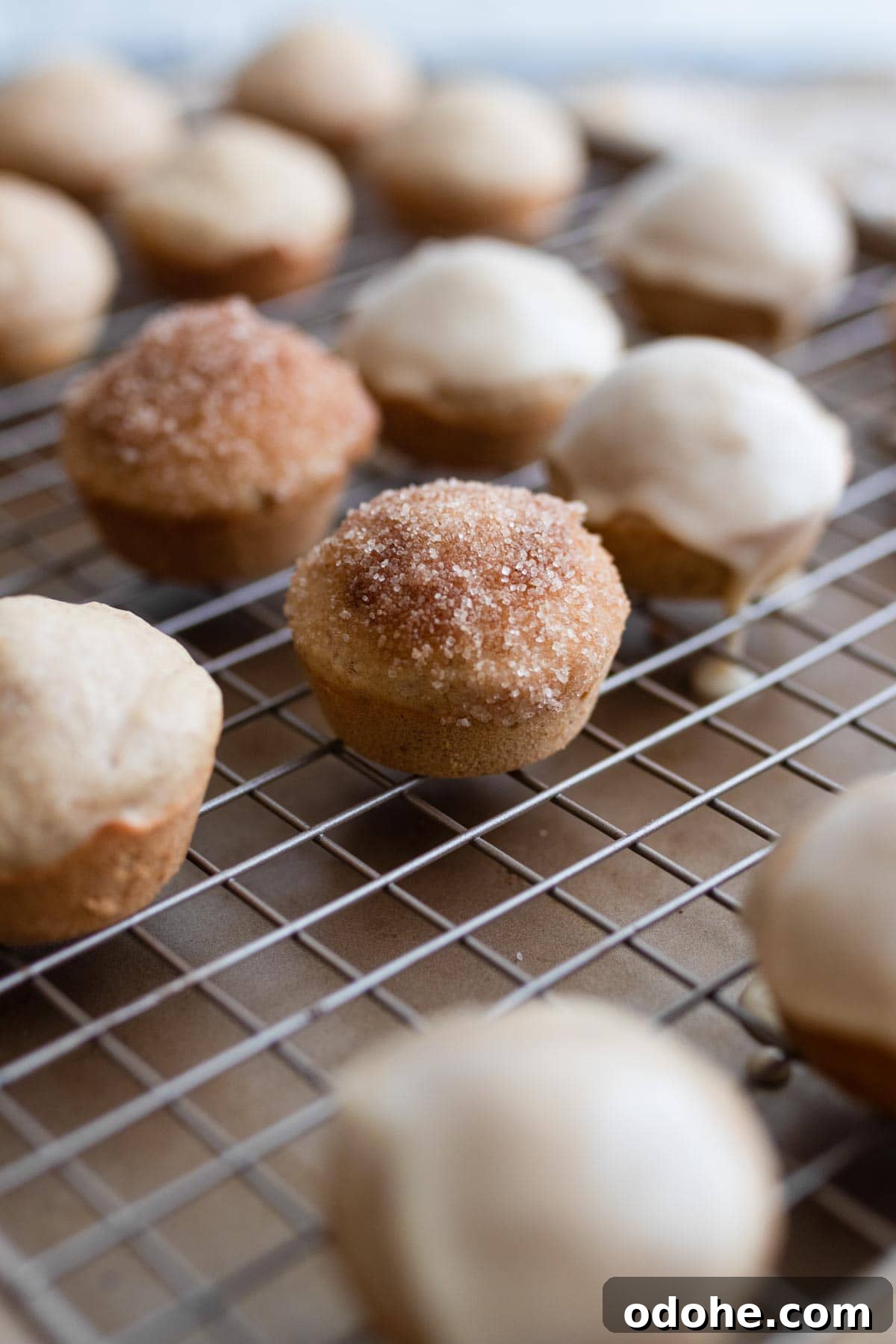
The glaze recipe yields enough for about half the batch (roughly 12 donut holes), which makes it easy to offer both finishes at once. The glaze hardens slightly as it cools, while the cinnamon-sugar gives a buttery, slightly crunchy coating that’s especially appealing in cooler months.
Recipe Tips
- Don’t overmix the batter—overworking it removes air and yields dense results.
- Adjust glaze thickness with additional powdered sugar (to thicken) or a little more liquid (to thin).
- If making larger muffins or full-sized baked donuts, increase baking time accordingly.
- This recipe yields 24 donut holes.
Storage Suggestions
These are best served warm the day they’re made. Store leftover donut holes in an airtight container at room temperature for up to 3 days. Refrigeration can dry them out.
To freeze: Cool completely, then place in a freezer-safe bag for up to 3 months. Thaw at room temperature for about an hour. For best texture, wait to apply coatings until after thawing.
Gifting: Cool completely and pack in layers separated by parchment paper to prevent sticking.
What to Serve with Baked Donut Holes
These bite-sized treats pair well with a variety of breakfast and brunch items. Serve alongside quiches, warm spiced beverages, or fruit-based baked goods for a balanced spread. They also make a fun dessert option after a casual meal.
Frequently Asked Questions
Use a 24-count mini muffin pan if you don’t have a donut hole pan. The batter portion is the same and the results are consistent.
Fried donut holes are often lighter and sometimes yeast-based. Baked donut holes have a tender, cakier texture and typically contain fewer calories than their fried counterparts.
Yes. Substitute a plant-based milk such as oat milk, and use a dairy-free spread or oil for the cinnamon-sugar coating. These changes can make the recipe vegan-friendly.
Brunch Recipes
If you enjoy these baked donut holes, try pairing them with other easy brunch bakes or seasonal dishes to round out your menu.
Recipes
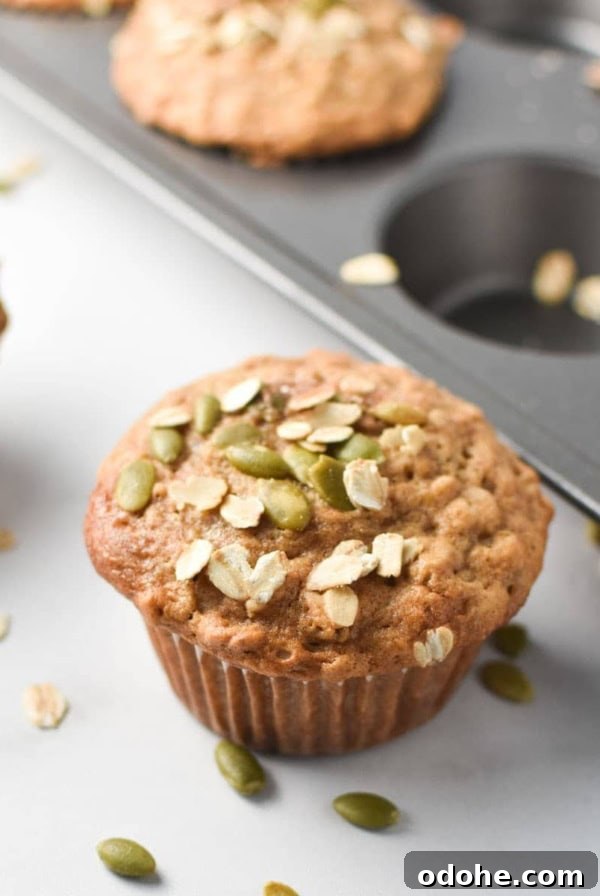
Cinnamon Oatmeal Muffins
Recipes
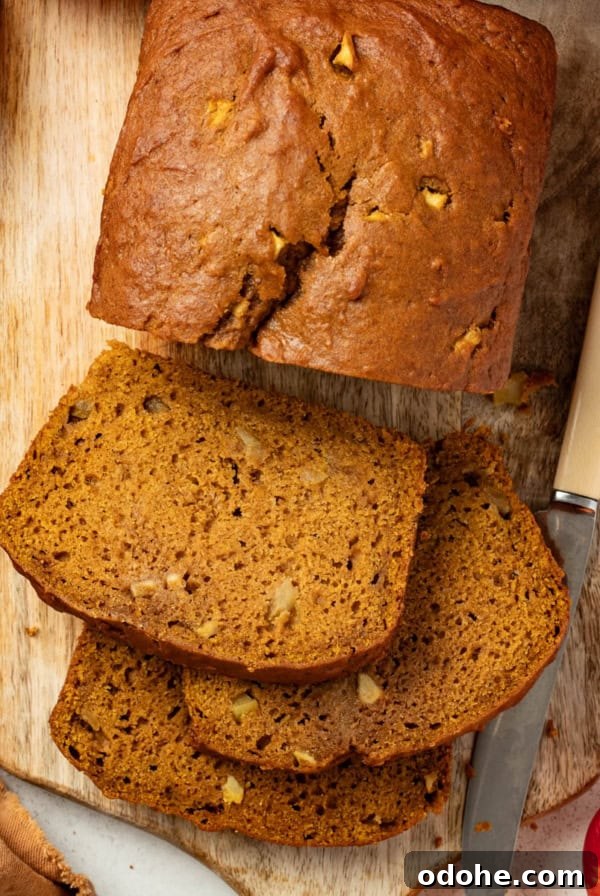
Pumpkin Apple Bread
The Dizzy Baker
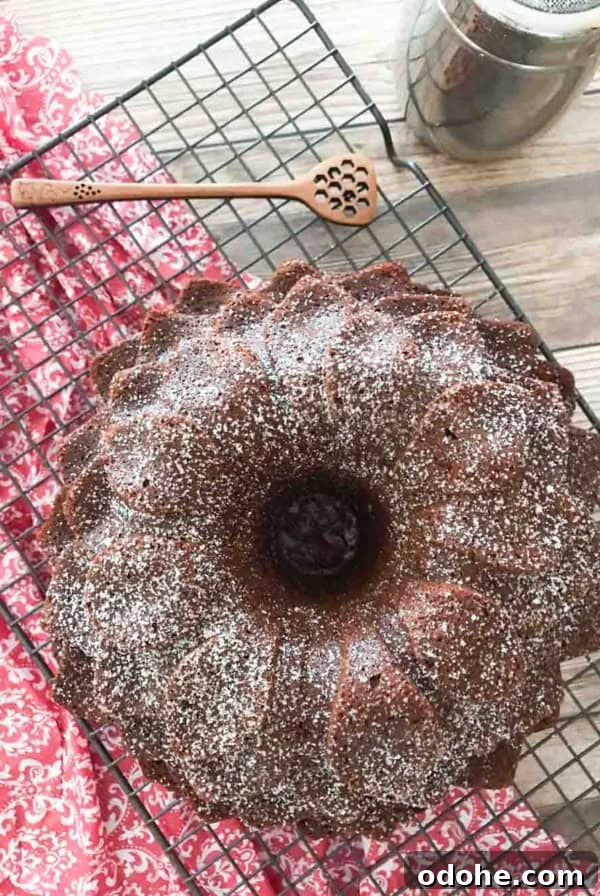
Spiced Apple Honey Cake
Breakfast
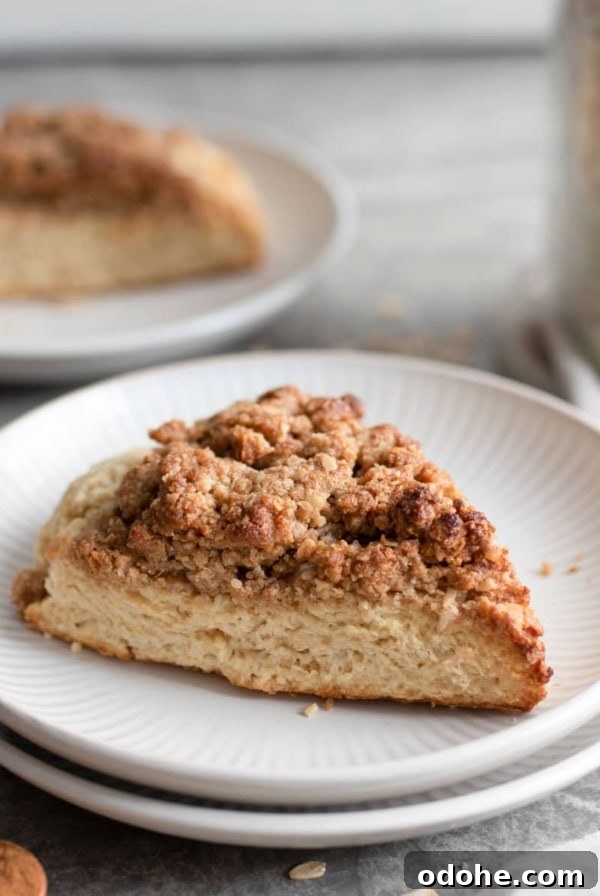
Cinnamon Scones
If you try this recipe, please leave a rating in the recipe card and tag @thedizzycook on social media to share your results.

Baked Donut Holes
Ingredients
Donut Holes
- 1 1/3 cups all purpose flour
- 1/3 cup white sugar
- 3/4 teaspoon baking powder
- 1/4 teaspoon baking soda
- 1/2 teaspoon ground cinnamon
- 1/4 teaspoon nutmeg
- 1/4 teaspoon salt
- 1/2 cup milk (or apple cider for variation)
- 1 large egg
- 1/3 cup unsweetened applesauce
- 1 teaspoon vanilla extract
Cinnamon Sugar Topping – covers 12 donut holes
- 1/4 cup unsalted butter, melted
- 1/4 cup white sugar
- 3/4 teaspoon ground cinnamon
Glaze Topping
- 1/2 cup powdered sugar
- 2–3 teaspoons milk or apple cider
- 1/2 teaspoon vanilla
Instructions
- Preheat oven to 400°F and grease a 24-count mini muffin or donut hole pan.
- In a large bowl, whisk flour, sugar, baking powder, baking soda, cinnamon, nutmeg, and salt. Add milk, egg, applesauce, and vanilla and stir until just combined. Do not overmix; a few lumps are okay. Spoon about 2–3 teaspoons of batter into each muffin cup.
- Bake at 400°F for 7–12 minutes, until puffed and lightly browned at the edges.
- Cool 5 minutes, then transfer donut holes to a cooling rack set over a sheet pan to catch drips.
- For cinnamon sugar: dip warm donut holes in melted butter, then roll in cinnamon-sugar to coat. For glaze: whisk powdered sugar with 2–3 teaspoons milk or cider and vanilla until smooth, then dip or drizzle over cooled donut holes.
Notes
- Gluten-free option: use 2/3 cup oat flour + 2/3 cup brown rice flour or a 1:1 gluten-free baking flour and bake 10–12 minutes.
- Glaze consistency can vary; add powdered sugar to thicken or a teaspoon more liquid to thin.
- Apple cider variation: reduce 1 1/2 cups cider to 1/2 cup with 2 cloves, cool, and use in place of the milk; increase cinnamon to 3/4 teaspoon and nutmeg to 1/4 teaspoon.
- Donut holes freeze well for up to 3 months; cool completely before freezing and wait to coat after thawing for best texture.
Nutrition
Nutrition information is an approximation.
This post was originally published in 2018 as a gluten-free apple cider version and has since been updated with new photos and instructions in September 2022.