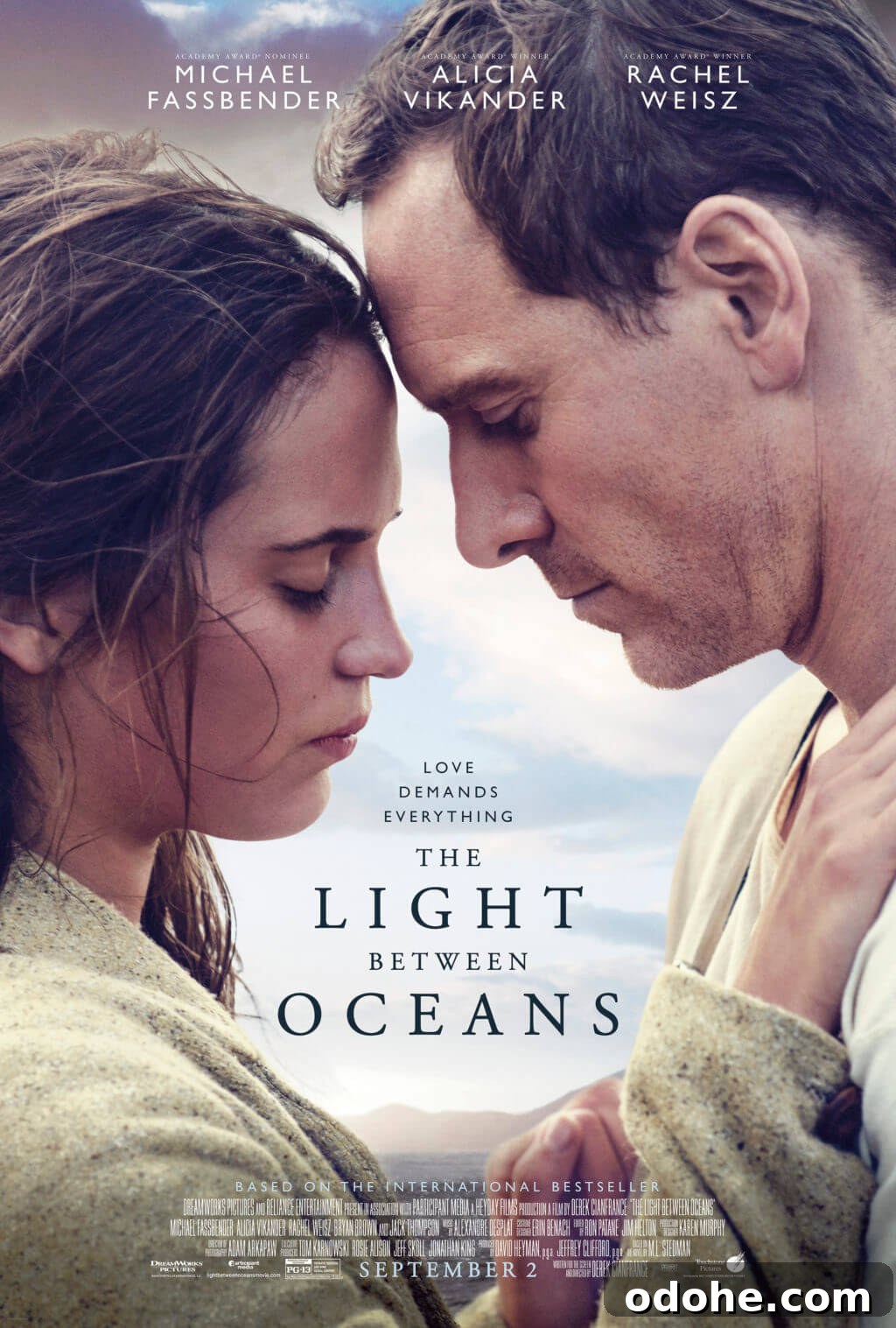
I attended a free screening to facilitate this review. All opinions are my own.
I tried to read the novel a few years ago but had to stop — as a mother, it felt too intense at the time. When I learned it was being adapted into a film, I became curious to see how the story translated to the screen.
The Light Between Oceans follows a childless couple living in isolation at a lighthouse on a remote island. After enduring multiple miscarriages, they discover a drifting boat containing a dead man and a living infant. Faced with despair and longing, they decide to raise the baby as their own instead of reporting the incident.
My husband and I reacted differently to the film. He appreciated its slow, contemplative rhythm and the ambiguous emotional notes at the end. The movie moves deliberately, favoring quiet moments and character development over rapid plot progression. I admired the performances and the atmosphere, but at times I found the pacing slow—there’s a long setup before the boat arrives. My husband, however, felt that the measured pace allowed the characters to be fully realized.
The film opens with Tom Sherbourne (Michael Fassbender) accepting a position as a lighthouse keeper, warned that it’s a lonely post. A World War I veteran, Tom carries visible trauma and a tendency toward solitude. He meets Isabel, whose warmth draws him back to life. Their courtship unfolds through letters, and they soon marry and settle on the island.
Isabel longs for a child, but after two miscarriages her grief is profound. When the boat with the infant appears, she persuades Tom that they should keep the baby and raise her as their own rather than reporting the discovery.
Years pass and the couple build a life with their daughter. During a trip to the mainland for the child’s christening, Tom learns crucial information about the baby’s origin. The revelation torments him and eventually drives him to an action that feels, to many viewers, deeply unforgivable. The moral complexity of his choice raises difficult questions about guilt, responsibility, and love.
Fassbender portrays Tom as quiet, brooding, and haunted; Alicia Vikander’s Isabel is luminous but often broken by grief. Their chemistry and restrained performances anchor the film, making its emotional stakes tangible.
Visually, the movie is striking. Cinematography emphasizes wide, desolate ocean views and the isolation of island life. The landscape becomes a character of its own, conveying both beauty and loneliness.
When the story’s secrets surface, the film’s emotional intensity ramps up. I found the final 20–30 minutes particularly moving and was in tears by the end. As a parent, many of the film’s themes resonated strongly.
Although the film’s slower pacing might make it feel more suited to television for some viewers, it raises thought-provoking moral dilemmas that make for compelling conversation. My husband and I spent our drive home debating the characters’ choices and weighing right against wrong. It’s an excellent pick for a date night if you enjoy movies that prompt discussion afterward.
Overall, The Light Between Oceans is a beautifully shot, emotionally powerful film that explores love, loss, and the complicated ethics of desperate decisions. Its deliberate tone won’t satisfy every viewer, but for those who appreciate character-driven drama and moral ambiguity, it’s worth watching.