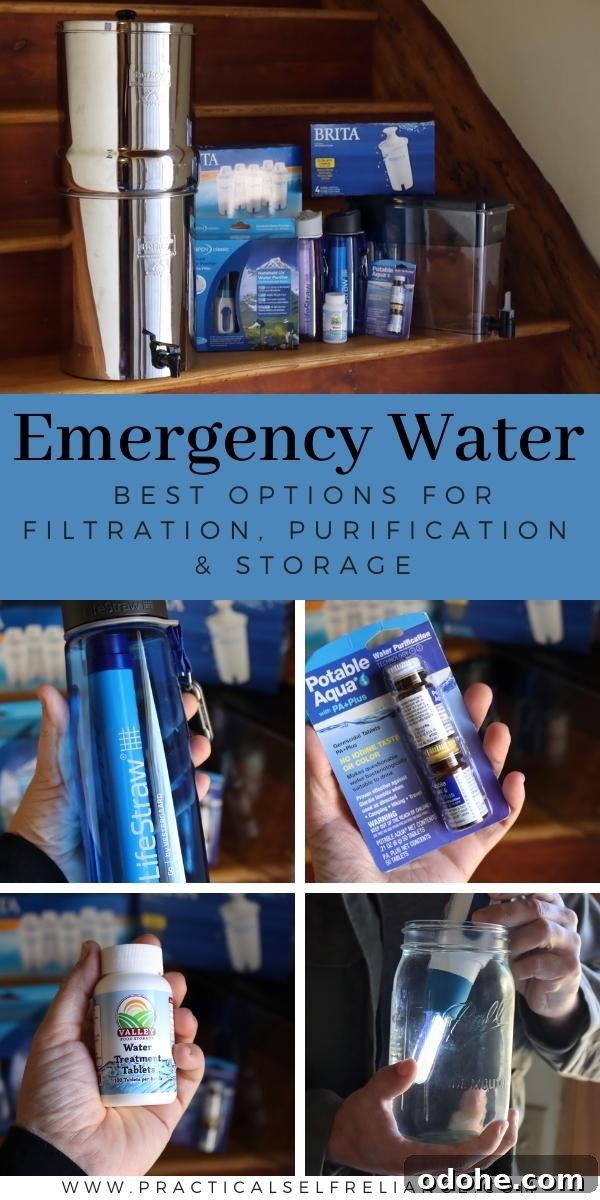
Access to clean, drinkable water during an emergency can be life-saving. While humans can survive weeks without food, lack of safe water causes severe problems within days — or hours in hot conditions.
In developed countries we often take potable water for granted — it flows from the tap on demand. Travel to places where tap water isn’t safe to drink quickly reminds you how valuable untreated water is. But what if an emergency cuts off reliable water services, or contamination forces a boil-water advisory?
Even outside of catastrophic events, everyday situations — a power outage that disables a well pump or a municipal contamination notice — can leave you needing a way to make water safe. There are many practical options for filtering and purifying water in emergencies. Below I outline the most reliable choices so you can choose what fits your family and circumstances.
Best Emergency Water Filtration & Purification Options
If you’re short on time, these are top choices for different needs:
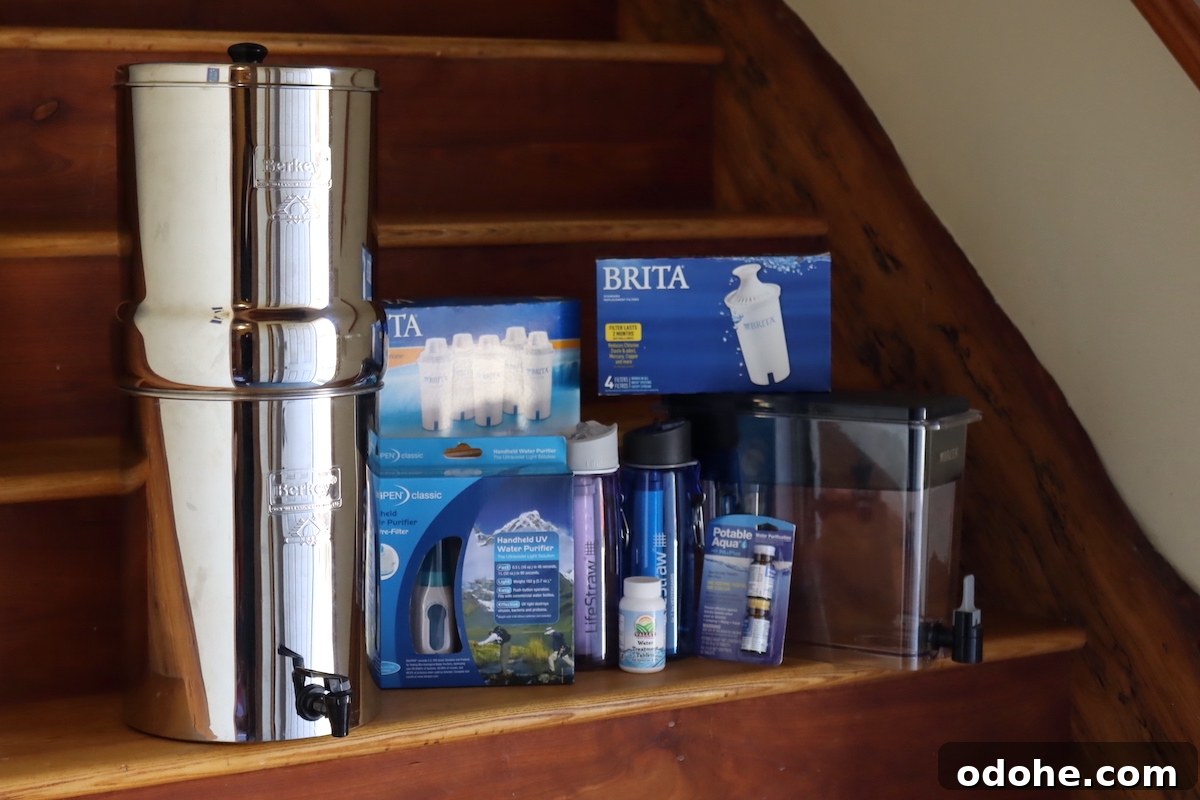
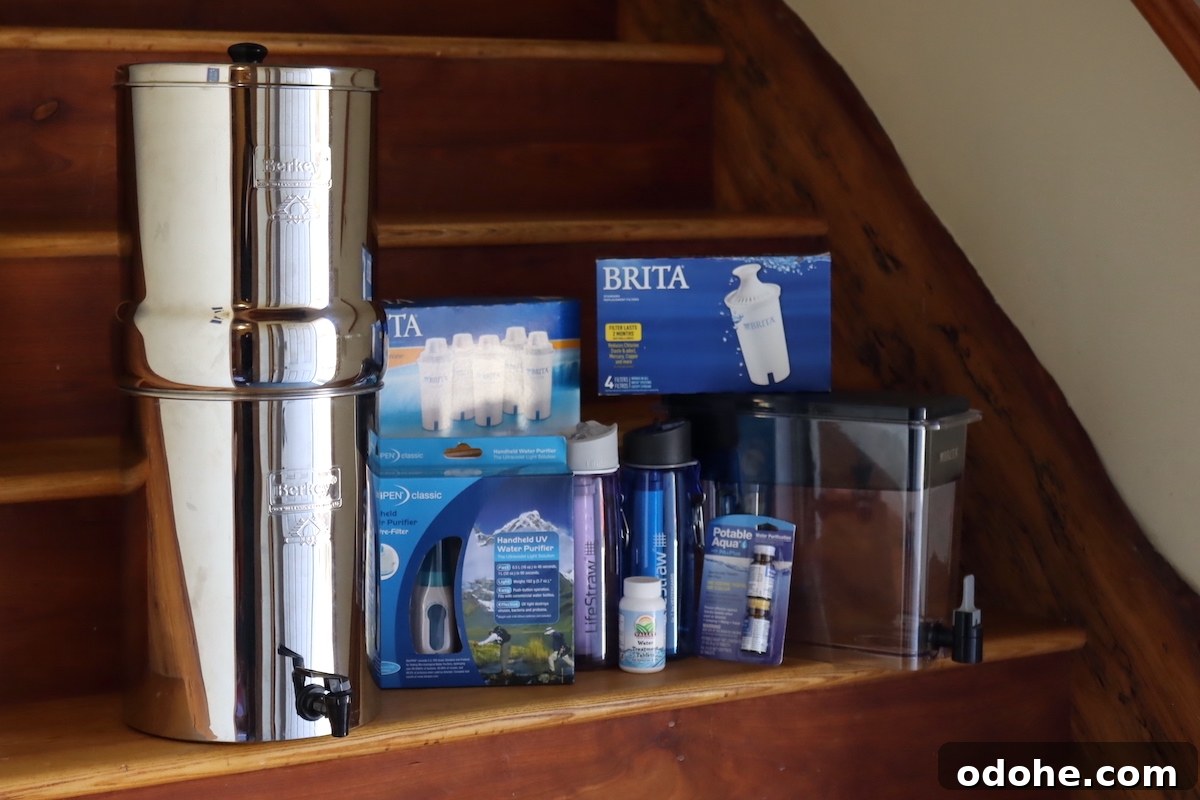
- Best at-home filter: Berkey Water Filters (filters and purifies) — reliable for home use and extended emergencies.
- Home backup option: Alexapure filters — similar performance and often more available.
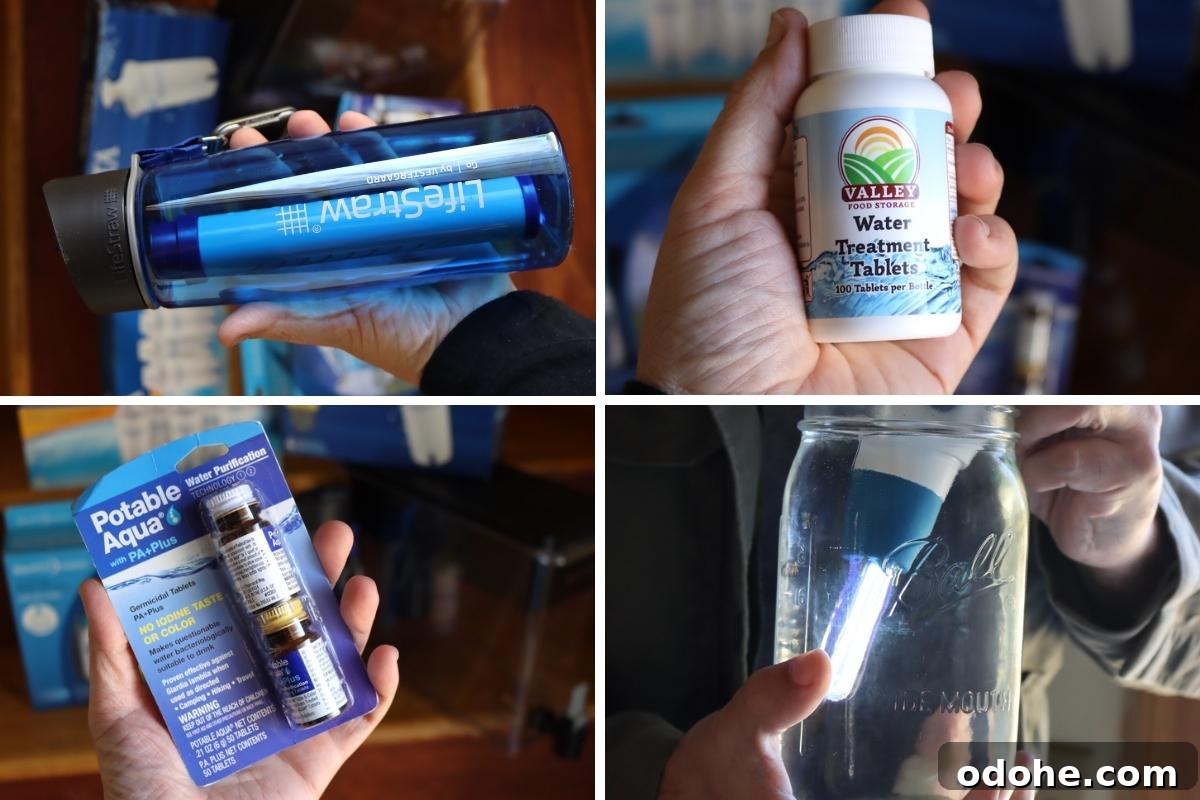
- Best drinking filter for hiking: Lifestraw Filter Bottle — portable and simple.
- Best portable filter for groups: Lifestraw Gravity Filter — filters multiple liters for groups or basecamp.
- Best dependable purification without filtration: Potable Aqua Plus with neutralizer tabs — chemical treatment for clear water.
- Best chemical-free purification: UV purification wand (Steripen) — fast and no aftertaste.
Emergency Water Filtration & Purification
Assume water is available but not safe to drink. That could be municipal tap water under a boil notice, rainwater, pond water, or stream water. Two broad categories of treatment exist: filtration and purification.
Filtration removes visible particles like silt and debris and, depending on the filter, can also remove bacteria and protozoa. Purification kills or inactivates biological threats — bacteria, viruses, and protozoa — and is used when water looks clear but may harbor invisible pathogens.
Emergency Water Filtration Options
Not all household filters qualify as emergency solutions. Simple charcoal pitchers improve taste but don’t reliably remove pathogens. For true emergency use, choose filters rated to remove bacteria, protozoa, and ideally viruses where necessary.
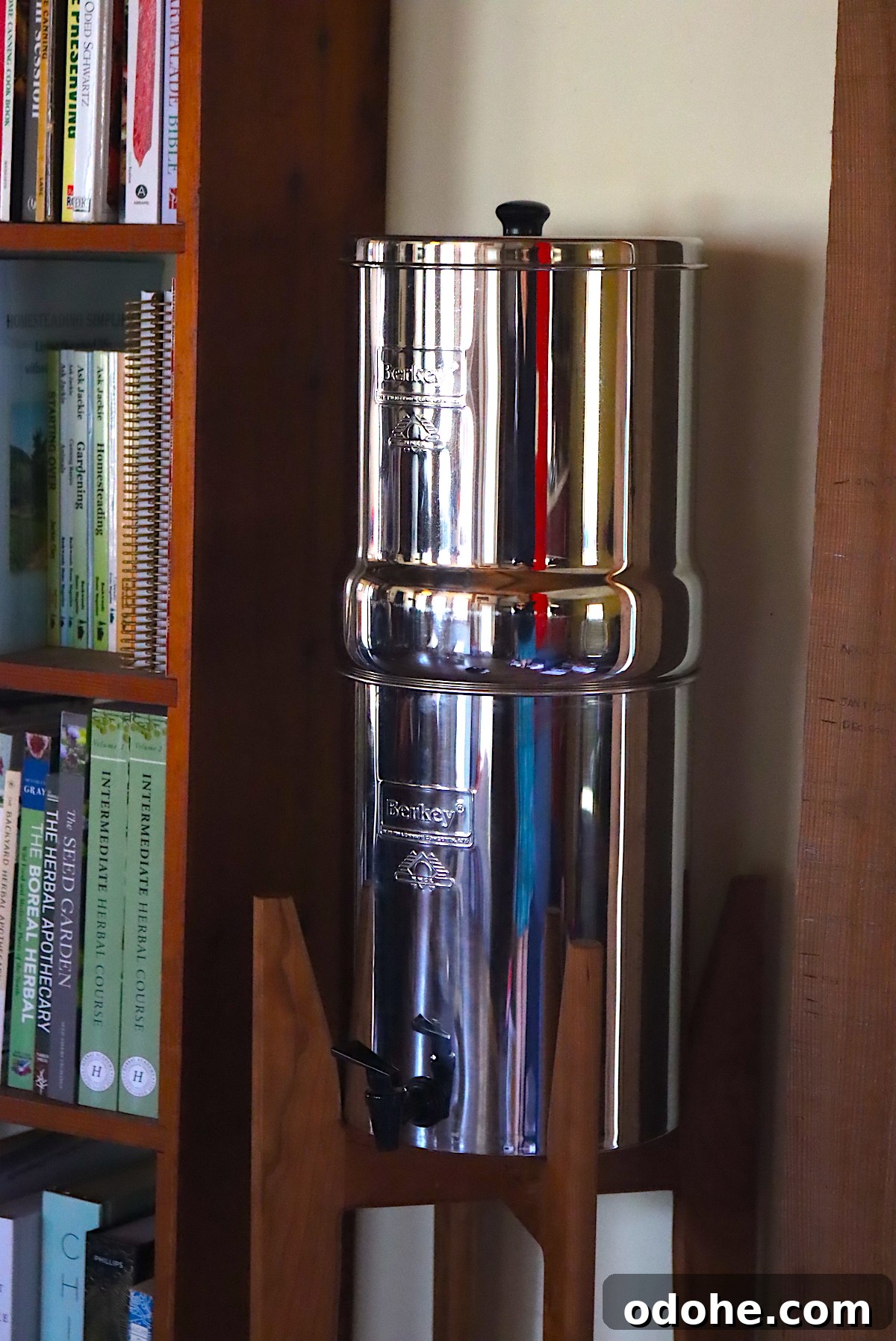
Berkey Water Filters
Berkey-style gravity filters are an excellent at-home choice. They remove sediment, heavy metals, and pathogenic bacteria, and many have proven performance in independent testing. They work well with well water, municipal water, rainwater, or surface water in an emergency.
Pros:
- Long-lasting elements rated to filter thousands of gallons depending on use.
- Cost-effective on a per-gallon basis over the filter’s life.
- Suitable for extended emergencies and can provide water for drinking, cooking, and washing.
Cons:
- Higher upfront cost than small portable filters.
- Designed mainly for home use; bulkier units are not ideal for backpacking.
Lifestraw Water Filters
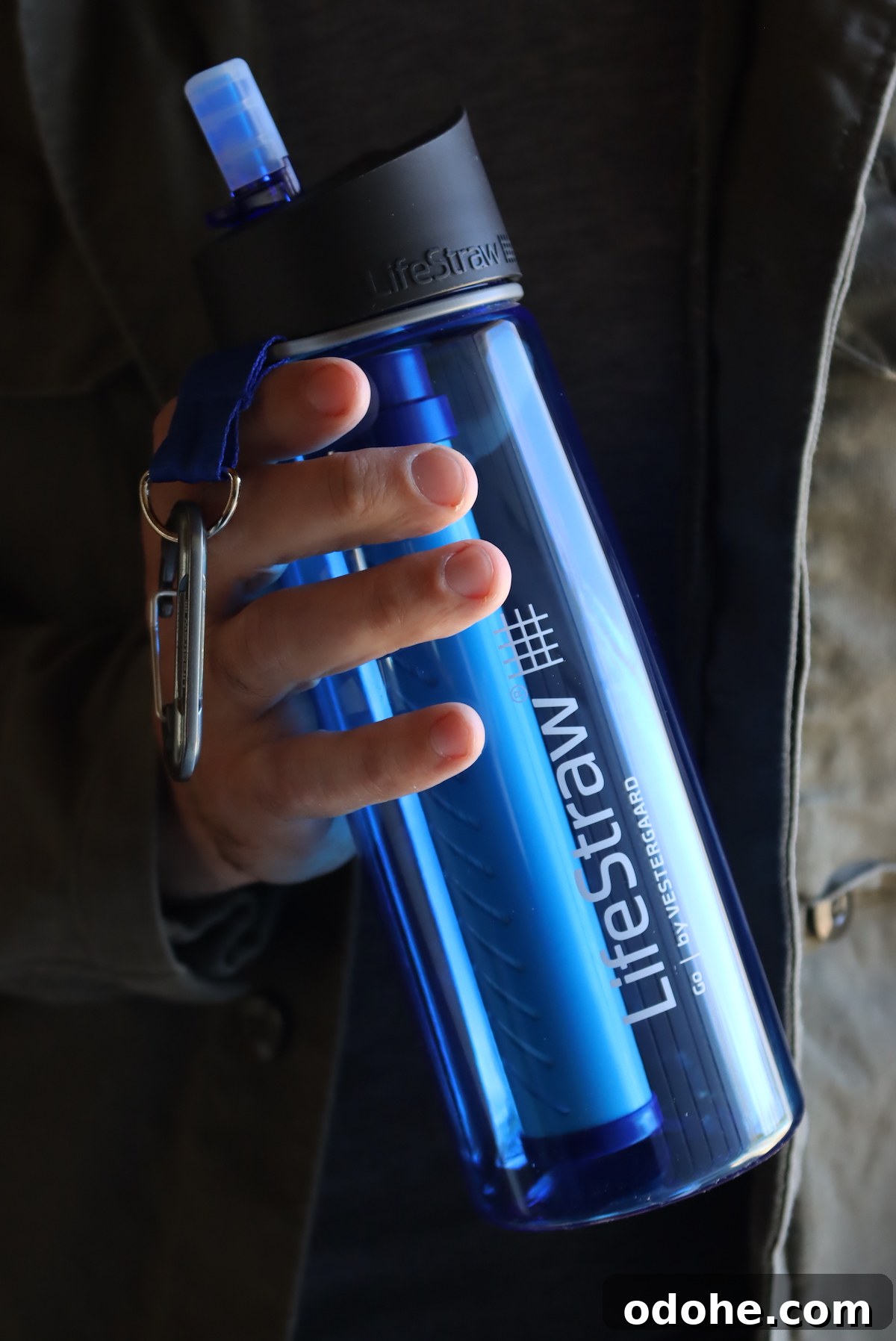
LifeStraw products are excellent portable filters. The simple straw models allow you to drink directly from streams, while bottles and gravity systems offer more versatility.
- LifeStraw Original: lightweight, single-person use, rated for dozens of gallons.
- LifeStraw Filter Bottle: bottle with built-in filter for carrying treated water.
- LifeStraw Gravity Filter: filled sack that filters into your container — good for groups and basecamp.
- LifeStraw Community Pitcher: larger capacity solution for groups.
Pros:
- Highly portable and suitable for hiking, travel, and emergency grab-and-go kits.
Cons:
- Many models are designed primarily for drinking; they are less useful for cooking, washing, or treating large volumes.
- Smaller filters have limited total capacity before replacement.
Water Purification
Purification is appropriate when water appears clear but may contain microbes, or when stored water has had time to grow contaminants. Purification methods include UV treatment, chemical disinfectants (iodine or chlorine dioxide), and boiling.
Some filtration systems, notably quality gravity filters, can both filter and purify water by removing particles and pathogen-sized organisms.
UV Wand
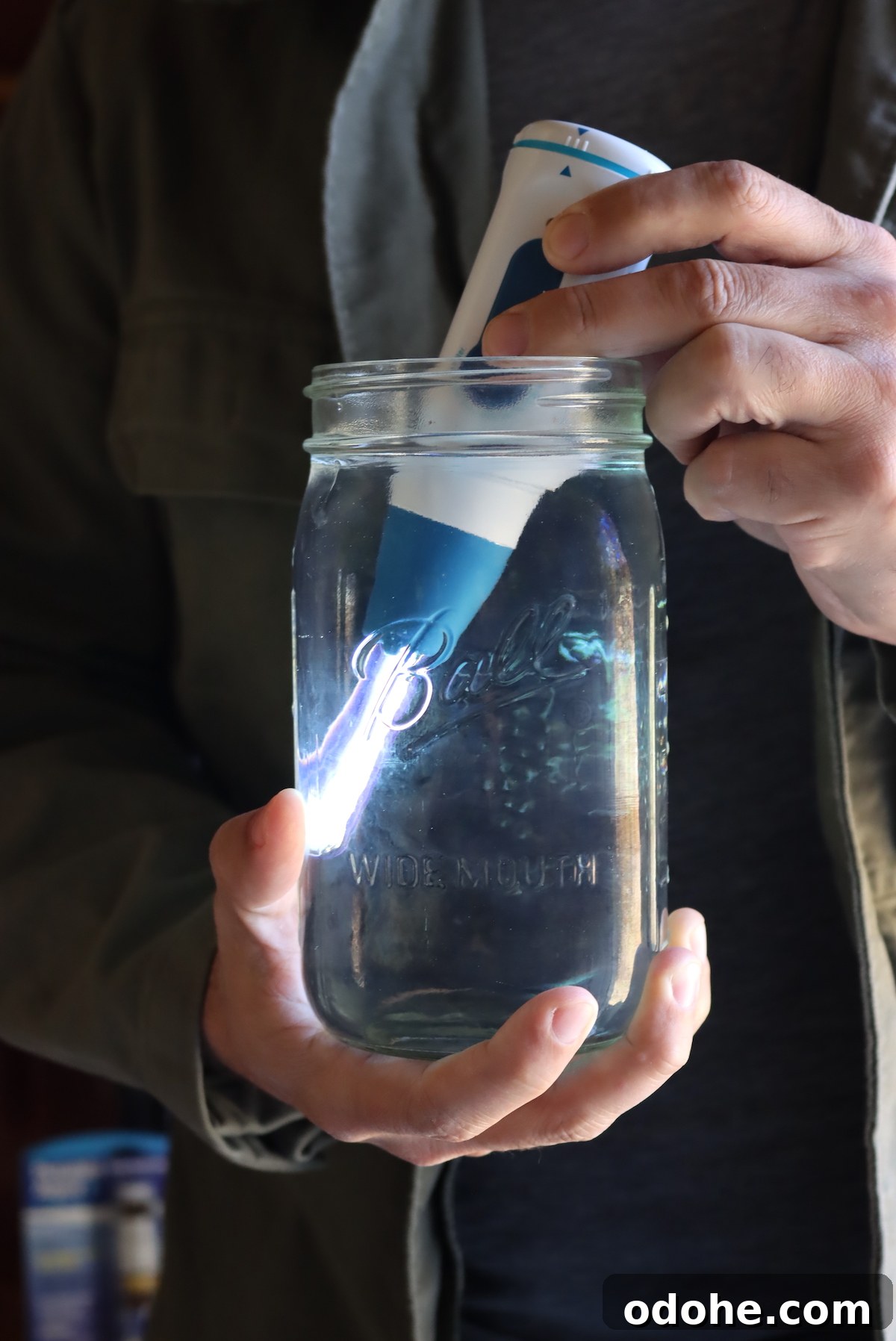
UV purification wands (like Steripen-style devices) deactivate pathogens with ultraviolet light. They work quickly, leave no chemical taste, and are ideal for treating small containers of clear water.
Pros:
- No chemical aftertaste.
- Fast — often under two minutes per liter.
- Simple to use for bottles and small jugs.
Cons:
- Requires batteries or recharge.
- Best suited to treating small quantities at a time and clear water (turbid water reduces effectiveness).
Iodine Tabs (Potable Aqua)
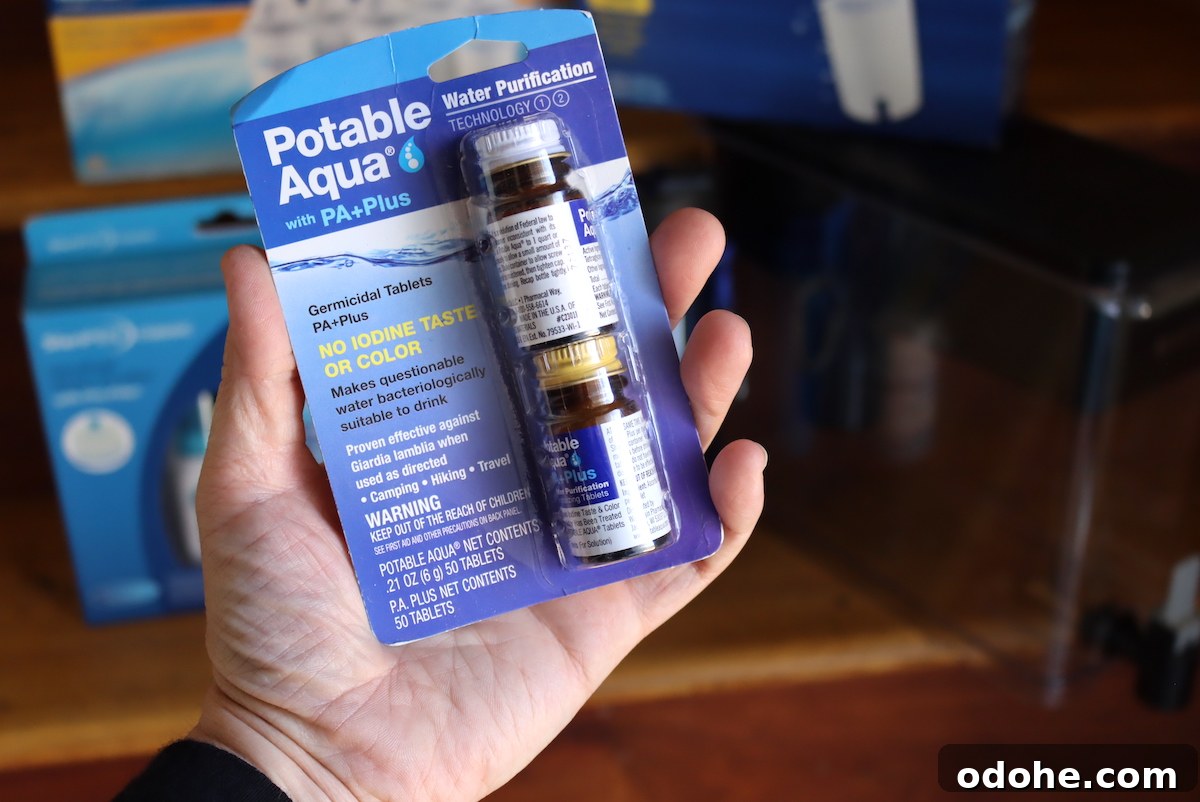
Iodine tablets are a proven, inexpensive purification method for small volumes. They work well for hikers and campers treating individual bottles, though they can impart a taste. Modern kits often include taste neutralizers to reduce flavor.
Pros:
- Affordable, lightweight, and portable.
- Effective against many pathogens when used as directed.
Cons:
- Leaves a chemical taste unless neutralized.
- Not ideal for treating large batches for cooking or washing.
Chlorine Tabs (Chlorine Dioxide)
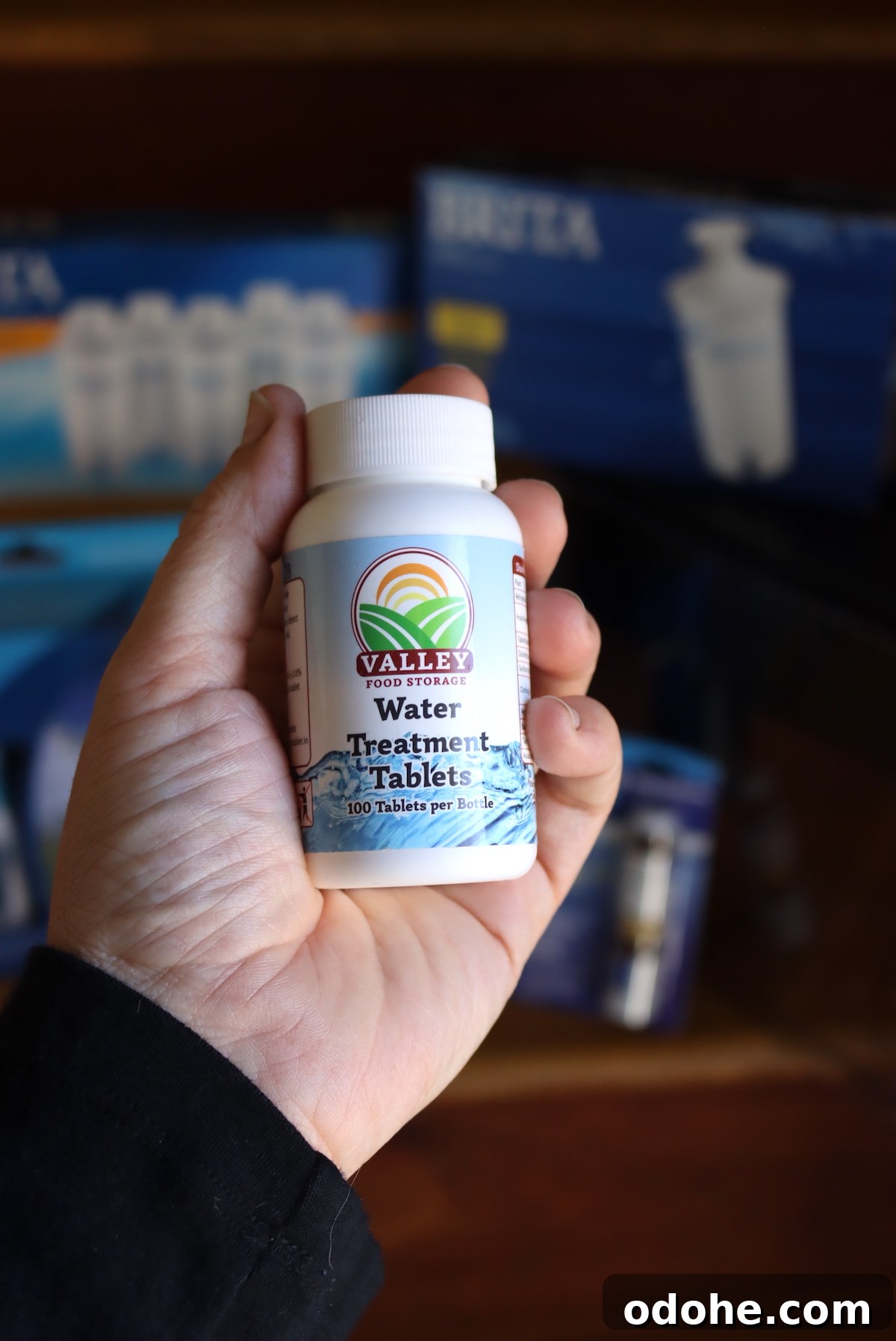
Chlorine dioxide tablets are excellent for stored water or larger batches. They disinfect effectively and, after adequate aeration, tend to leave less noticeable taste than iodine. Typical treatment times range from a few hours up to 24 hours depending on concentration and volume.
Pros:
- Inexpensive and easy to use for large containers and drums.
- Good for drinking, cooking, and washing when allowed to off-gas appropriately.
Cons:
- Requires waiting time (often many hours) and ventilation for the residual chlorine to dissipate.
Best Emergency Water Treatment Options
For most households, a Berkey-style gravity filter is the best all-around emergency solution: it provides high-capacity filtration and pathogen removal, supports cooking and washing needs, and is durable for extended outages. If you need a portable drinking solution for hiking or evacuation, Lifestraw bottles or personal filters are lightweight and effective.
If you already have access to clear surface water and only need to inactivate biological threats, consider a UV wand (fast and taste-free) or potable aqua/iodine tablets as a low-tech backup. For stored water in large containers or drums, use chlorine dioxide tablets to sanitize large volumes before use.
In arid regions where water access is the main concern, prioritize reliable storage solutions — 50-gallon food-grade drums or emergency water bladders can hold significant supplies. Keep chlorine purification tablets on hand to treat stored water when needed. For short-term emergency kits and vehicles, emergency water pouches are compact, long-lasting, and suitable for a few days of supply.
Preparedness Resources
Consider adding water treatment and storage solutions to your emergency plan. Choose options that match your likely scenarios — home outages, travel, camping, or regional hazards — and practice using them so you can act quickly when needed.