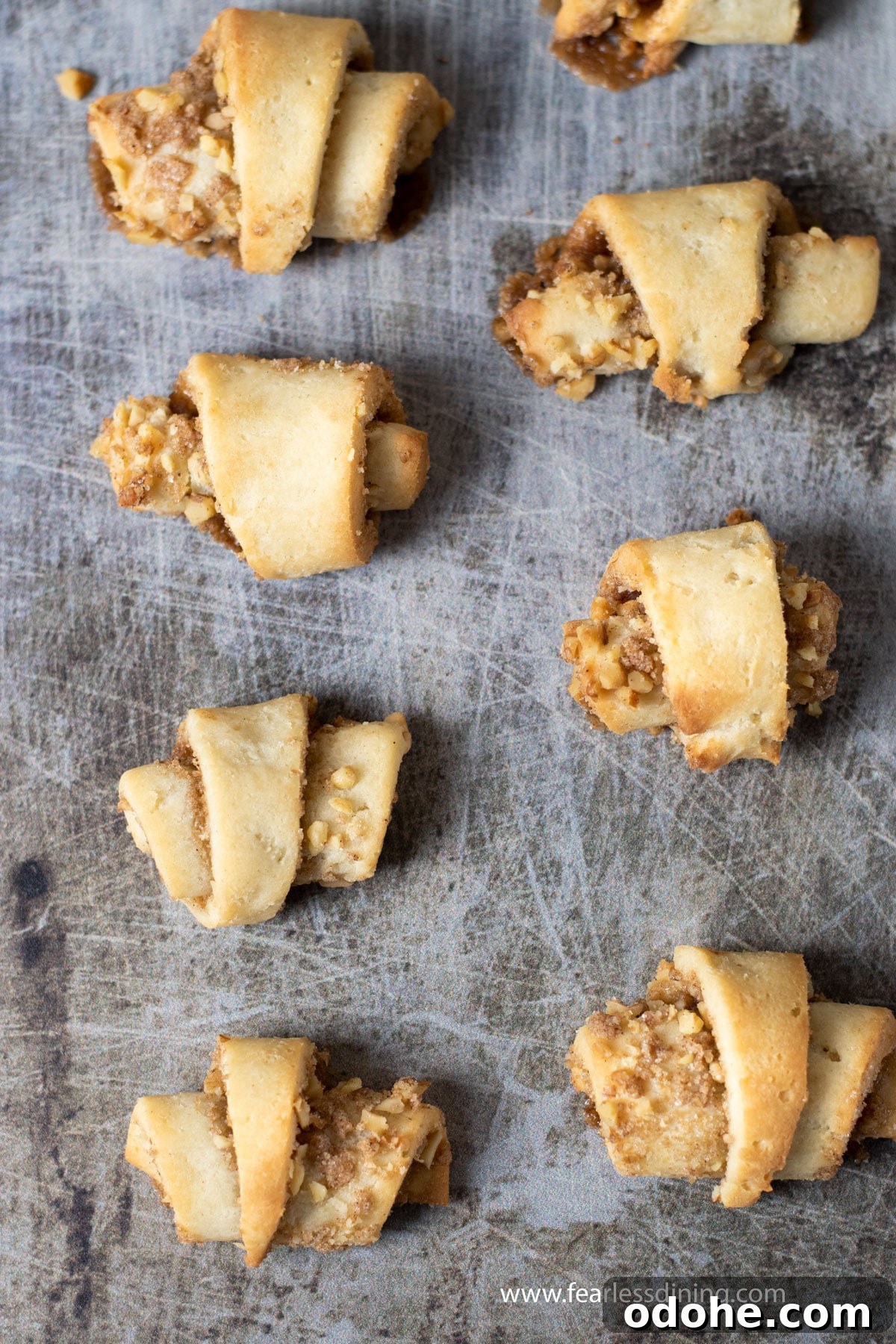
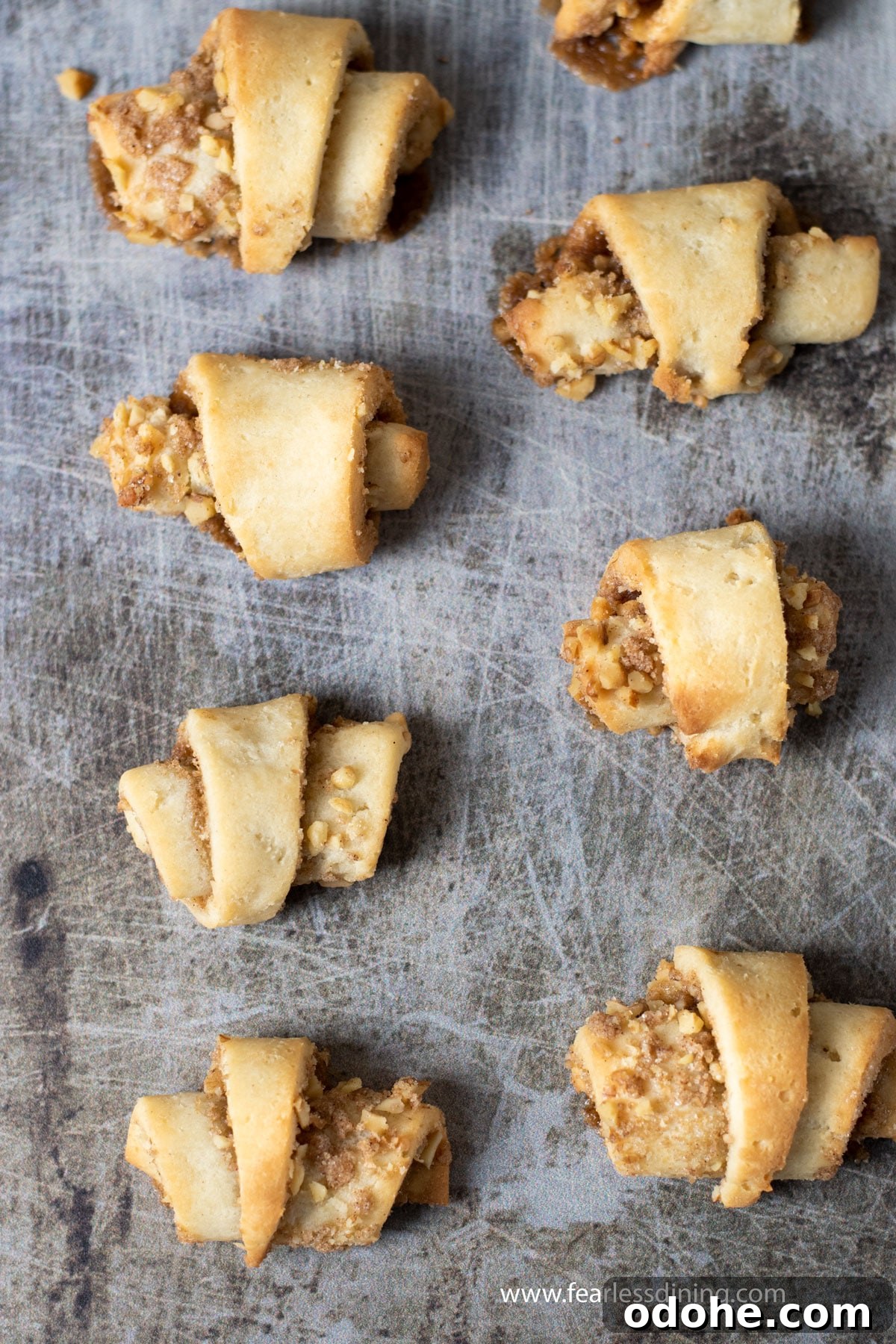
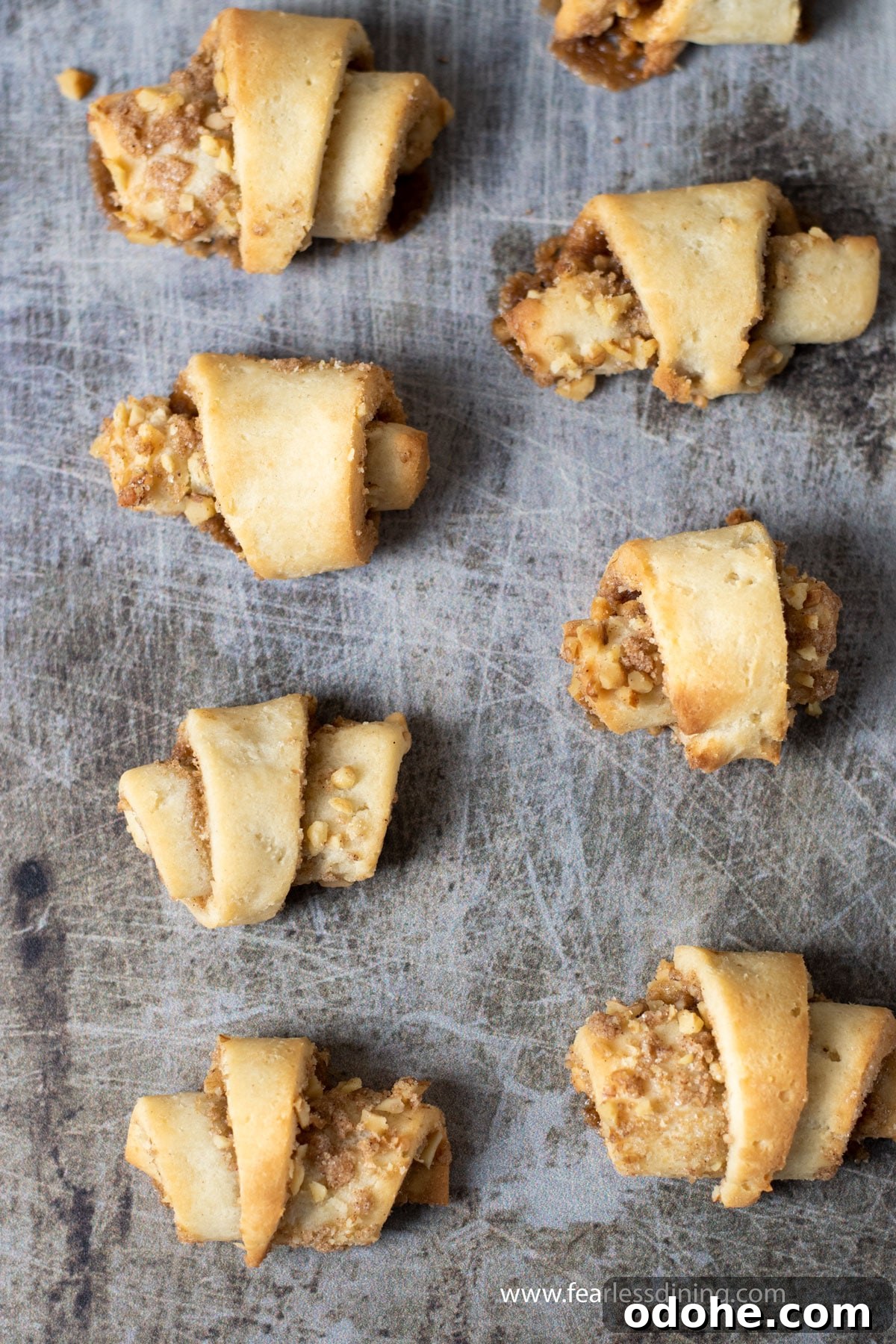
These gluten-free rugelach cookies feature a soft, cream cheese-based dough that rolls easily and bakes up flaky rather than dry or crumbly. The dough holds fillings well, whether you choose a classic cinnamon-nut mix, chocolate, or jam. If you’ve missed traditional rugelach since going gluten-free, this recipe recreates the expected texture and flavor.
❤️ Sandi’s Recipe Summary
The Quick Bite: This gluten-free rugelach dough rolls smoothly, holds fillings without leaking, and bakes without excessive spreading or cracking. Chill the dough, roll into wedges, and shape into crescents for a dependable gluten-free version of the classic pastry.
- Time: About 1½ hours including chill time.
- Method: Hand-rolled and baked in the oven.
- Tools: Mixing bowl, whisk, pizza wheel (or sharp knife), and a cookie sheet.
- Free From: gluten, soy, and oats. A dairy-free version is also possible.
- Best For: Hanukkah or anytime you want a tender, flaky cookie.
Mr. Fearless Dining’s grandmother made rugelach, and the combination of a flaky, buttery dough with a sweet filling makes these cookies special. We’re big cookie fans at Fearless Dining, and this recipe is one of our family favorites.
Rugelach is a traditional Jewish pastry commonly enjoyed during Hanukkah and winter holidays. This gluten-free version preserves the original’s spirit while making the recipe accessible to those avoiding gluten. I’ve tested the method multiple times so you get consistent results without the guesswork.

Ingredient Notes:
See the recipe card below for exact ingredient amounts.
- Gluten-Free Flour Blend – Use a reliable 1:1 blend. Different blends vary in starch-to-grain ratio; if the dough seems too wet or dry, adjust with small additions of flour or liquid.
- Sugar – Adds sweetness and helps the cookies brown.
- Binder – If your flour blend has no binder, add 1 teaspoon xanthan gum (or follow a psyllium-based blend for a gum-free option).
- Cream Cheese – Provides fat and moisture, making the dough pliable and less likely to crack when rolling. Use full-fat cream cheese at room temperature.
- Butter – Unsalted butter adds flavor and layers; soften to room temperature for smooth blending with cream cheese.
- Vanilla Extract – Use pure vanilla for the best flavor.
- Mix-ins such as chopped nuts, chocolate, or dried fruit enhance texture and flavor.
Substitutions:
- To avoid xanthan or guar gum, use a psyllium-based DIY gluten-free blend.
- Dairy-free: some readers have used plant-based butter and vegan cream cheese with success; results can vary by brand.
How to Make Gluten-Free Rugelach (Step-By-Step)
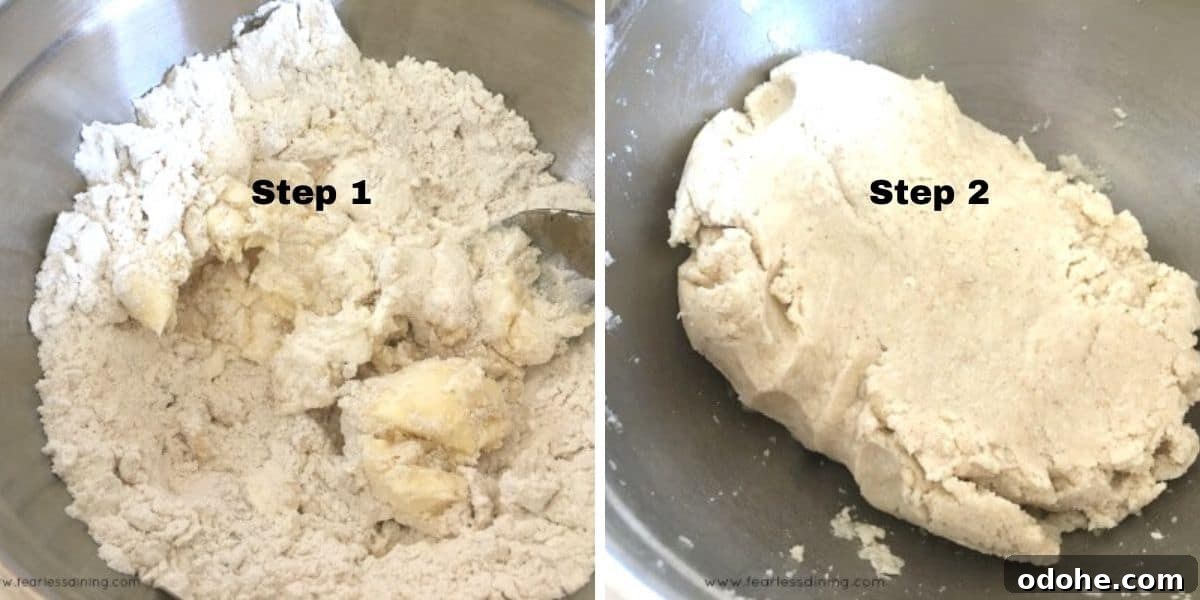
Step 1: Whisk the dry ingredients in a large bowl. In a separate bowl, beat softened cream cheese, softened butter, vanilla, and the initial wet ingredients until smooth. Combine wet and dry and mix until a soft, cohesive dough forms. Use a stand mixer or mix by hand.
Step 2: The dough should be pliable and not sticky; it should hold together when shaped.
📢 Sandi says: Every gluten-free flour blend behaves differently. If the dough is too wet, add a bit more flour; if too dry, add liquid a teaspoon at a time. Adjust to get the pictured dough consistency.
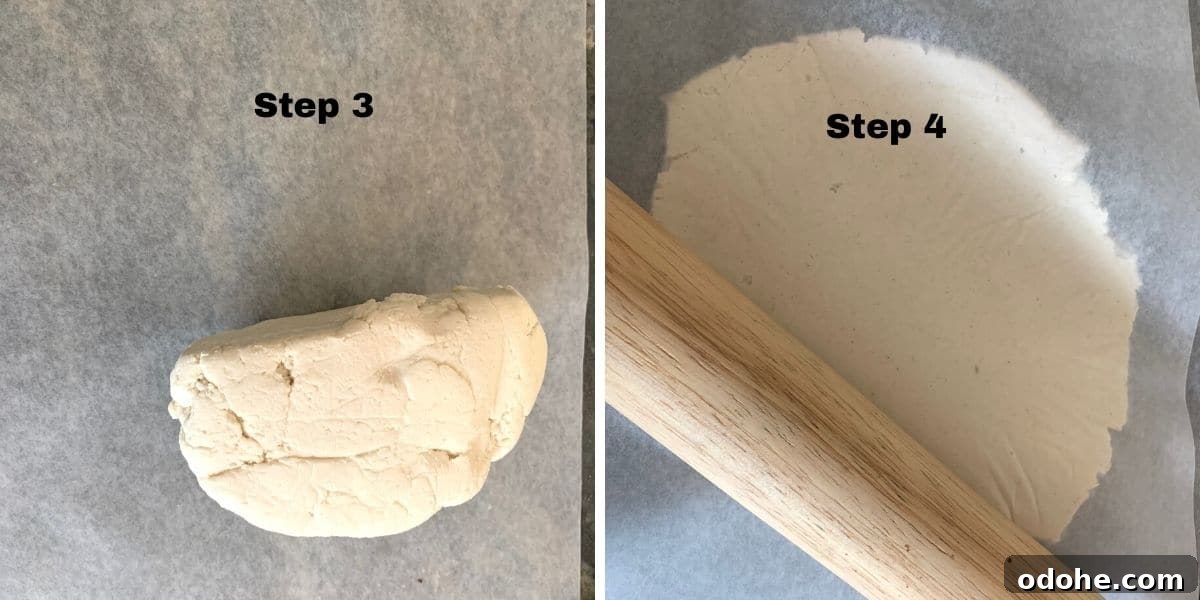
Step 3: Wrap the dough tightly in plastic and refrigerate for 45 minutes. Chilling firms the dough so it rolls without sticking or cracking.
Step 4: Place a dough ball between two sheets of wax paper and roll to about 1/4-inch thickness. Rolling between wax paper prevents sticking and avoids adding extra flour, which can dry gluten-free dough.
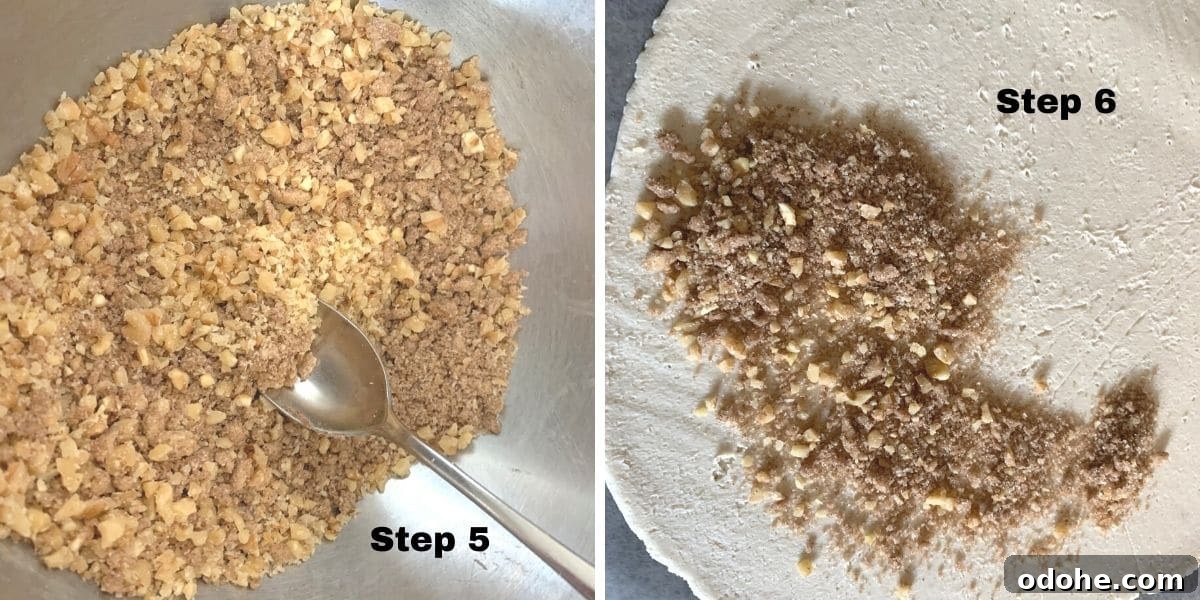
Step 5: Prepare the filling by finely chopping nuts or other mix-ins.
Step 6: Sprinkle the filling evenly over the rolled dough and press it lightly so it adheres.
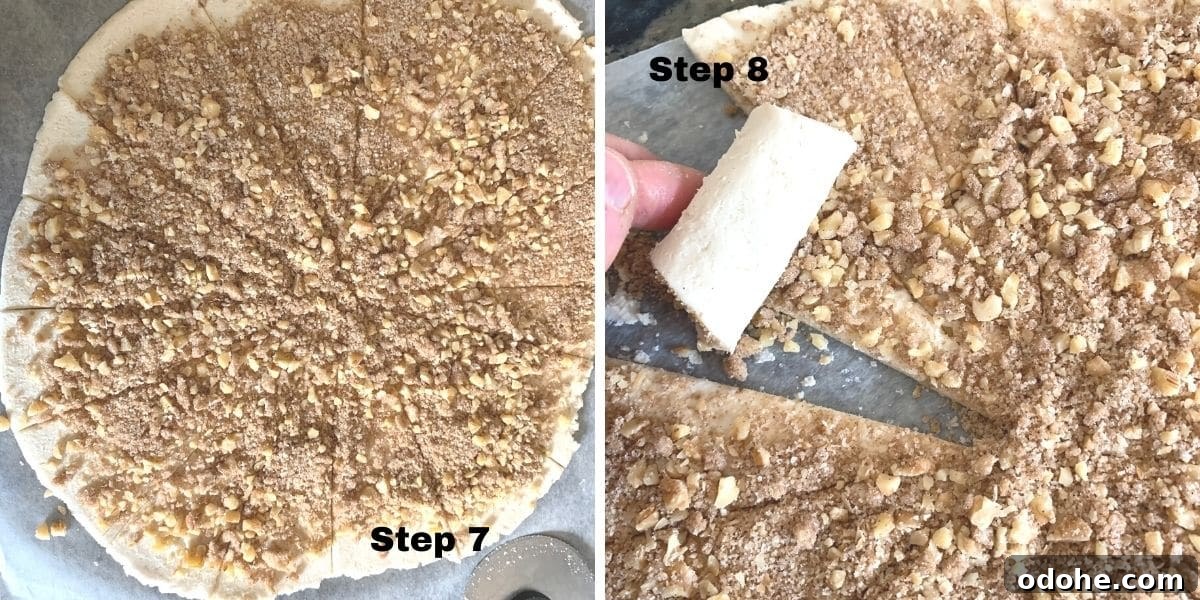
Step 7: Cut the circle into equal wedges using a sharp knife or pizza wheel.
Step 8: Starting at the wide edge of each wedge, roll toward the point to form crescents. Place each cookie seam-side down on a parchment-lined baking sheet. Use metal baking sheets for even baking rather than glass pans.
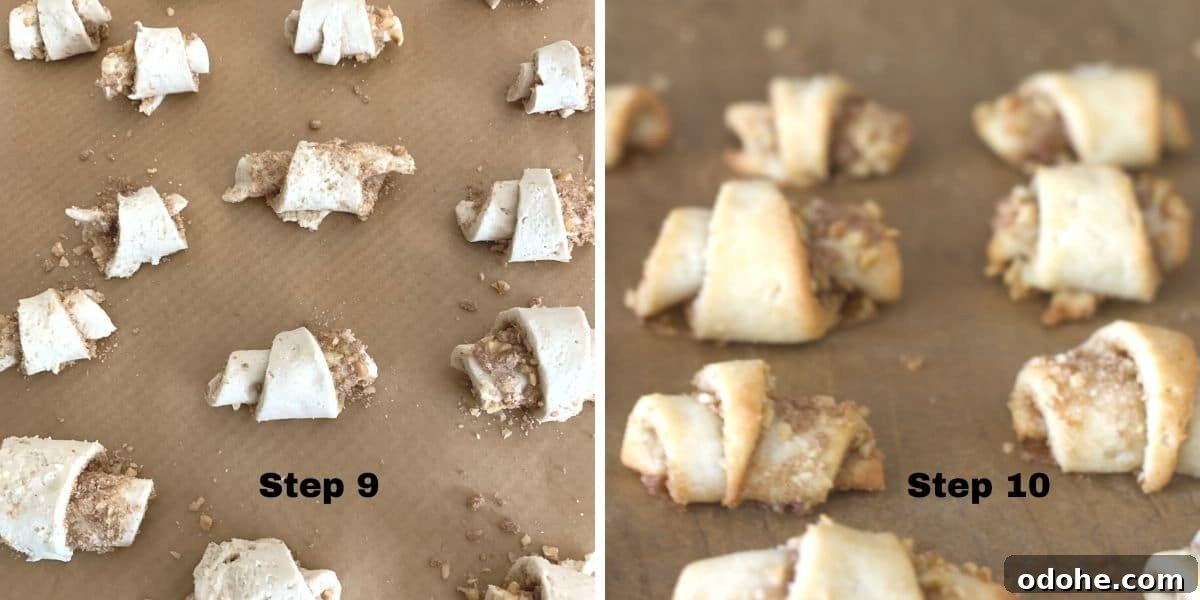
Step 9: Arrange the rugelach on the prepared baking sheet.
Step 10: Bake at 350°F (175°C) for 9–10 minutes, depending on the size of your rolls, until golden brown. Let cool slightly and dust with powdered sugar if desired.
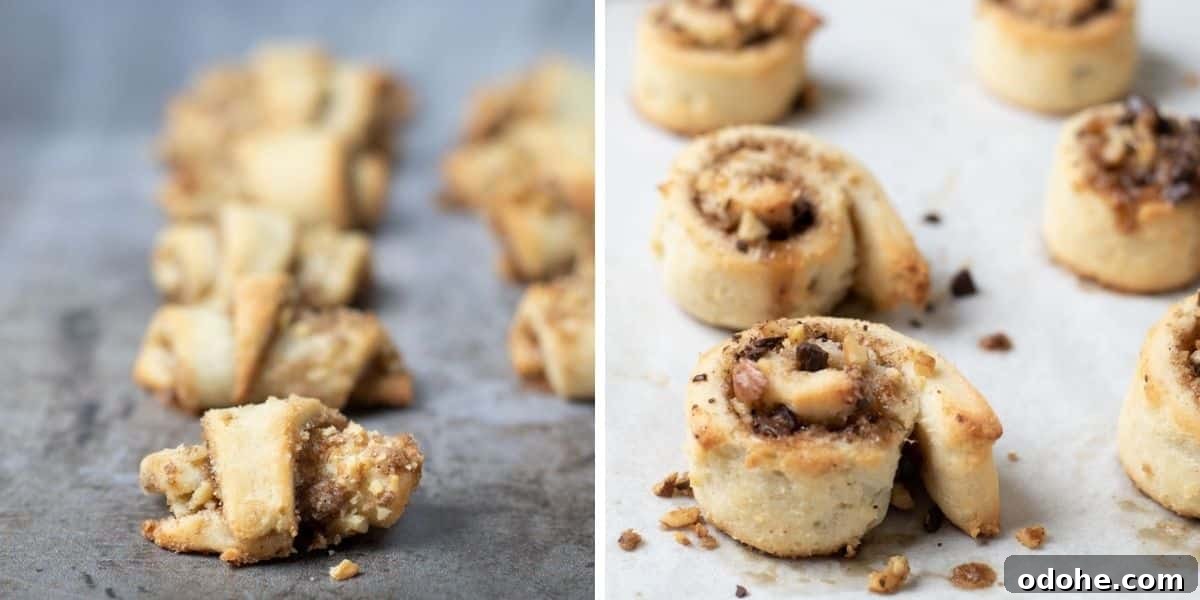
What kind of fillings can you use?
Rugelach can be filled with classic or inventive combinations. Popular choices include:
- Nutella or other chocolate spreads with chopped nuts.
- Chopped nuts (pecans, walnuts).
- Chocolate chips for a rich variation.
- Cinnamon-sugar for a cinnamon-roll–like cookie.
- Fruit jams such as strawberry, apricot, or orange marmalade—white chocolate pairs nicely with strawberry.
Why are my cookies flat or spread too much?
Flat cookies are a common issue. Check these points:
- Chill time: If the dough isn’t chilled enough, the butter can be too soft and cause spreading.
- Flour measurement: Use the spoon-and-level method—spoon flour into the cup and level with a knife instead of packing it.
- Flour blend differences: Some gluten-free blends absorb more or less liquid. If your dough is too loose, add a tablespoon of flour at a time to reach the right consistency.
Why do my gluten-free cookies taste gritty?
A gritty texture can come from rice flour that isn’t milled very fine. Letting cookie dough rest for 15 minutes before rolling allows the rice flour to soften and reduces grittiness.
Frequently Asked Questions:
Cracks usually mean the dough is too cold or a bit dry. Let it sit at room temperature for a few minutes, then gently pinch the cracks closed while rolling. Cream cheese dough seals easily with light pressure.
Store in an airtight container for up to 4 days at room temperature, or freeze for up to 4 months.
Yes. Freeze baked rugelach in a sealed freezer bag or airtight container. Thaw at room temperature before serving.
More Gluten-Free Cookie Recipes:
If you love baking gluten-free cookies, here are some other recipes to try from the Fearless Dining collection.
- Gluten Free Rum Raisin Cookies
- Gluten Free Chocolate Chip Cookies
- Easy Gluten Free Oatmeal Raisin Cookies
- Israeli Honey Cookies
Gluten-Free Rugelach (Cream Cheese Dough That Rolls Easily!)
Ingredients
- ½ cup unsalted butter softened
- ½ cup cream cheese softened
- 1 teaspoon pure vanilla extract
- 1 ¾ cup gluten free flour blend * see note
- 2 tablespoons sugar
- dash salt
- ¼ cup + 2–3 tablespoons water (add extra tablespoons gradually until dough forms)
- ¼ cup finely chopped walnuts
- ¼ cup cane sugar
- 1 teaspoon ground cinnamon
Equipment
- Stand mixer (optional)
- Silicone mat or wax paper
- Cookie sheet and parchment paper
- Pizza wheel or sharp knife
Method
- Preheat the oven to 350ºF (175ºC).
- In a large bowl, whisk together 2 tablespoons sugar, 1¾ cups gluten-free flour blend, and a dash of salt.
- In another bowl, beat ½ cup softened cream cheese, ½ cup softened unsalted butter, ¼ cup water (reserve extra 2–3 tbsp), and 1 teaspoon vanilla until smooth.
- Add the wet ingredients to the dry and mix. Add extra water one tablespoon at a time until a soft dough forms. Refrigerate for 45 minutes.
- Divide dough in half. Place one piece between wax paper sheets, shape into a disk, and roll to 1/4-inch thickness.
- Spread the filling (¼ cup chopped walnuts, ¼ cup cane sugar, 1 teaspoon cinnamon) or your preferred mix-ins over the dough.
- Cut into thin wedges with a pizza wheel or knife, then roll each wedge from the wide end to the point to form crescents. Pinch any cracks closed.
- Place rugelach seam-side down on a parchment-lined baking sheet and repeat with the second disk of dough.
- Bake for about 10 minutes, until golden. Let cool before serving.
Notes
- I tested this recipe with a few popular 1:1 gluten-free blends; other blends may work but can require adjustments.
- If your blend lacks xanthan or guar gum, add 1 teaspoon to the dry ingredients.
- If the dough cracks while rolling, let it relax briefly at room temperature and pinch the cracks closed before continuing.
- Store baked rugelach up to 4 days at room temperature in an airtight container or freeze up to 4 months.