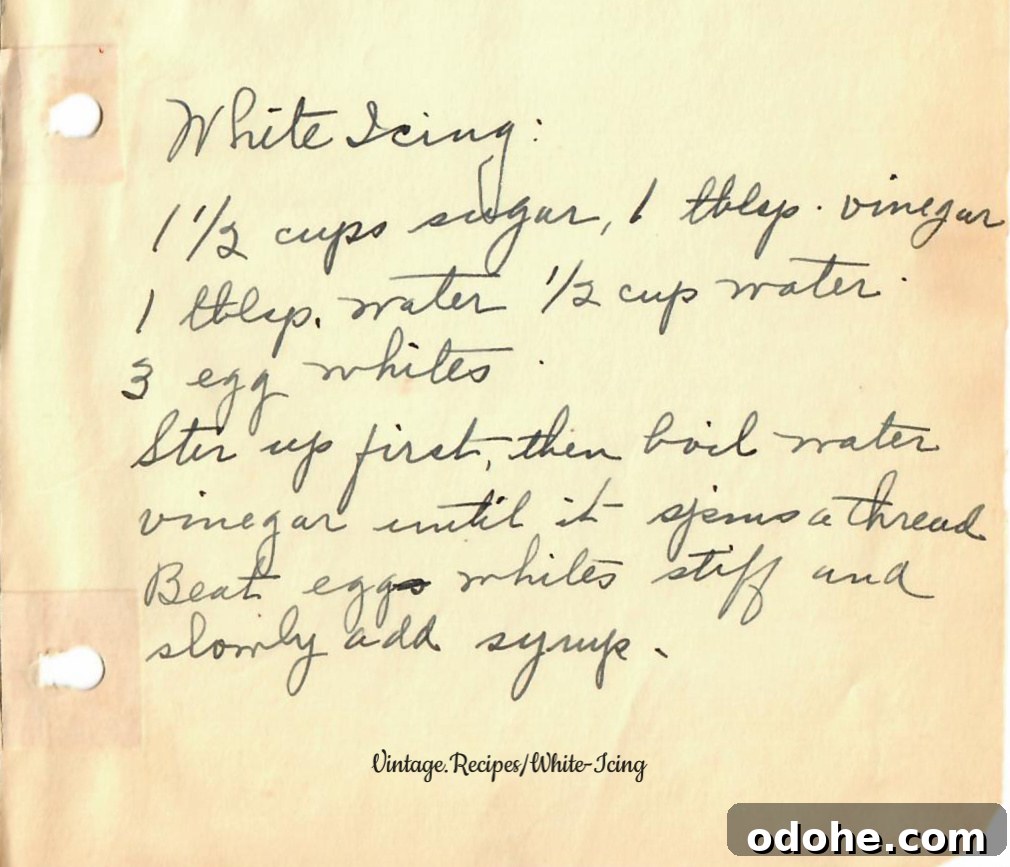
Ingredients
1 1/2 cups sugar
1 tablespoon vinegar
1 tablespoon water (for the syrup)
1/2 cup water (for the syrup)
3 egg whites
Method
This recipe produces a glossy, stable meringue using a simple sugar syrup. Begin by combining the sugar, vinegar, and both measures of water in a small saucepan. Stir the mixture briefly to dissolve any sugar crystals, then set the pan over medium heat. Allow the syrup to come to a gentle boil without stirring, and cook until it reaches the “thread” stage: when a small amount of syrup pulled between two spoons forms a thin, continuous thread. This indicates the syrup has concentrated enough to stabilize the egg whites.
While the syrup is heating, separate the eggs and place the three egg whites in a clean, dry mixing bowl. Make sure no yolk contaminates the whites and that the bowl and beaters are free of grease—any fat will prevent proper whipping. Beat the egg whites on medium speed until they form firm, glossy peaks.
Once the syrup reaches the thread stage, remove it from the heat. With the mixer running on low to medium speed, slowly and carefully pour the hot syrup in a thin, steady stream into the whipped egg whites. Continue beating as you add the syrup so it incorporates gradually; this tempering step prevents the eggs from cooking and helps create a smooth, satiny meringue.
After all the syrup has been added, increase the mixer speed and beat the mixture until it cools slightly and becomes thick and shiny. The finished meringue should hold its shape well and have a smooth texture. Use it immediately for topping pies, piping onto baking sheets for baked meringues, or folding into other desserts that call for stabilized whipped egg whites.
Tips for success: use room-temperature egg whites for easier whipping; avoid getting any traces of yolk or liquid into the whites; add the syrup slowly to prevent curdling; and be careful when handling the hot syrup to avoid burns. If you plan to bake the meringue, preheat the oven and follow the specific recipe directions for time and temperature, since those will vary depending on the intended application.