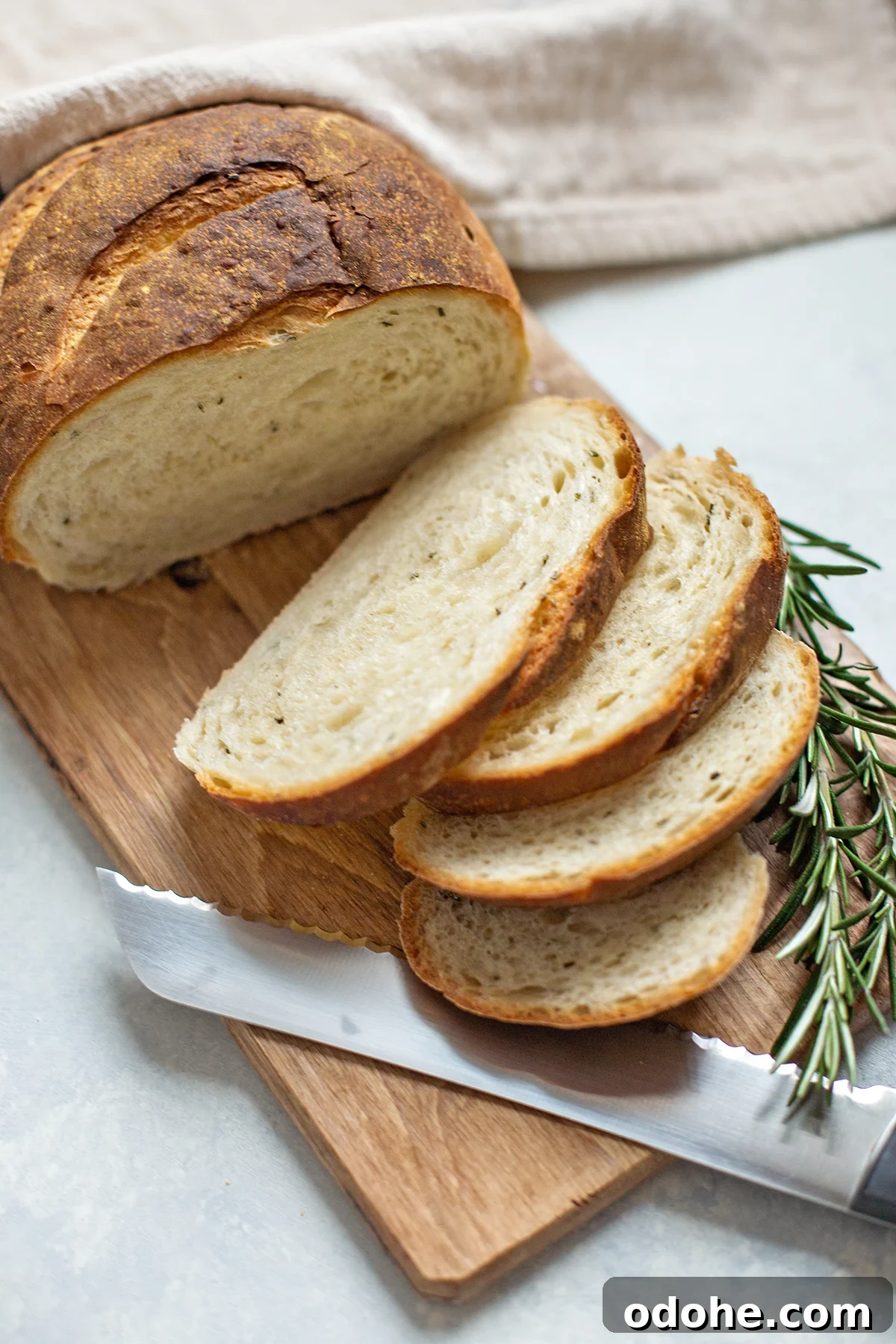
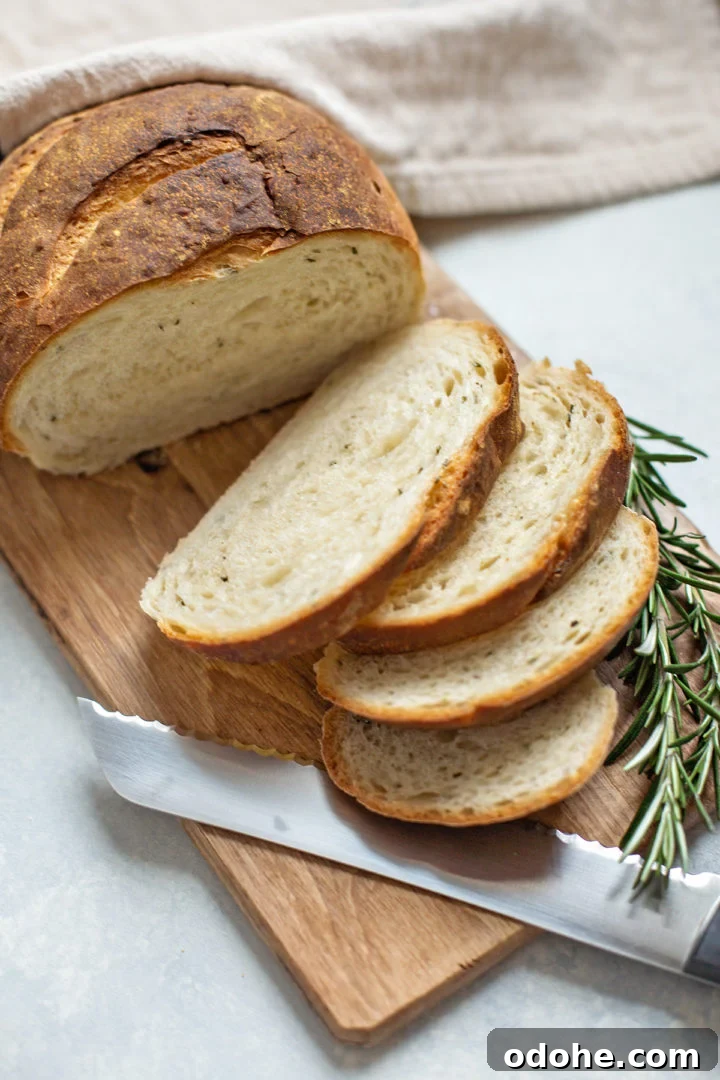
This Rosemary Garlic Bread is a rustic artisan-style loaf that’s simple to make. Read on for an easy method, tips to get the best rosemary bread, and ideas for serving.
This post may include affiliate links. As an Amazon Associate and participant in other affiliate programs, I earn a small commission from qualifying purchases.
Creating this Recipe for Rosemary Garlic Bread
I wanted something special for sandwiches one evening and ended up making open-face roasted vegetable sandwiches on a rustic rosemary garlic loaf. The bread is inspired by rosemary focaccia and adapted from a simple rustic white bread, producing a fragrant, crusty loaf perfect for sandwiches, dipping, or serving alongside soup.
This recipe blends all-purpose and whole wheat elements, letting you enjoy the flavor of fresh rosemary and garlic while getting a little extra nutrition. It also works well whether you mix by hand, use a stand mixer, or a food processor with a dough blade.
Making this Rosemary Garlic Bread
I tested the dough in a food processor as well as a stand mixer. The food processor handled the dough gently when fitted with a plastic dough blade, and cleanup was straightforward enough. If you prefer to knead by hand, the recipe and timings still apply — just knead until the dough is smooth and elastic.
Tools to Make this Delicious Bread
Helpful tools for making this garlic and rosemary bread:
- Measuring cups and spoons or a kitchen scale
- Large glass measuring cup or a 4–8 cup bowl for proofing yeast
- Whisk to combine the yeast mixture
- Stand mixer with paddle and dough hook (or a food processor or your hands)
- Silicone spatula to scrape the bowl
- Large mixing bowl for the first rise
- Silicone pastry mat or lightly floured surface for shaping
- Sharp knife or bread lame to score the loaves
- Rimmed baking sheet or pizza stone for baking
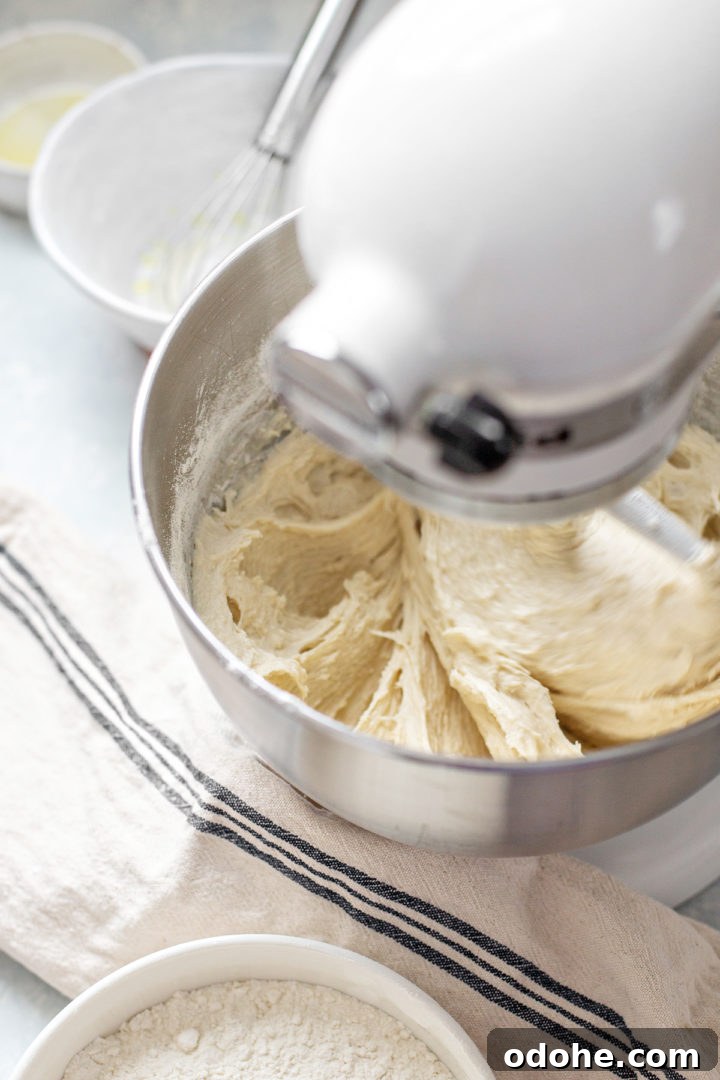
Ingredients in this Recipe for Rosemary Garlic Bread
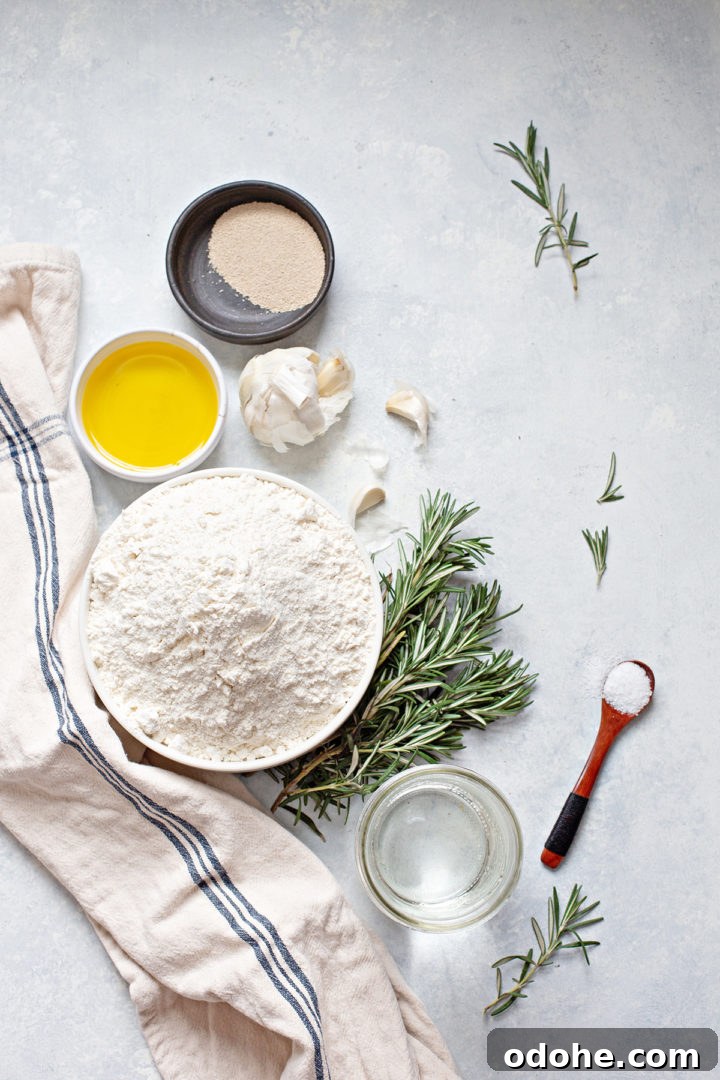
This free-form rustic bread is great as a snack, with soup, or for sandwiches. It combines all-purpose flour with some whole wheat for added texture and nutrition.
- Warm water
- Olive oil
- Active dry yeast
- All-purpose flour (with optional portion of whole wheat)
- Garlic cloves, minced
- Fresh rosemary, chopped
- Sea salt
- Cornmeal for the pans
For exact quantities and step-by-step measurements, see the printable recipe card included below in the recipe section.
Ingredient Substitutes
Substitutions work, but avoid changing multiple ingredients at once when trying a new recipe. If you want to swap flour, keep substitutions to one change at a time so you can assess results. See the FAQ for common substitutions like whole wheat or other fresh herbs.
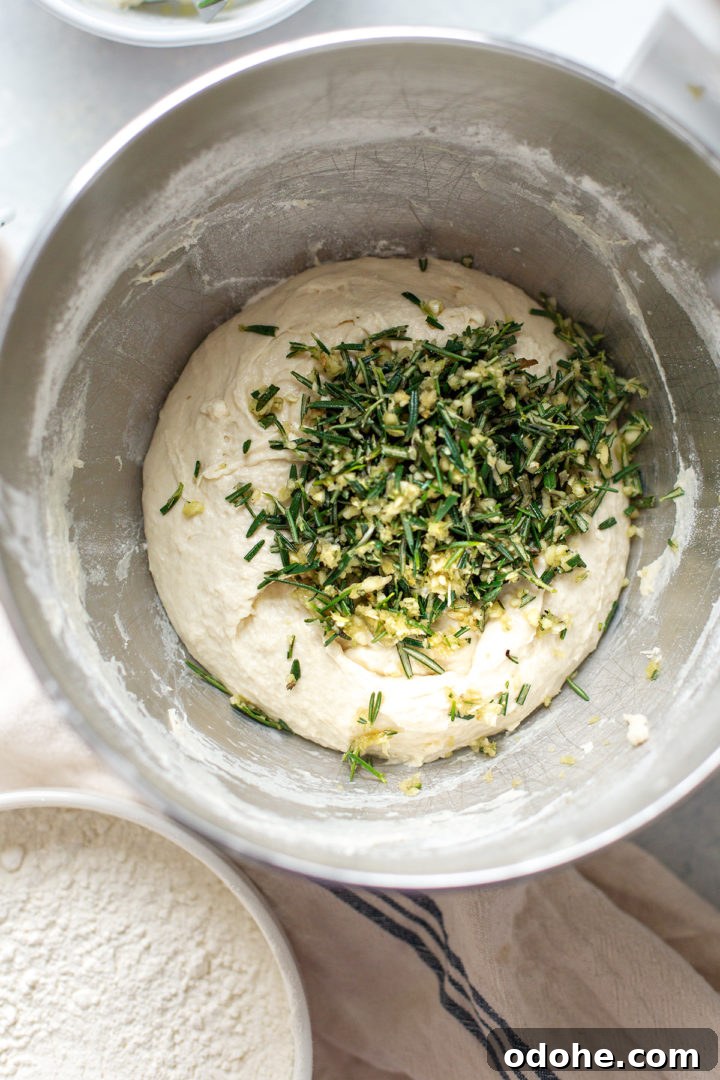
How to Make Rosemary Garlic Bread
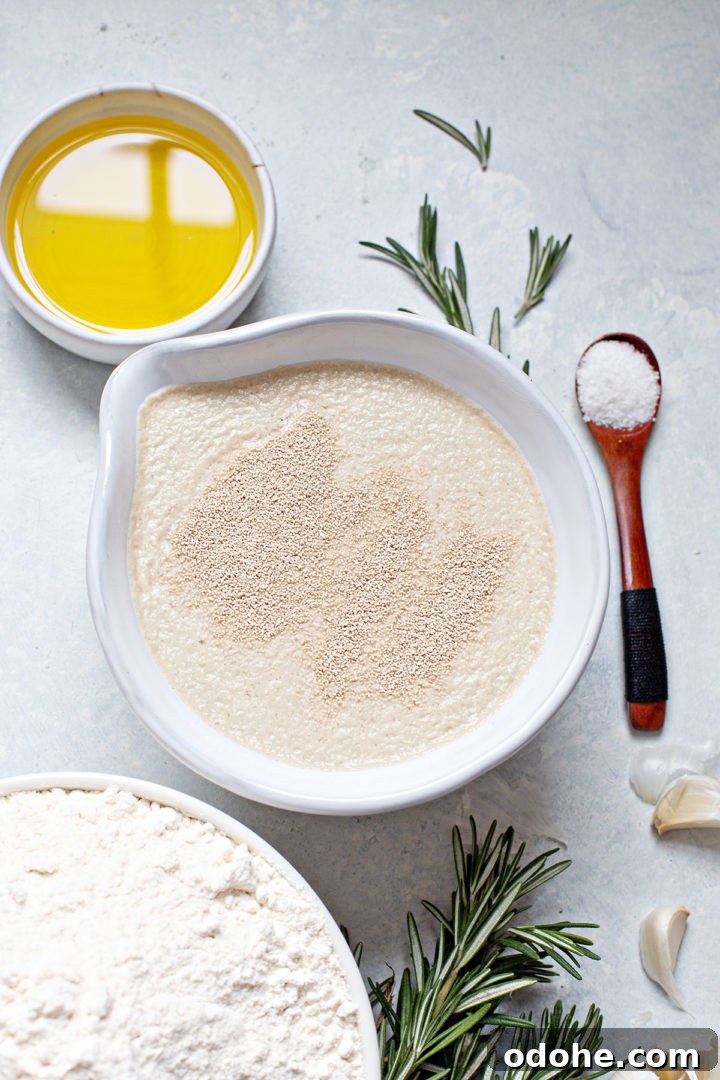
- Proof the yeast: add warm water to a small bowl, sprinkle yeast on top. Once dissolved, whisk in the olive oil.
- In a stand mixer fitted with the paddle, add the yeast mixture and about half of the flour while mixing on low. Add the garlic, rosemary, and salt.
- Scrape the bowl, switch to the dough hook, then add remaining flour 1/4 cup at a time while kneading on medium-low.
- Knead until the dough is smooth, elastic, and slightly tacky but not sticky.
- Place the dough in an oiled bowl, turn to coat the top, cover, and let rise at room temperature until doubled.
- Punch down the dough and transfer to a floured surface. Divide into two pieces, shape each into a loaf and place on a cornmeal-dusted sheet for the second rise.
- Preheat the oven to 500°F (260°C). Score the loaves with diagonal slashes, transfer to a hot baking stone or sheet, then lower the oven to 450°F (232°C).
- After 20 minutes, reduce heat to 350°F (177°C) and bake until the loaves are golden and the internal temperature reaches 200–210°F (93–99°C).
- Cool on a rack before slicing to ensure the crumb sets and the interior isn’t gummy.
This summary covers the main steps. For precise quantities and timings, follow the full printable recipe card below.
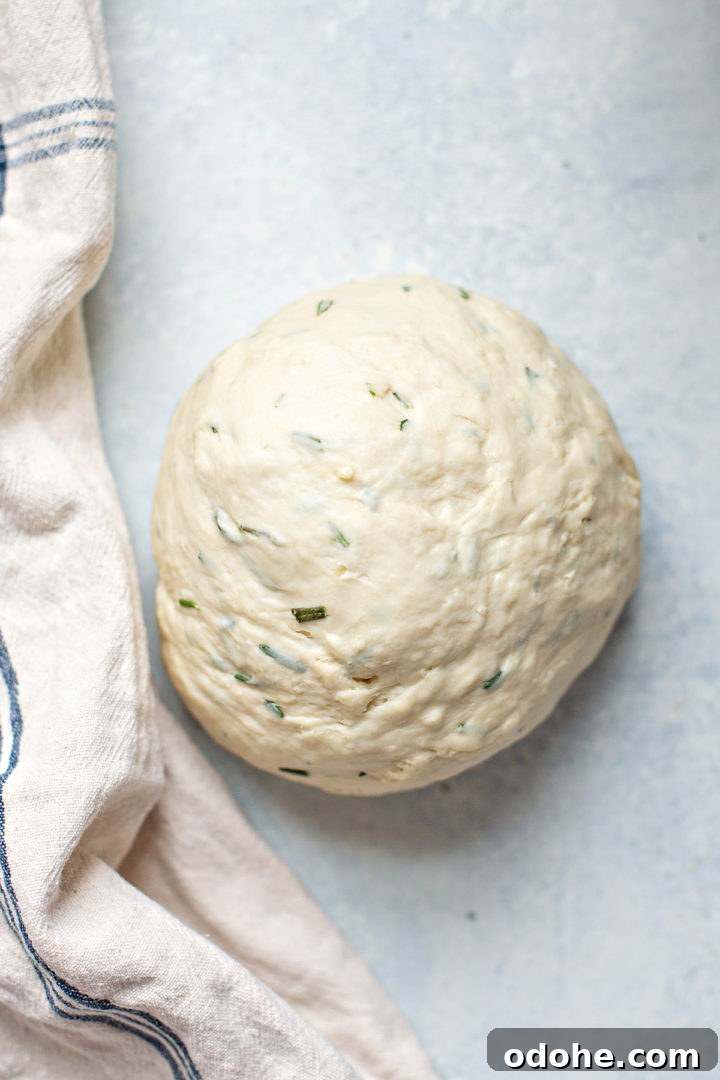
Tips for Making the Best Rosemary Garlic Bread
Helpful tips to improve your loaf:
- Use fresh rosemary for the best flavor—dried herbs won’t provide the same bright aroma.
- Add flour gradually and judge dough by feel. A sticky dough needs more flour; a stiff dough will make dry bread.
- Let the dough rise in a warm place to shorten fermentation; colder kitchens will slow the rise.
- Test doneness with a thermometer: finished bread is around 200–210°F (93–99°C) internally.
- Allow the bread to cool before slicing to avoid a gummy interior.
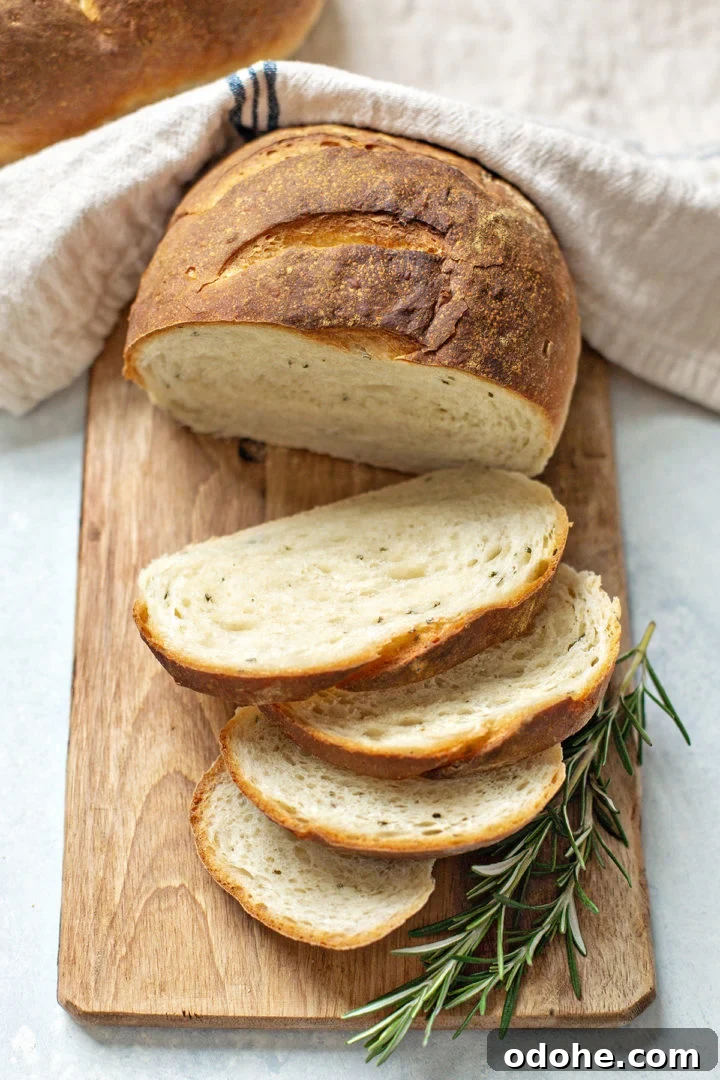
Rosemary Bread FAQ
Can I Use Whole Wheat Flour?
Yes — but limit whole wheat to no more than half the flour to keep the loaf tender. If using whole wheat, consider white whole wheat for a milder flavor and lighter texture.
Can I Use Different Fresh Herbs?
Absolutely. Oregano, marjoram, or thyme work well in place of or alongside rosemary. Adjust amounts to taste.
Is it okay to Substitute Roasted Garlic?
Yes — roasted garlic adds a sweeter, milder garlic flavor and works nicely in this loaf.
Can I Add Anything Else to this Bread Recipe?
Try grated Parmesan or chopped sun-dried tomatoes for variety. Start with small amounts and adjust to taste.
Can I Bake this Rosemary Bread in a Different Shape?
Yes. Shape loaves as rounds, batards, or thinner baguette-style loaves. Reduce baking time for smaller or thinner loaves and watch the crust closely.
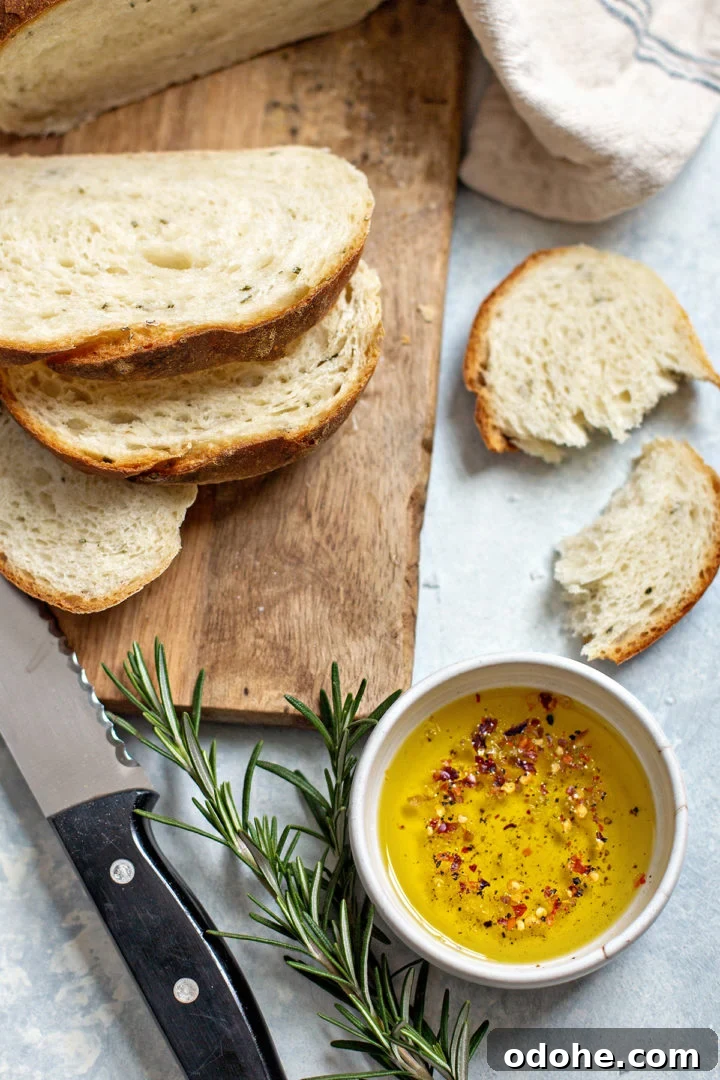
How to Serve this Rosemary Bread Recipe
Serve the bread warm to bring out the rosemary and garlic aroma — wait until it’s slightly cooled from oven temperature. Offer softened butter, or serve with a dipping mix of good olive oil and balsamic vinegar with fresh herbs for a simple accompaniment.
Try this Artisan Bread with Rosemary and Garlic!
This rosemary garlic loaf is an easy, rewarding bread to make at home. If you try it, leave a comment and rating so others know how it turned out. Share photos on Instagram and tag @goodlifeeats with #goodlifeeatsrecipes if you post your loaf.

More Delicious Bread Recipes
If you enjoy baking bread, here are a few other recipes to explore: a classic Rustic White Bread for a perfect crust, sweet potato dinner rolls for seasonal baking, chocolate swirl bread for a sweet yeast loaf, and a quick whole wheat baguette for artisan-style baking with less hands-on time.
Not seeing what you want here? Check the recipe index on the site for more bread and baking recipes.
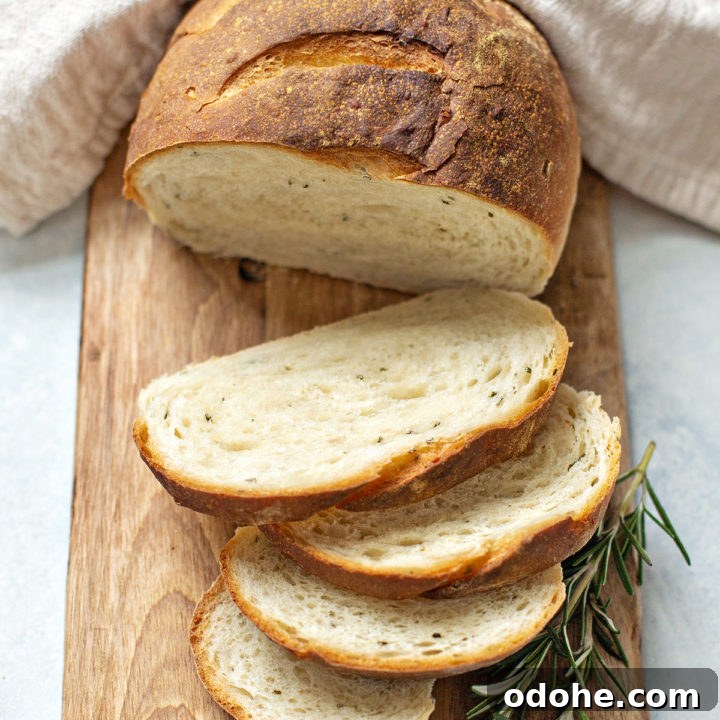
Rustic Rosemary Garlic Bread
2 loaves
20 minutes
40 minutes
2 hours
3 hours
This Rosemary Garlic Bread is a rustic artisan-style loaf that is easy to make. Follow the steps below for a flavorful homemade loaf.
Ingredients
- 2 cups warm tap water, about 110 degrees
- 1/4 cup olive oil
- 2 1/2 teaspoons active dry yeast
- 5 – 6 cups (660 – 840 grams) all-purpose flour
- 6 cloves garlic, minced
- 1/3 cup fresh rosemary, chopped
- 4 teaspoons salt
- 1/4 cup flour for dusting the loaves
- Cornmeal for the pans
- 2 small cookie sheets or a large (at least 11×17-inch) jelly roll pan
Instructions
Preparing the Dough
Method 1: Stand Mixer
- Combine warm water and yeast in a small bowl and let the yeast dissolve. Whisk in the olive oil.
- Add the yeast mixture to the mixer. Add about half the flour while mixing on low, then add garlic, rosemary, and salt.
- Scrape the bowl, switch to the dough hook, and add remaining flour 1/4 cup at a time while kneading.
- Knead until the dough is smooth and elastic but not sticky. Typical total flour for me is 675–725 grams.
- Proceed to the first rise instructions below.
Method 2: Food Processor
- Proof the yeast in water for a few minutes and whisk in the oil.
- Place 4 cups (480 g) flour, garlic, rosemary, and salt in the food processor bowl with a dough blade.
- Add the yeast mixture and process until combined, then add remaining flour 1/4 cup at a time until a smooth, elastic dough forms (about 45 seconds more).
- Proceed to the first rise instructions below.
The First Rise
- Place dough in an oiled bowl, turn to coat, cover, and allow to rise at room temperature until doubled.
Shaping
- Turn dough onto a lightly floured surface and gently press to deflate.
- Divide into two pieces. Press each into a square, roll up tightly, rotate 90 degrees, roll again, and place seam side down. Cover and rest 5 minutes.
The Second Rise
- Dust a pan with cornmeal. Roll each piece under your palms to elongate, shaping the ends slightly.
- Place loaves seam side down on cookie sheets, dust heavily with flour (about 1/4 cup total), cover, and let rise until doubled.
Baking
- About 30 minutes before baking, preheat oven to 500°F and place racks in middle and lower positions.
- Place a pan on the lowest rack to protect the bottoms from excess heat.
- Score each loaf with 3–4 diagonal slashes at a 30-degree angle, place in the oven, and immediately lower temperature to 450°F.
- After 20 minutes, reduce oven to 350°F and bake another 20–30 minutes until the internal temperature reaches about 200–210°F. Remove and cool on a rack.
Notes
Adapted from a classic rustic white bread recipe.
Nutrition Information:
Yield: 24
Serving Size: 1
Amount Per Serving:
Calories: 256
Total Fat: 4g
Saturated Fat: 1g
Trans Fat: 0g
Unsaturated Fat: 3g
Cholesterol: 0mg
Sodium: 368mg
Carbohydrates: 49g
Fiber: 3g
Sugar: 1g
Protein: 7g
Nutrition information is an estimate only and provided as a courtesy.