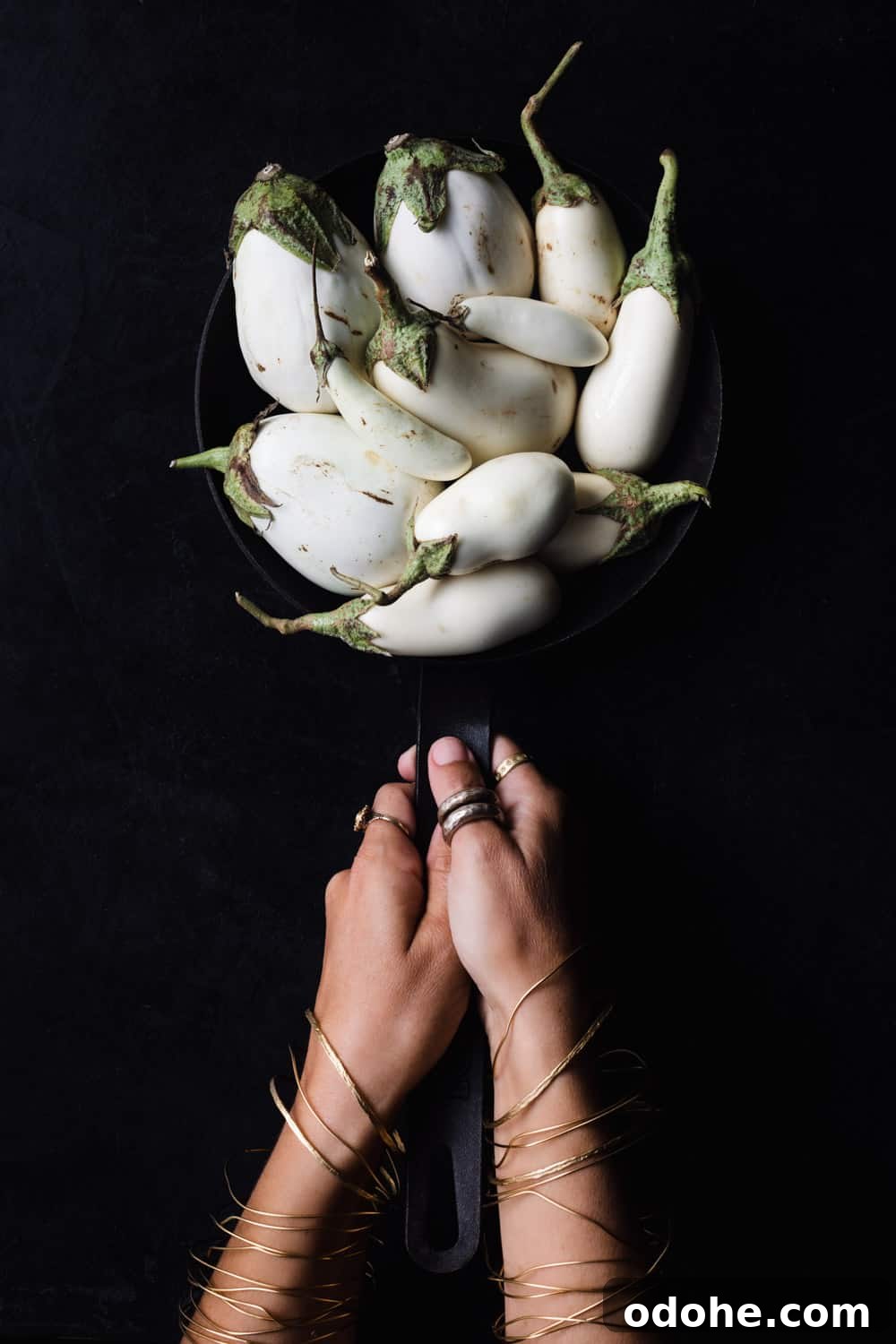
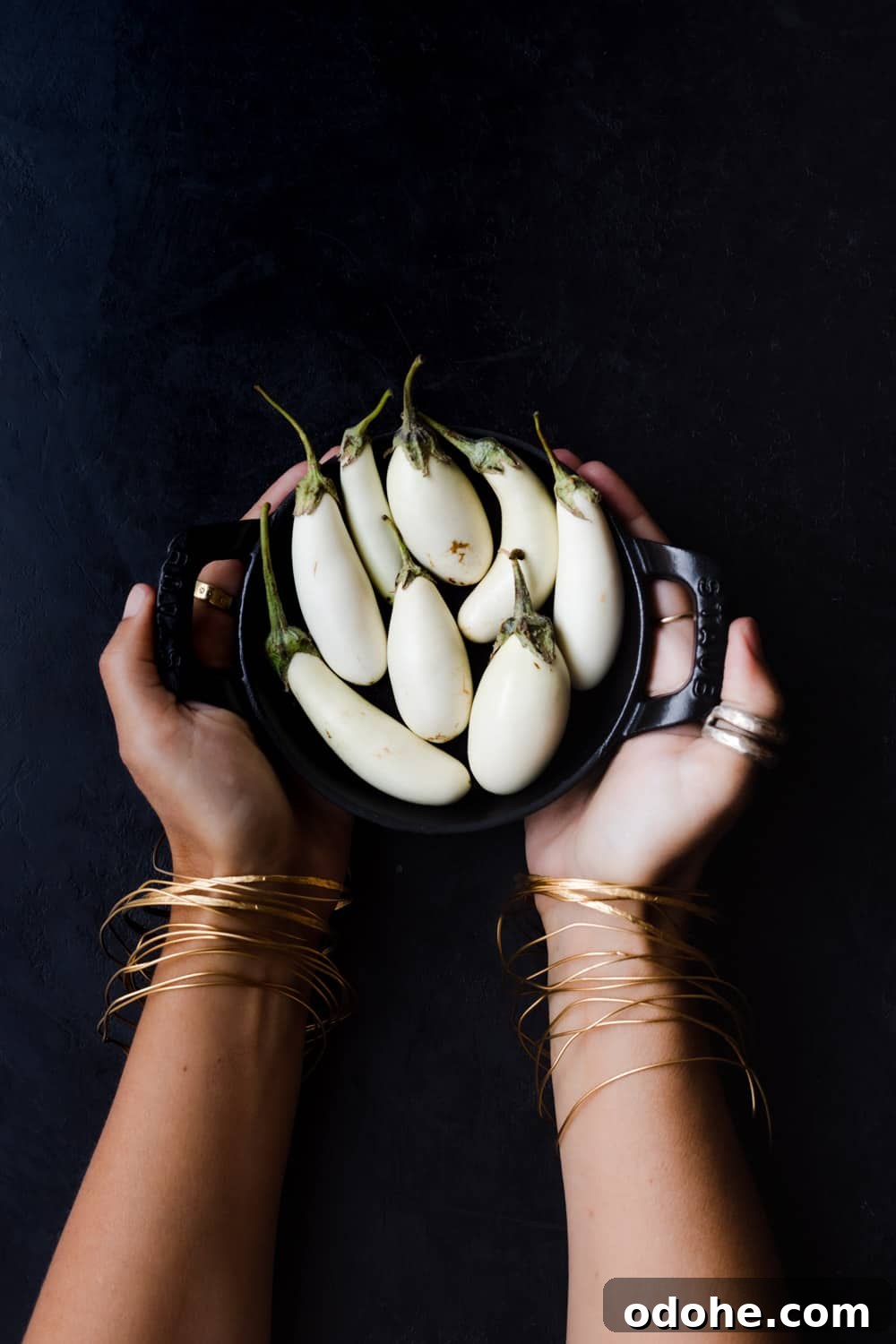
White eggplant is the milder, creamier, and slightly sweeter — and technically older — cousin of the familiar purple eggplant.
In this comprehensive guide, you’ll learn where it comes from, how it compares to purple varieties, what it tastes like, and the best ways to cook and enjoy it.
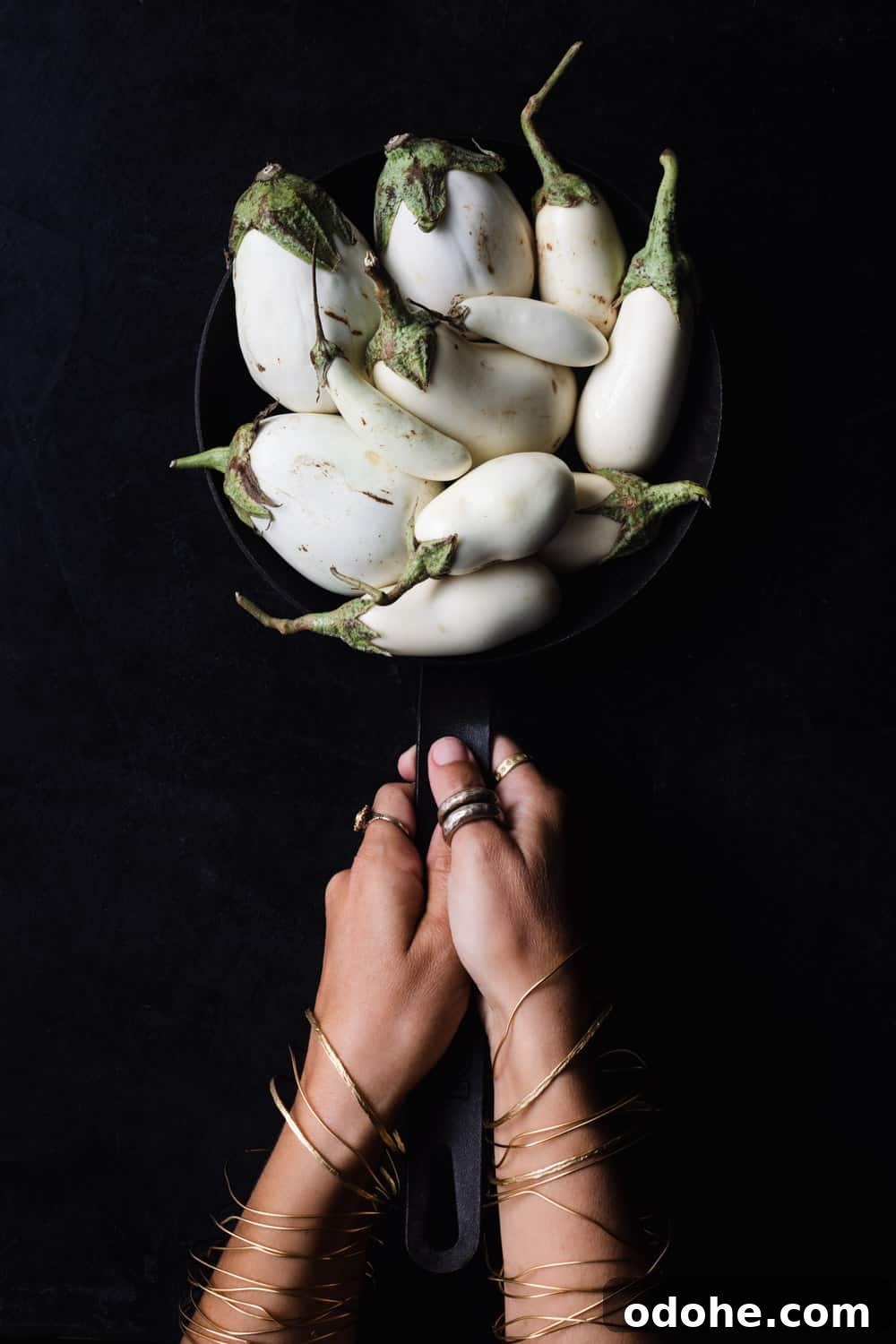
Eggplants belong to the nightshade family, Solanaceae, and are botanically classified as Solanum melongena. Though botanically fruits — specifically berries — they are most often treated as vegetables in cooking. Closely related to tomatoes, potatoes, and peppers, eggplants have edible skin and seeds like tomatoes, but are usually enjoyed cooked like potatoes.
What is White Eggplant?
White eggplants first gained notice in 18th-century England. These pale varieties were small and egg-shaped, which led to the common name, eggplant. Over time the name stuck and was extended to include the more common purple varieties as well.
There are many pale eggplant varieties — white and yellow — ranging from ancient heirlooms to recently developed hybrids.
Season: Summer
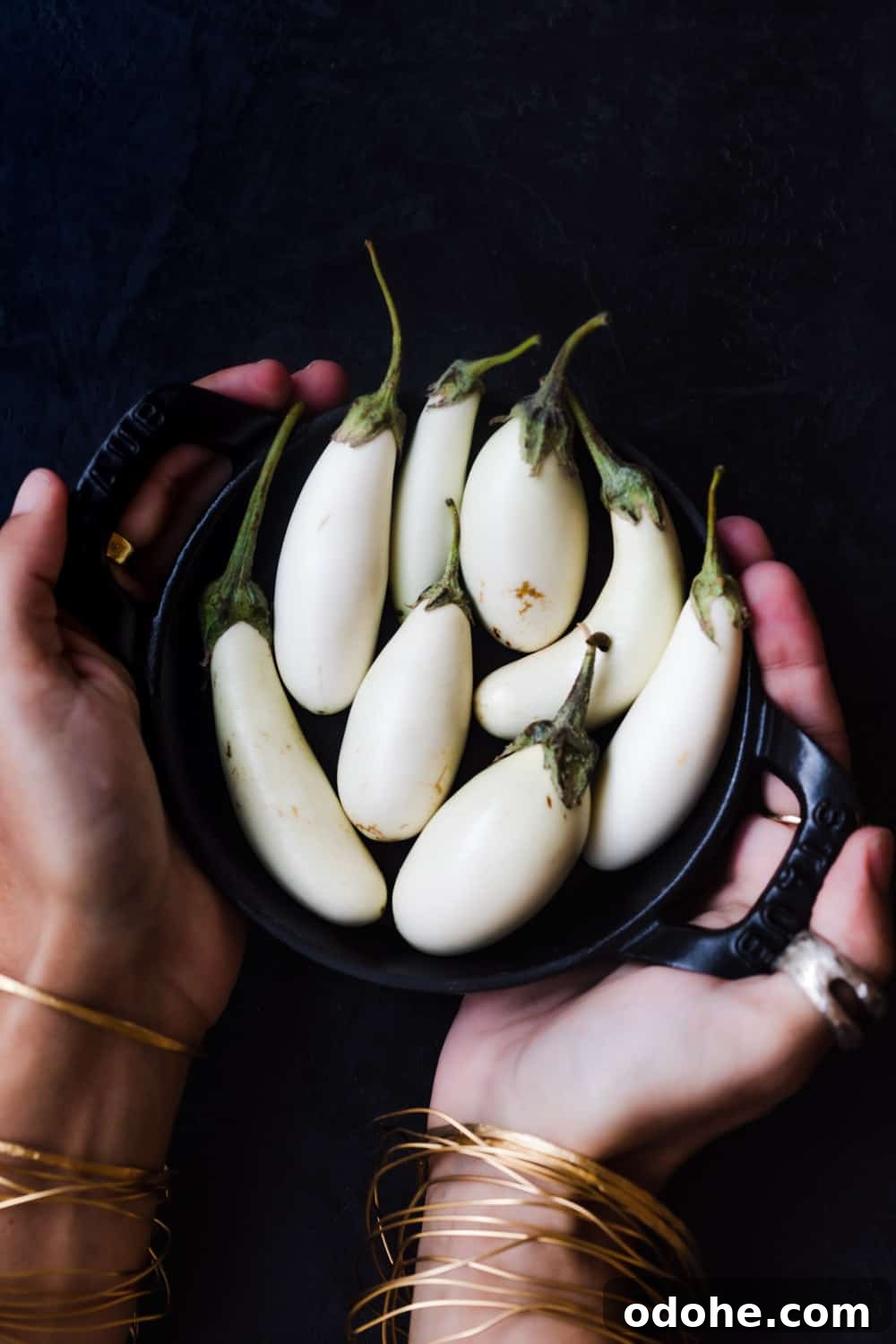
A Brief History of White Eggplant
White eggplants have origins in South Asia — particularly India and Bangladesh — where wild and cultivated varieties have existed for centuries. From there they spread across Asia and into Europe through historic trade routes.
Today, white eggplants appear at specialty grocers, farmers markets, and select produce sections across Asia, Europe, and the United States.
Cultivars of White Eggplants
White eggplant cultivars are less common than purple types and generally fall into two groups: culinary/domesticated varieties and ornamental varieties. This guide focuses on the culinary types that are grown for eating.
Popular culinary white eggplant cultivars include:
- Casper
- Easter Egg
- White Beauty
- Cloud Nine
- Ghostbuster
- Albino
- Tango
- Garden Eggs
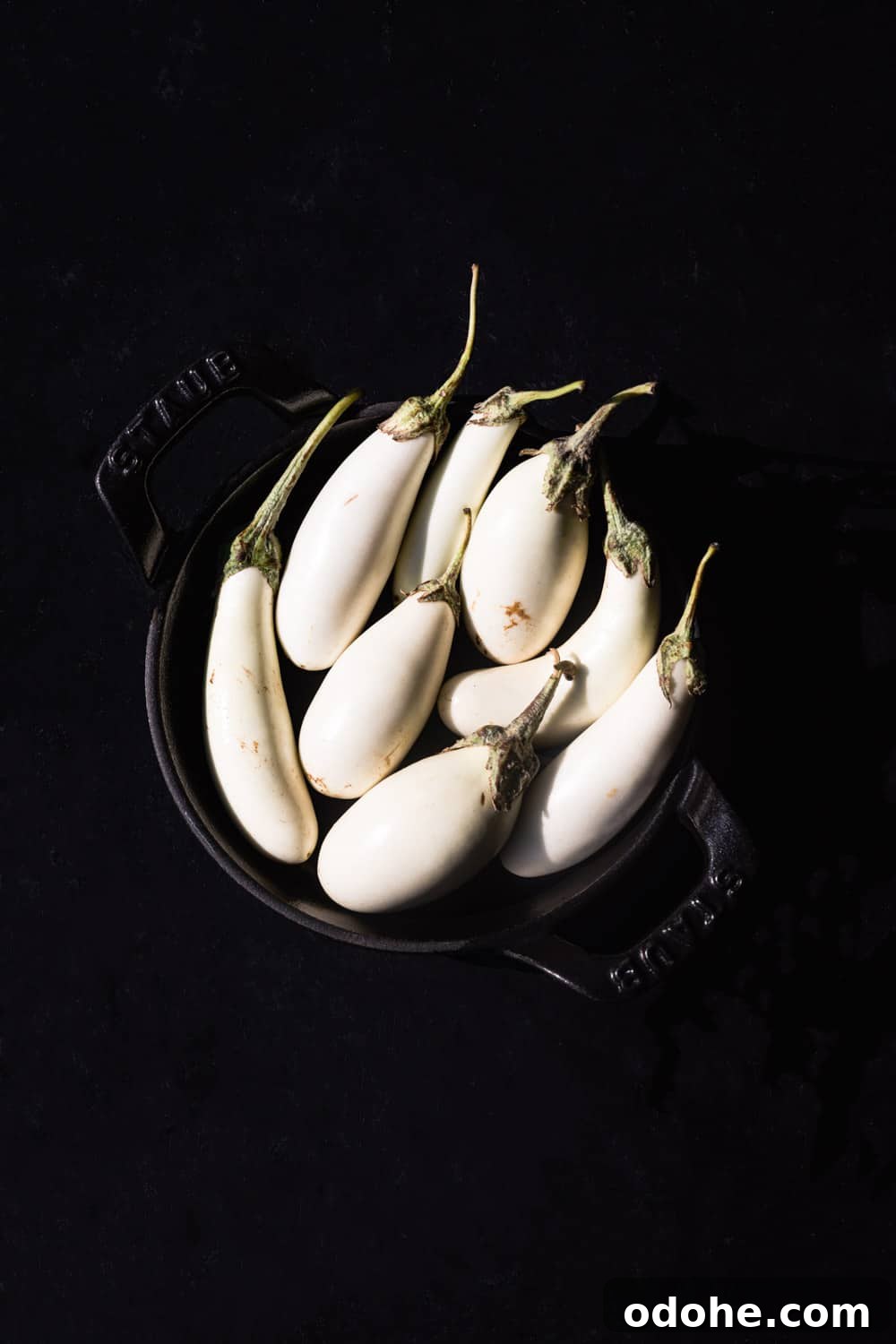
These culinary varieties vary in shape and size, from small, plump teardrops and round forms to longer, slender types. Ornamental white eggplants are grown for decoration rather than eating.
White Eggplant vs Purple Eggplant
Size: White eggplants are often smaller than many purple varieties, though small purple types exist as well.
Flesh: White eggplant has creamy white flesh, while many purple varieties show a slightly greenish tint in the flesh.
Taste: White eggplants tend to be less bitter, creamier, denser, and a touch sweeter. These differences are usually subtle, and white and purple eggplants can be used interchangeably in most recipes.
Is White Eggplant Less Bitter?
Yes. White eggplant is generally less bitter than most purple varieties. Its flavor profile is milder, creamier, and slightly sweeter, making it a good choice when you prefer a gentler eggplant flavor.
Cooking Methods
Like other eggplants, white eggplant is best enjoyed cooked. Cooking transforms the flesh into a silky, tender texture with a light, sweet flavor. You don’t need to remove the skin or seeds before cooking.
Best methods: Sautéing, roasting, pan-frying, stir-frying, deep-frying, grilling, steaming, barbecuing, and baking. High-heat methods tend to bring out the best texture and flavor.
Chef’s Tip: Cook white eggplant quickly over high heat or roast it until tender to preserve its creamy texture and sweet notes.
Colorful Fruits & Veggies
If white eggplant piqued your interest, you might enjoy exploring other colorful produce. Vibrant fruits and vegetables add visual appeal and variety to meals.
Here are a few more colorful produce ideas to try: purple potatoes, purple cauliflower, purple brussels sprouts, purple kale, red okra, pink pineapple, pink lemons, pink apples, and pink oyster mushrooms. These varieties offer different textures and flavors while expanding your culinary palette.
If you find white eggplant, bring it home and experiment — roast it, grill it, or sauté it. Share your creations and enjoy the unique creaminess and mild sweetness this variety offers.
There’s a wide world of colorful vegetables out there — hopefully this guide inspires you to explore more vibrant produce and make waves in the kitchen.