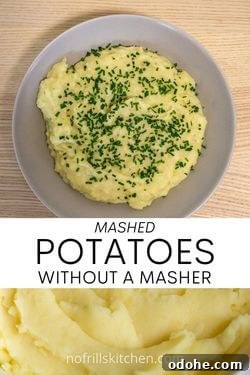
Are you craving a warm, creamy bowl of mashed potatoes but don’t have a potato masher? No problem — you can achieve delicious results with simple kitchen tools.
You don’t need special equipment to make great mashed potatoes. Unlike ricing methods that require a ricer, this approach works beautifully with a wooden spoon (or even a fork). The texture won’t be perfectly silky, which many people actually prefer — a little rustic texture makes the mash more interesting and satisfying.
How to Make Mashed Potatoes Without a Masher
Begin by choosing the right potatoes. Waxy varieties like Yukon Gold or new potatoes are ideal because their lower starch content helps prevent the mash from becoming gluey if you work it a bit. Yukon Golds are often the best all-around choice for creamy, flavorful mashed potatoes.
Wash and, if you prefer, peel the potatoes. Leaving the skins on produces a more rustic mash, but peeling creates a smoother finish. Cut the potatoes into uniform 5 cm (2-inch) chunks so they cook evenly; very small potatoes can be left whole if already the right size.
Place the potatoes in a large pot and cover with cold water. Generously salt the water — seasoning early ensures the potatoes are well flavored. Bring to a boil over medium-high heat, then reduce to a steady simmer. Cook until the potatoes are very tender when pierced with a fork but not falling apart, about 20–25 minutes. Start checking at 15 minutes to avoid overcooking.
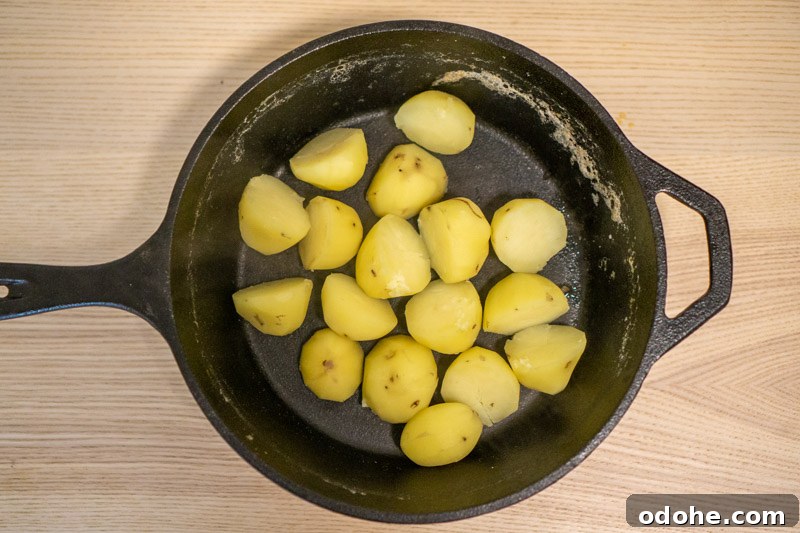
When the potatoes are cooked, drain them thoroughly and return them to the pot. Add the butter so it melts from the residual heat while you warm the milk mixture.
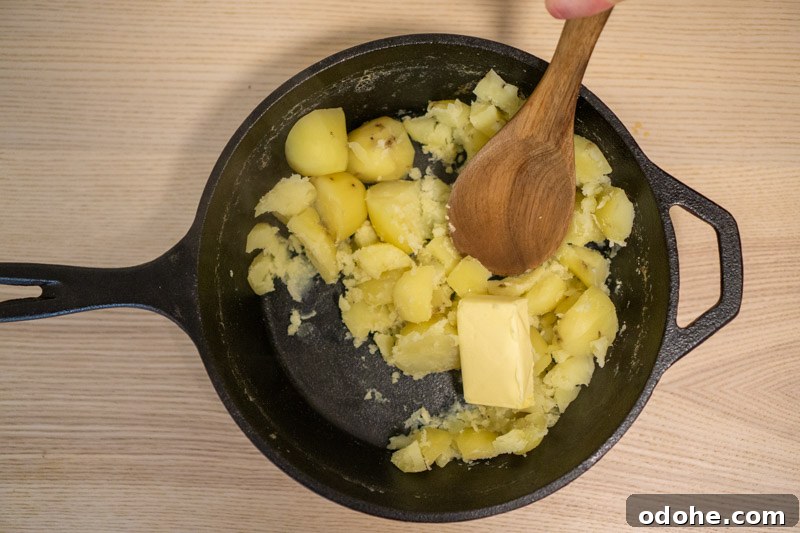
Warm whole milk and buttermilk together in a small saucepan over low heat until just steaming; avoid boiling or simmering vigorously to prevent the buttermilk from separating. If you don’t have buttermilk, use sour cream, crème fraîche, or just whole milk — but buttermilk adds a pleasant tang that complements the potatoes.
Using the back of a large wooden spoon, press and crush the potatoes against the side of the pot. Break them down and mix in the butter as you go. This method produces a textured, creamy mash without specialized equipment.
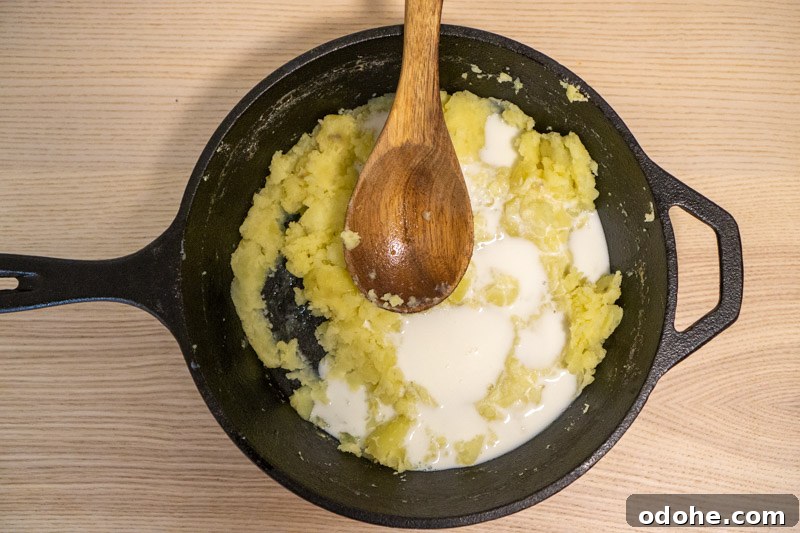
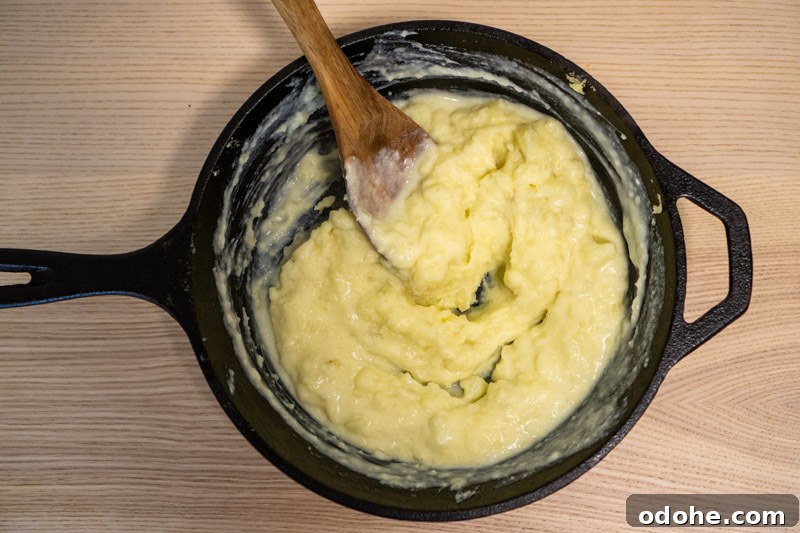
Slowly stream the warm milk-and-buttermilk mixture into the potatoes a little at a time, stirring and continuing to break up the chunks until you reach your desired consistency. You may not need all the liquid — add enough for a creamy but not soupy texture. Keep in mind that overworking potatoes can release excess starch and make the mash gluey, so stop when the lumps are small and the texture is pleasant.
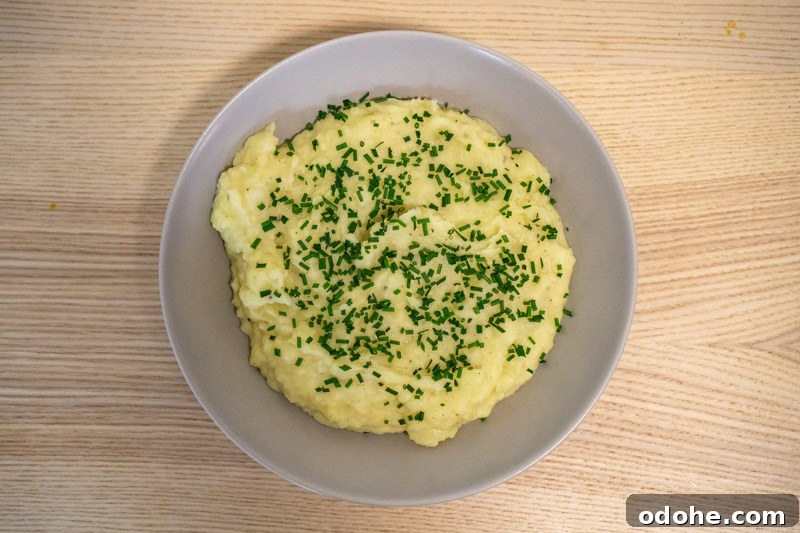
Season to taste with salt and pepper. Many recipes suggest white pepper to avoid visible black specks; black pepper is perfectly fine if you don’t mind the appearance. For a bright, fresh finish, fold in a handful of finely chopped chives or sprinkle them on top as a garnish.
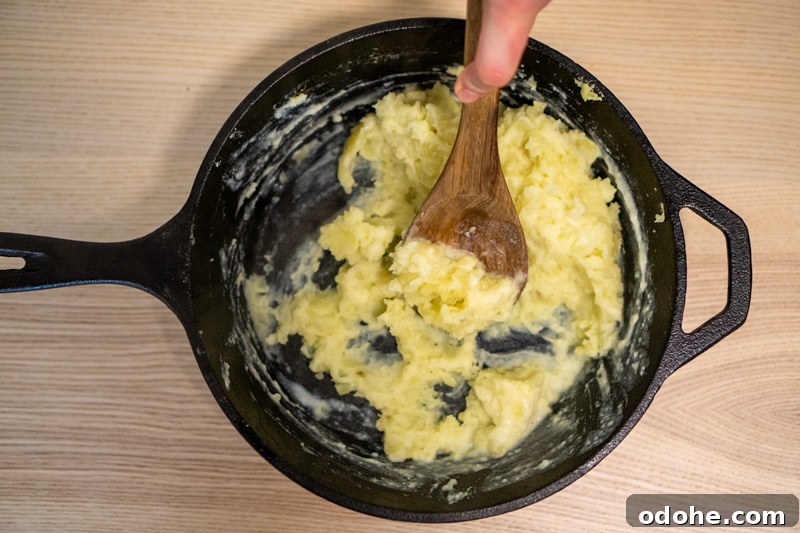
Serve the mashed potatoes hot, topped with extra butter or a scattering of chives. This straightforward technique produces rich, comfort-food mashed potatoes using only basic kitchen tools.
Recipe at a Glance
- Servings: 4
- Prep time: 5 mins
- Total time: 30 mins
Ingredients
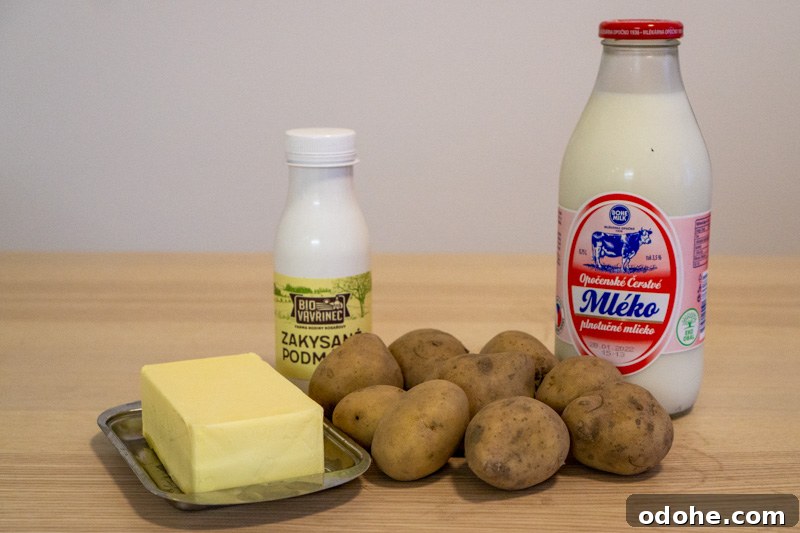
- 1 kg (2 lb) potatoes, peeled and cut into 5 cm (2-inch) pieces
- 50 g (4 tbsp) butter
- 120 ml (1/2 cup) whole milk
- 120 ml (1/2 cup) buttermilk
- Fresh chives, minced, for garnish (optional)
Instructions
- Cover potatoes in a large pot with generously salted cold water. Bring to a boil, then simmer until fork-tender but not falling apart, about 20–25 minutes. Drain and return to the pot.
- While the potatoes finish cooking, warm the milk and buttermilk over low heat until steaming; do not boil. Remove from heat and set aside.
- Add butter to the potatoes. Using the back of a wooden spoon, crush the potatoes against the pot sides until broken down and the butter melts.
- Slowly add the warm milk mixture a little at a time, stirring and breaking up the potatoes until you reach the desired consistency. Season with salt and pepper and garnish with chives if you like.
This method delivers creamy, flavorful buttermilk mashed potatoes without a masher — simple, accessible, and delicious.
Have questions about the technique or want tips for variations? Share a comment below.