This post may contain affiliate links. If you buy something through one of these links, we may earn an affiliate commission – at no extra cost to you.
This post, on how to make sauerkraut, was previously published in 2019. It has been updated for a better user experience. Enjoy!
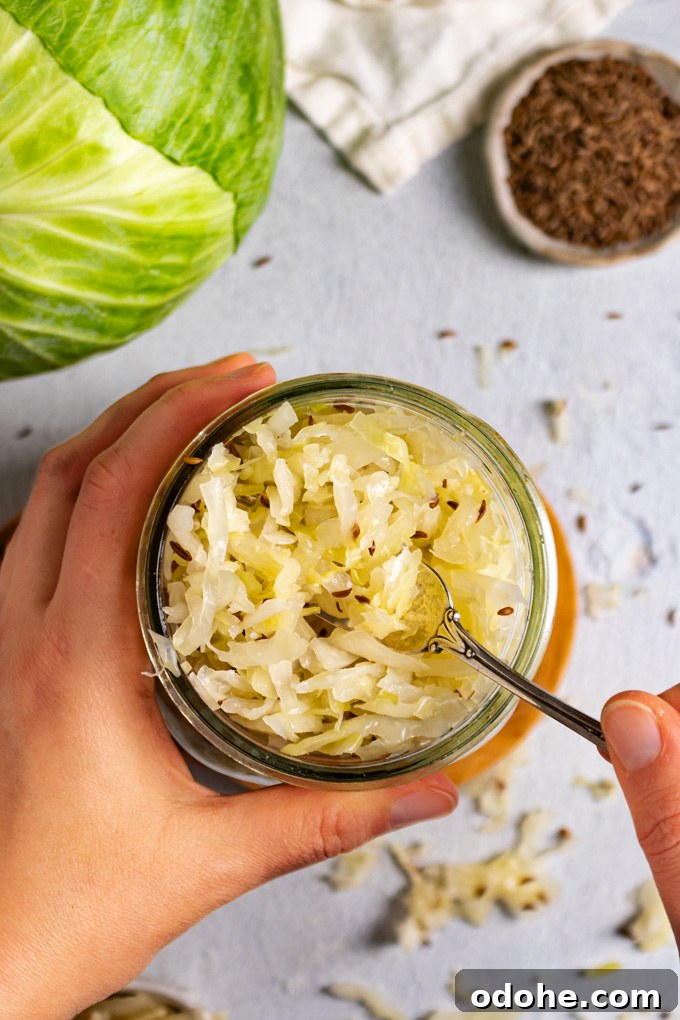
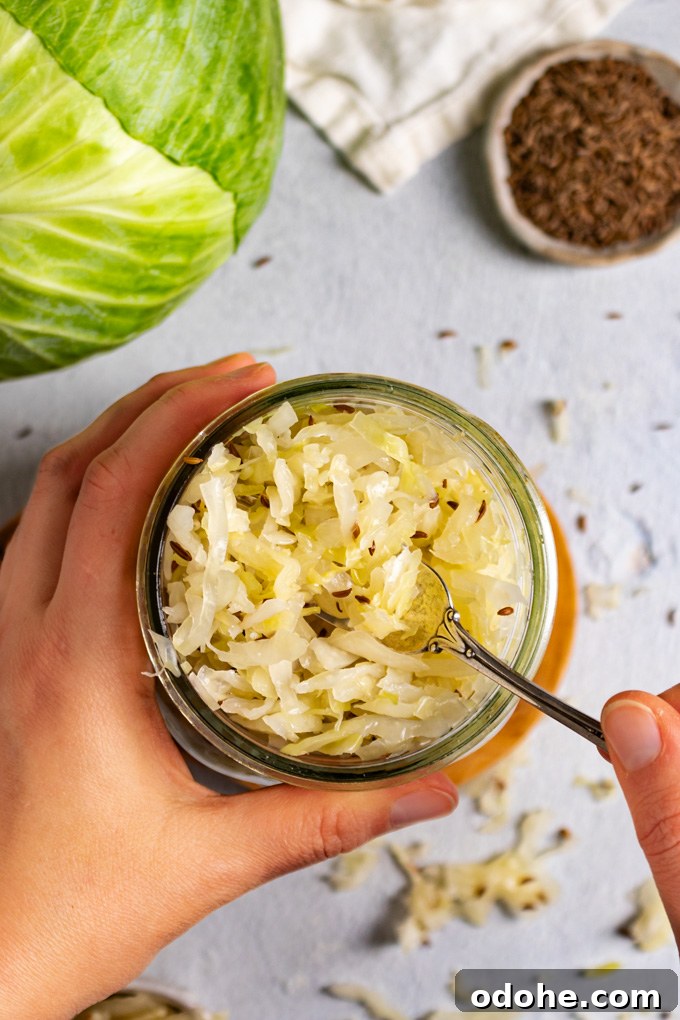
Learning to make sauerkraut has been one of the most rewarding parts of this recipe blog journey. Fermented foods are not only delicious but also incredibly beneficial for your health. Making sauerkraut is a simple way to preserve cabbage using lacto-fermentation, producing a crunchy, tangy condiment packed with probiotics.
Sauerkraut was the first fermented food I learned to make, and I keep coming back to it. This post has been refreshed for clarity, improved photos, and better SEO. Homemade sauerkraut requires just two main ingredients—cabbage and kosher salt—plus about 30 minutes of hands-on time. After that, you let it ferment for anywhere from 3 to 14 days depending on temperature and your personal taste.
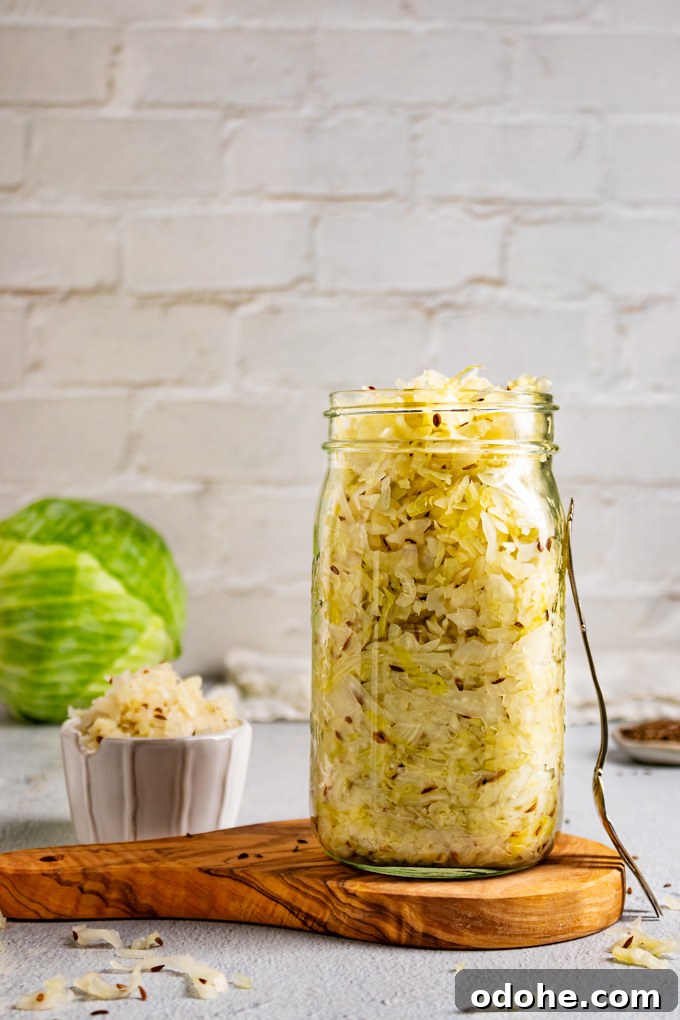
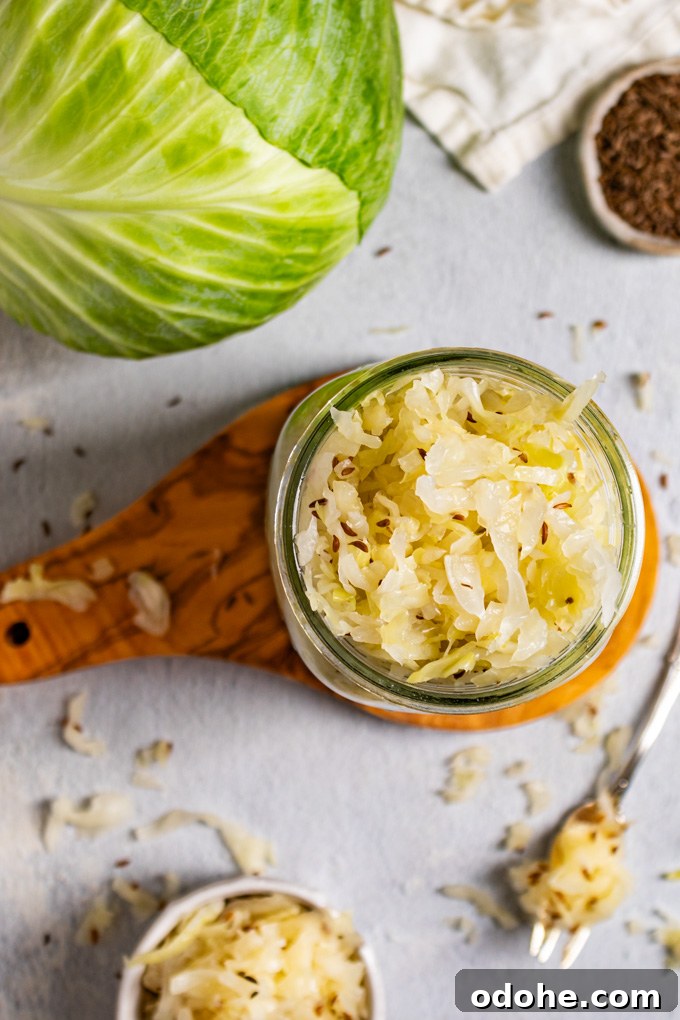
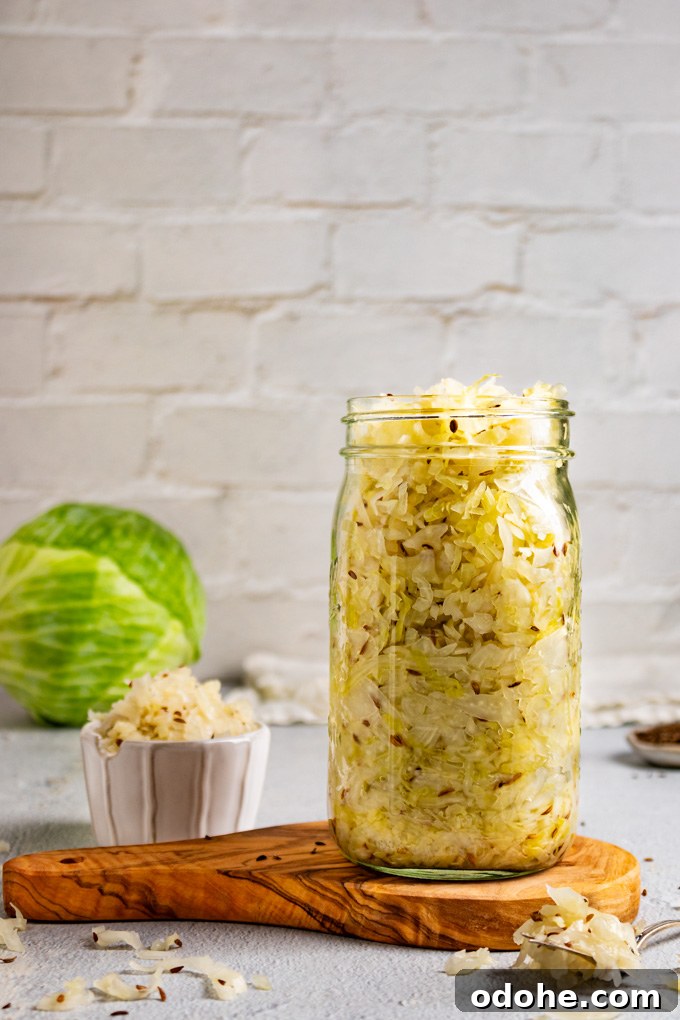
The result is a crunchy, tangy sauerkraut with a pleasant fermented depth. It’s versatile: eat it straight from a bowl, pile it on a brat or sandwich, add it to salads, or use it as a condiment. And because you make it yourself, you get a fresh source of gut-friendly probiotics. Go you!
What is sauerkraut?
Sauerkraut is shredded cabbage that has been salted and allowed to lacto-ferment in its own brine. The fermentation creates a distinct sour flavor and preserves the cabbage for longer storage.
What is lacto-fermentation?
Lacto-fermentation uses lactic-acid-producing bacteria to preserve foods. It’s an ancient method of food preservation used before refrigeration. In this oxygen-free environment, natural sugars are converted into lactic acid, creating a tangy, shelf-stable product that’s rich in beneficial bacteria.
Common lacto-fermented foods include sauerkraut, yogurt, sourdough, and kimchi. Lacto-fermentation does not produce alcohol; that is a different type of fermentation that relies on yeast.
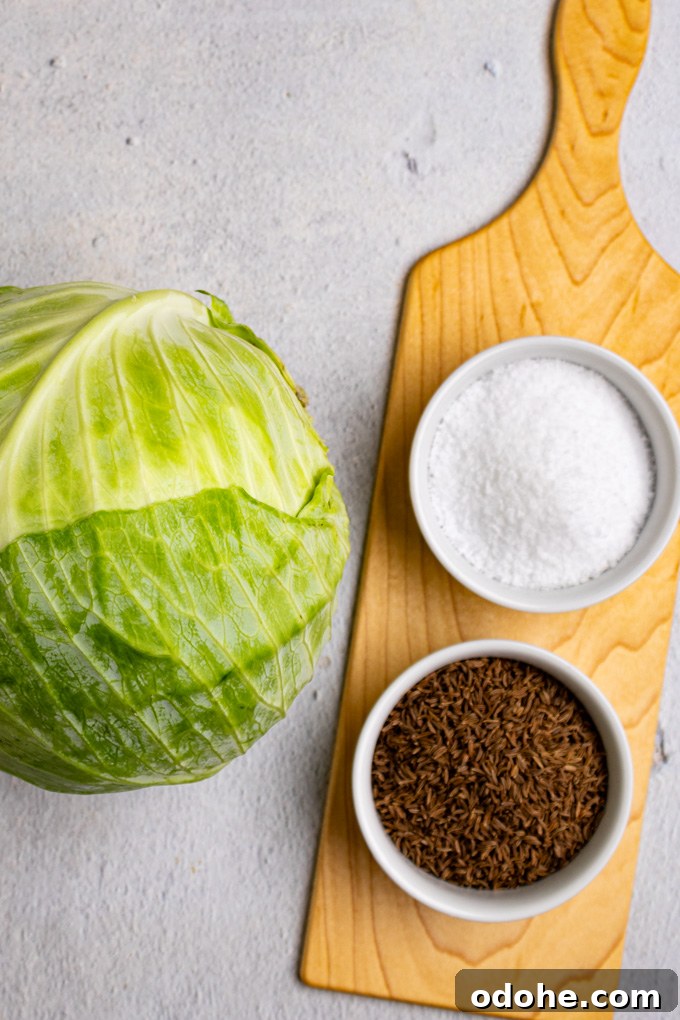
Ingredients for fermented sauerkraut
Measurements are in the recipe card below.
- Cabbage – one medium head (green or red; green is most common).
- Kosher salt – or pickling salt. Do not use table salt or iodized salt, as iodine can inhibit fermentation.
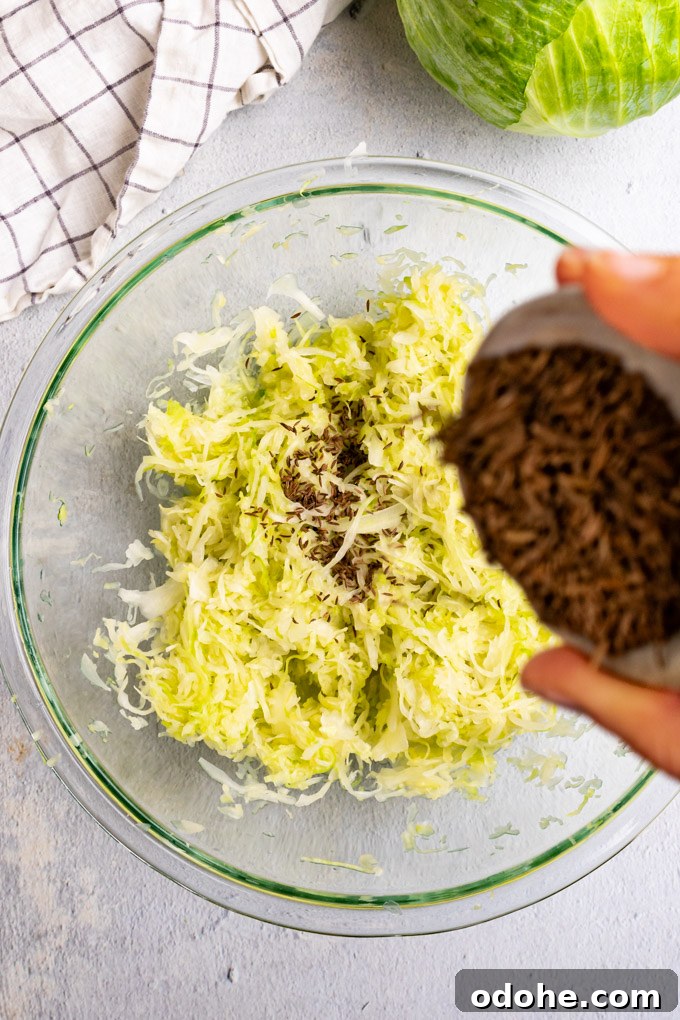
- (Optional) Caraway seeds – add for a nutty, aromatic note.
That’s all you need to make homemade sauerkraut.
How to make sauerkraut
Detailed directions are in the recipe card below. Here’s a summary:
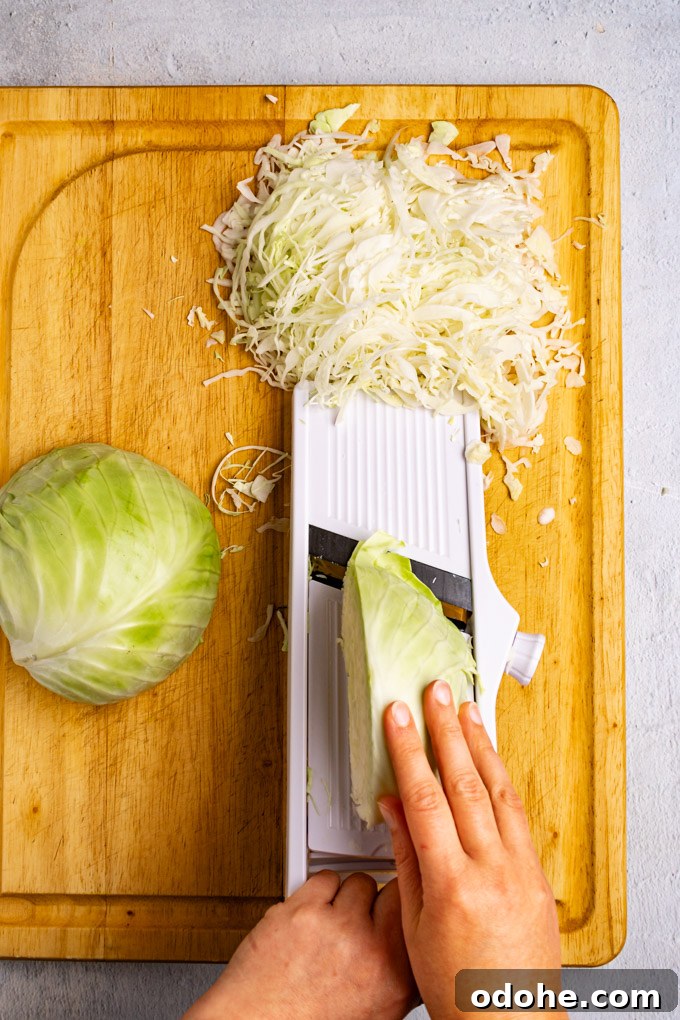
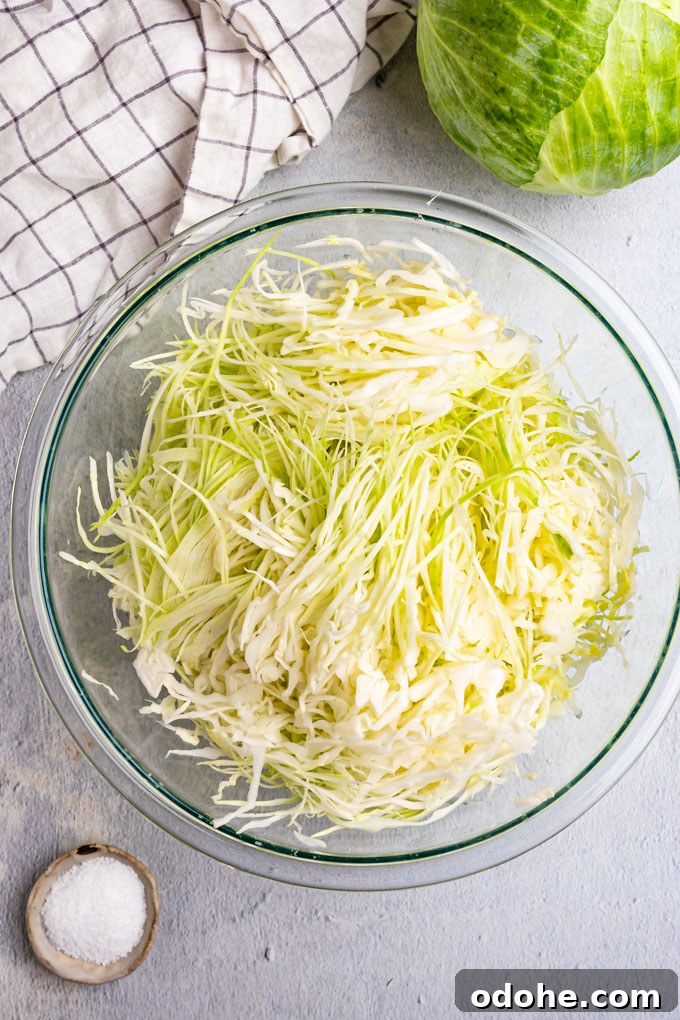
- Shred the cabbage.
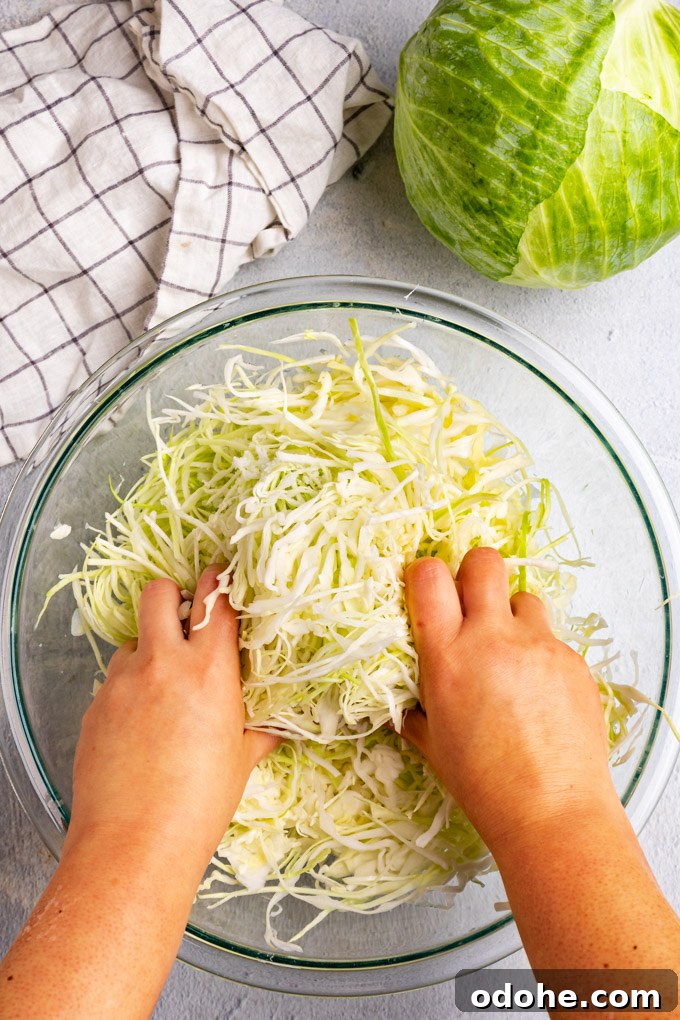
- Massage the cabbage with salt to release its liquid.
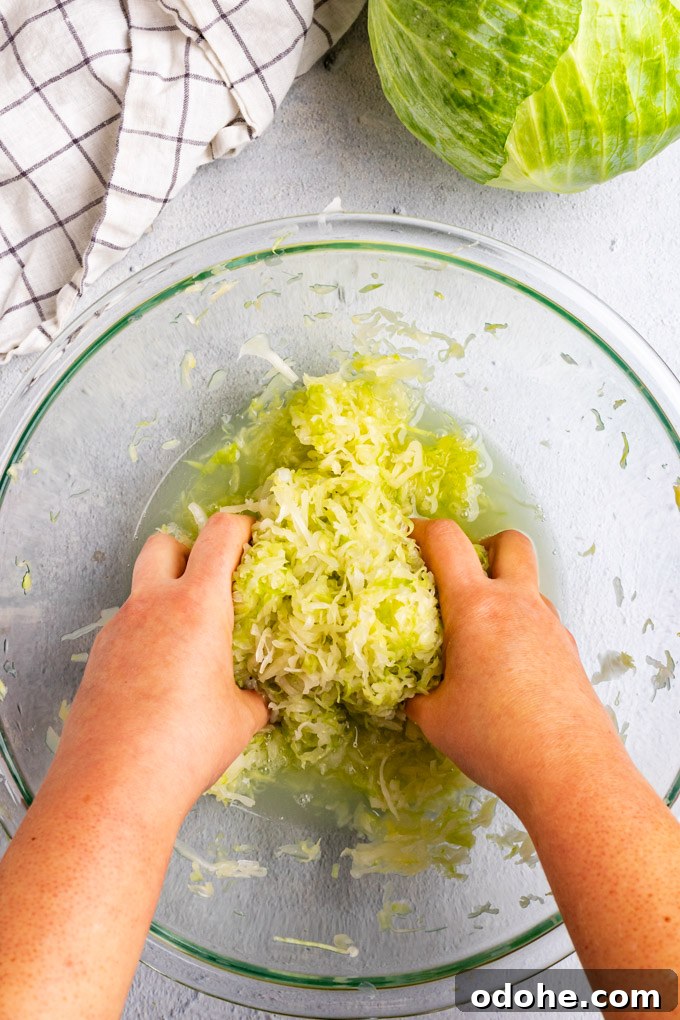
- Let it rest so more liquid is drawn out.
- Massage again, then add optional caraway seeds.
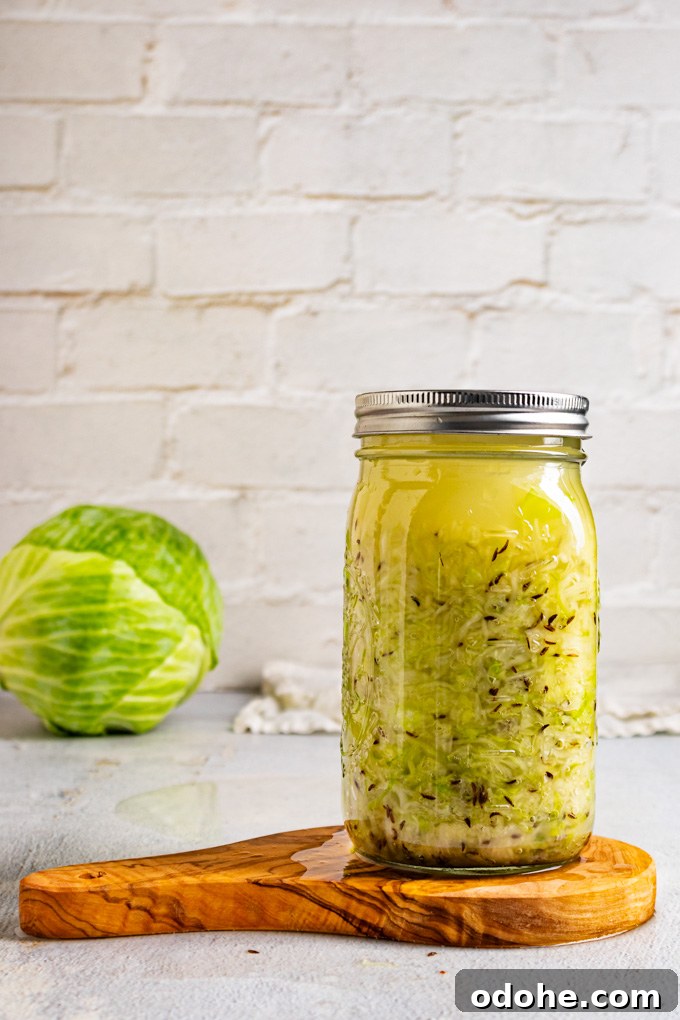
- Pack the cabbage tightly into a jar, include the released liquid so it’s submerged.
- Weigh the cabbage under the brine (a small jar works well) and loosely secure the lid to allow gases to escape.
- Ferment at a steady temperature for 3 to 14 days.
- Check daily for proper submersion and to let gases escape.
- Taste to decide when it’s to your liking, then store in the fridge.
Equipment I use
- Food processor – fastest way to shred cabbage.
- Mandolin – produces thin, even shreds.
- Chef’s knife – fine if you prefer hand slicing.
- 32-ounce wide-mouth canning jar – ideal size and easy to pack.
- Muddler or wooden spoon – for packing the cabbage down.
- 4-ounce jelly jar – used as a weight to keep cabbage submerged.
Health benefits of fermented foods
Fermented foods are rich in probiotics—beneficial bacteria that support gut health. Regularly eating probiotic-rich foods can help digestion, support the immune system, and contribute to overall well-being. Sauerkraut is an easy, tasty way to add these foods to your diet.
How long does sauerkraut take to ferment?
Fermentation typically takes between 3 days and 2 weeks. Two main factors affect timing:
- How sour you want it—longer fermentation yields a tangier kraut.
- Temperature—warmer conditions speed up fermentation, cooler conditions slow it down.
What cabbage should I use?
Green cabbage is most common, but red cabbage works too and adds a vibrant color. Do not use pre-shredded bagged cabbage; its surface bacteria and moisture content are altered and it won’t ferment reliably. Always shred a fresh head of cabbage right before fermentation.
Storage and safety
Refrigerated sauerkraut will last about 3 to 6 months, often longer. We usually eat ours within a few weeks because it’s so good.
Storing at room temperature is possible only in a cool, dark place (around 60°F or lower) with the cabbage kept weighed under the brine. Otherwise, refrigeration after fermentation is safest to slow further fermentation and maintain texture.
Can I can fermented sauerkraut?
Do not hot-can fermented sauerkraut. Heating jars to preserve them will kill the beneficial probiotics created during fermentation and can change acidity, affecting safety and flavor. If you want shelf-stable sauerkraut, use a recipe specifically designed and tested for canning.
Fermented vs. canned sauerkraut
Fermented sauerkraut is raw, probiotic-rich cabbage preserved by lactic acid. Canned sauerkraut sold on grocery shelves is usually vinegar-pickled and heat-processed, which removes probiotics. Both are edible, but fermented sauerkraut provides live beneficial bacteria.
How to tell if your sauerkraut has gone bad
Discard sauerkraut if you see mold (green, black, or fuzzy white) or if it smells or tastes rotten. A fermented aroma and some bubbling are normal. White foam or scum on top is usually harmless—remove it with a spoon—but any obvious mold or off odors mean toss it and start fresh.
Ways to serve sauerkraut
Sauerkraut is delicious straight from a bowl or used as a topping for brats, hot dogs, Reubens, burgers, sandwiches, salads, and more. It adds a tangy, salty, crunchy element that complements many dishes.
Why you’ll love making sauerkraut
- It’s fun and feels like a science experiment.
- It’s easy once you learn the steps.
- It’s inexpensive to make.
- It’s delicious—tangy, salty, crunchy, and savory.
- It’s versatile—great on sandwiches, salads, and sausages.
- It’s naturally vegan, dairy-free, and gluten-free.
- It’s healthy—full of probiotics for gut support.
- It’s satisfying and rewarding to make at home.
More fermented recipes to try
- Easy fermented salsa
- Kimchi fried rice (using store-bought kimchi)
More condiments you’ll love
- Quick pickled red onions
- Easy homemade salsa
- Jalapeno sauce
- Basil pesto
Leave a comment
If you make this recipe, please leave a comment and rating below. Your feedback helps others find the recipe and supports the blog—thank you!