
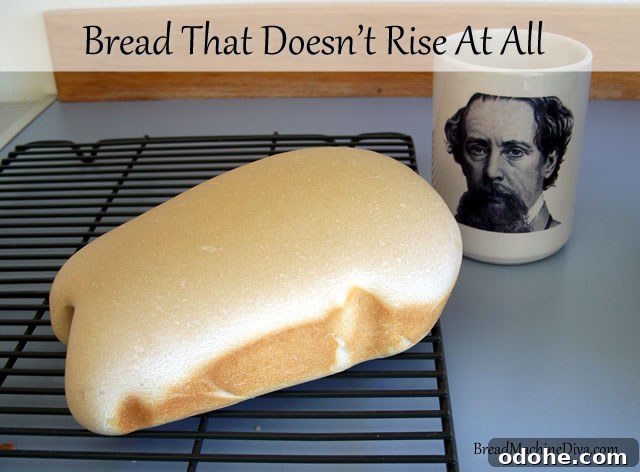
Last Updated on February 21, 2021 – Originally Posted December 2010
We’ve all experienced it: the wonderful aroma of baking bread fills the kitchen, you open the machine expecting a perfect loaf, and instead you find a dense, heavy brick. When bread doesn’t rise properly, it’s frustrating — but the loaf often tells you what went wrong if you inspect it closely.
First, ask whether the loaf rose at all. Also consider whether you checked the dough during the rising cycle. Occasionally dough rises too much and then collapses before baking ends; the finished loaf can appear as if it didn’t rise at all. If you see that pattern, try reducing the yeast slightly next time.
The Bread Brick — the bread rose a little, but not enough:
Not enough liquid – A dry dough won’t rise well. Try increasing the water or milk by one to two tablespoons.
Too much salt – Excess salt inhibits yeast activity. Reduce the salt by about ¼ teaspoon.
Not enough sugar – Yeast needs a little food to feed on. Increase the sugar by about ½ teaspoon.
Insufficient yeast – If the yeast amount is too low, the loaf won’t rise fully. Try increasing yeast by ¼ to ½ teaspoon. Be cautious: too much yeast can cause the dough to over-rise and then collapse.
Yeast type or condition – Old or inappropriate yeast can fail to activate. Using the correct, fresh yeast for your machine and program matters.
Flour – Stale flour or the wrong type of flour can affect rising. Make sure your flour is fresh and suitable for bread baking.
The Uber Bread Brick — the bread didn’t rise at all:
Flour – Old or unsuitable flour can prevent rising entirely. Check freshness and protein content for best results.
Yeast type or condition – Dead or incorrect yeast will not produce any rise. Confirm yeast is fresh and appropriate for your bread machine cycles.
No yeast – It happens: forgetting to add yeast yields a loaf that never rises.
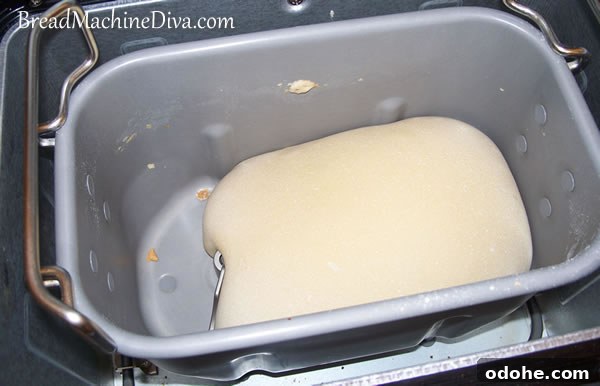
This is what it looked like when I forgot to add the yeast to the bread pan.
Too much yeast – Excess yeast can cause the dough to rise too rapidly and then collapse during baking, leaving a dense loaf that resembles one that never rose. To diagnose this, observe the dough through the machine’s cycles so you can tell whether it over-expanded and fell.

Sometimes the dough rises correctly but then partially collapses during baking, creating a deep indentation or “valley” in the loaf. This can result from overproofing, excessive yeast, or temperature issues. Watch the dough during the rise cycle and adjust yeast, liquid, or rise time to prevent over-expansion.