If you’ve had trouble motivating your children to do chores, you are far from alone.
Many parents tell me they feel stuck in a cycle where their kids “just won’t do chores no matter what I try.”
That frustration is understandable.
Chores are an important part of raising responsible, capable, and independent children, yet they often lead to repeated battles that leave parents exhausted and tempted to do everything themselves.
The good news is you can get your kids to help — as long as you avoid the five biggest mistakes parents commonly make when introducing chores.
Below I’ll explain those mistakes and give practical alternatives you can use to build a calm, consistent household where children pitch in without constant nagging or power struggles.
Let’s begin.
RELATED: Age-appropriate Chores for Kids
THE BIGGEST MISTAKES PARENTS MAKE TRYING TO GET KIDS TO DO CHORES
Mistake #1: Creating an environment where kids expect rewards
Many chore systems unintentionally create a “rewards economy” where children learn to expect something in return for every helpful act. If you’ve been met with “What will you give me?” when you ask for help, you know what this looks like.
When everything is tied to a reward, intrinsic motivation—the internal satisfaction of being helpful—quickly fades. Kids learn that there’s no reason to contribute unless a prize or payment is involved.
That’s why many experts recommend separating allowance from chores. As ASU psychologist Suniya Luthar points out, paying a child for every little task can teach entitlement rather than responsibility.
WHAT TO DO INSTEAD:
- Create a culture of helpfulness. Make it clear that everyone in the home contributes because the household functions better when everyone does their part. Frame chores as part of belonging to the family, not a transaction.
- Connect chores to privileges. Link privileges like screen time or outings to the expectation that daily chores are complete. For example: “You can watch 30 minutes of TV after you finish your chores.”
- Celebrate together. Instead of bargaining—“If you do this, you’ll get that”—use family celebrations: “Let’s finish our chores so we can relax with a movie and popcorn in a clean house.”
- Separate allowance from chores. Use allowance to teach saving, giving, and spending rather than as payment for basic household responsibilities.
When kids help because it feels good and brings a sense of pride, you build long-term habits that don’t rely on external rewards.
For more, check out How to Get Kids to Do Chores & Help Out Without Being Asked
Mistake #2: Waiting until kids are older to give chores
When children are young and eager to help, parents sometimes exclude them because teaching and supervising takes time. It’s quicker to do things yourself, so chores get postponed until children are older and more resistant.
Delaying the habit-building phase makes introducing chores harder later on.
WHAT TO DO INSTEAD:
- Start now. It’s never too late to begin. Commit to consistent expectations and begin integrating age-appropriate tasks into your routine.
- Allow a transition period. Expect an adjustment phase—about two weeks—to build new habits. If you stay consistent through that period, routines typically begin to stick.
Mistake #3: Yelling when kids resist or complain
Losing your temper is understandable, but yelling creates a negative association with chores. If tasks are consistently linked to anger and conflict, children won’t develop internal motivation; chores become a constant power struggle.
WHAT TO DO INSTEAD:
- Use calm-down strategies. When you feel yourself getting frustrated, pause, take deep breaths, and come back to the conversation when you’re calmer. Simple statements like, “This is frustrating for me too. I’m going to take a minute and then we’ll figure this out,” can diffuse escalation.
- Know your triggers. If certain times are harder (for example, evenings), schedule chores when everyone has more energy or less stress.
- Team up with your partner. Agree on a calm approach and support each other to avoid yelling and reinforce consistent expectations.
Mistake #4: Using a complicated chore system
Overly elaborate chore systems can be overwhelming to set up and maintain, which makes them hard to stick with. If a system feels like too much work for parents, it won’t last.
WHAT TO DO INSTEAD:
- Start simple. Choose a few daily tasks to focus on and help your child build those habits. Add responsibilities gradually as they gain competence.
- Give the same chores daily. Consistency helps habits form. Many families find success giving children stable daily chores plus one flexible “extra” task that changes based on household needs.

Mistake #5: Not giving kids clear expectations
Children often resist when expectations are vague or when they don’t know how to complete a task correctly. Lack of clarity leads to confusion, complaining, or refusal.
WHAT TO DO INSTEAD:
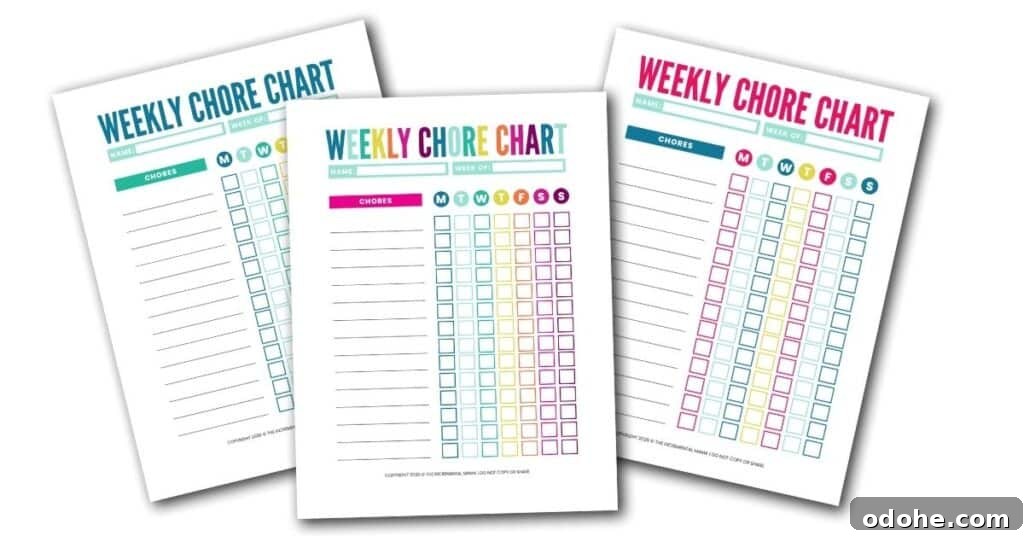
- Use chore charts. Visual reminders help children see what’s expected and give them a sense of accomplishment as they check items off their list.
- Work alongside your child. Demonstrate tasks, let them try, and praise their effort to reinforce learning.
- Break tasks into steps. Start with a simple portion of a task—like unloading silverware before tackling larger items—so children can master each step progressively.
- Use checklists for big jobs. Step-by-step lists make larger tasks manageable and clear for kids.
- Provide kid-friendly tools. Child-sized cleaning supplies and labeled kits help children learn how to use tools and feel ownership over their responsibilities.
If you want more tools and printable checklists, consider resources designed to support chore teaching and habit-building for kids in different age groups.

YOU CAN GET YOUR KIDS TO DO CHORES
It won’t always be easy, but with clear expectations, simple systems, calm enforcement, and a family culture that values helpfulness, you can build lasting habits. Avoid the five mistakes above and focus on consistent, patient teaching.
With time and steady effort, your home can become a calmer, more cooperative place where children contribute willingly.
You’ve got this!