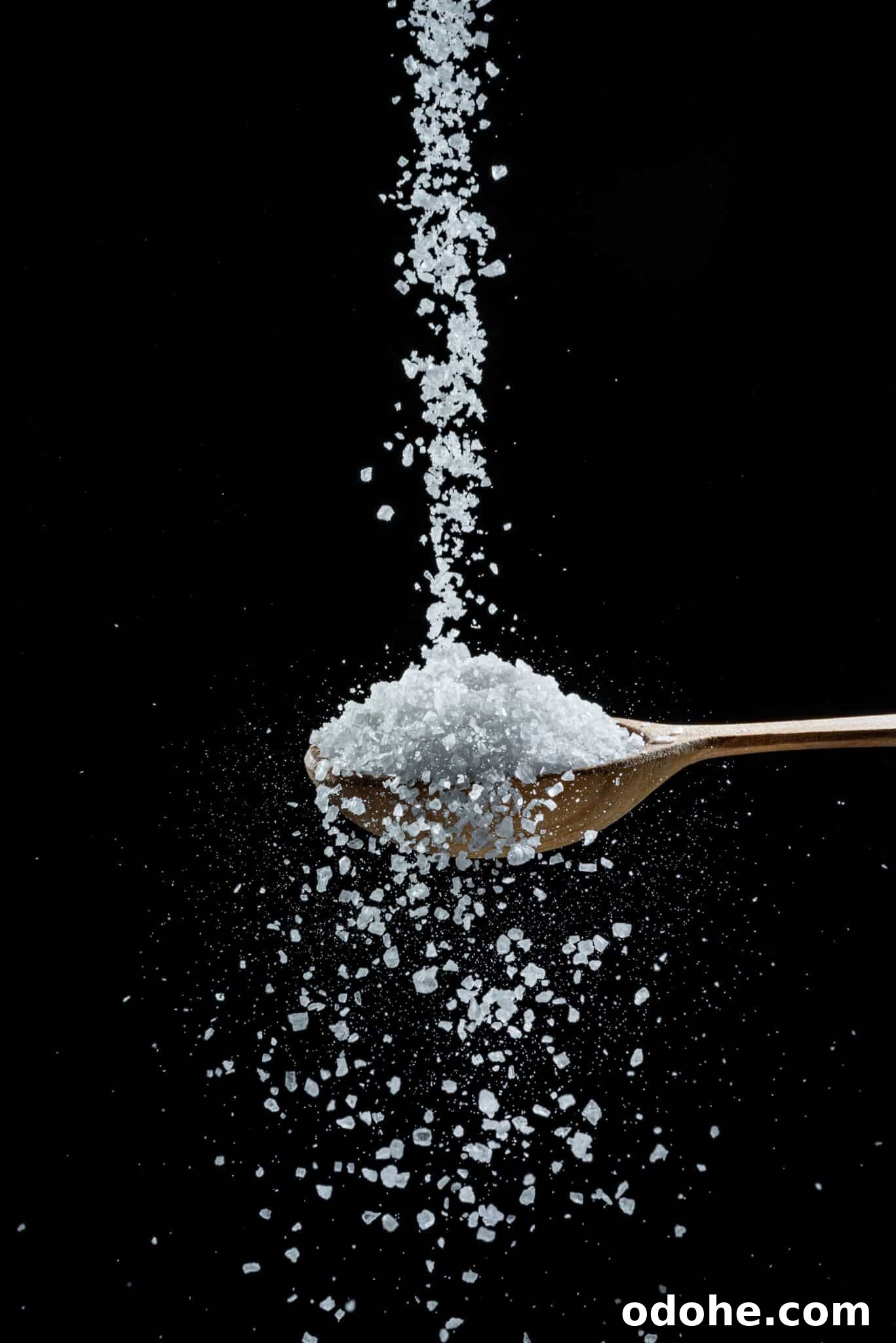
I grew up thinking salt was just salt — a shaker on the table and whatever came from the pantry. Over time I discovered kosher salt and it changed how I season food. Diamond Crystal and Morton’s look similar, but they act differently in the kitchen. Understanding those differences clears up why recipes and results can vary between cooks.
This is not a brand war or a declaration of a winner. It’s about recognizing the tool in your hand and why a teaspoon in one hand can taste very different from a teaspoon in another. Once you know how different kosher salts behave, seasoning becomes much more predictable and intuitive.
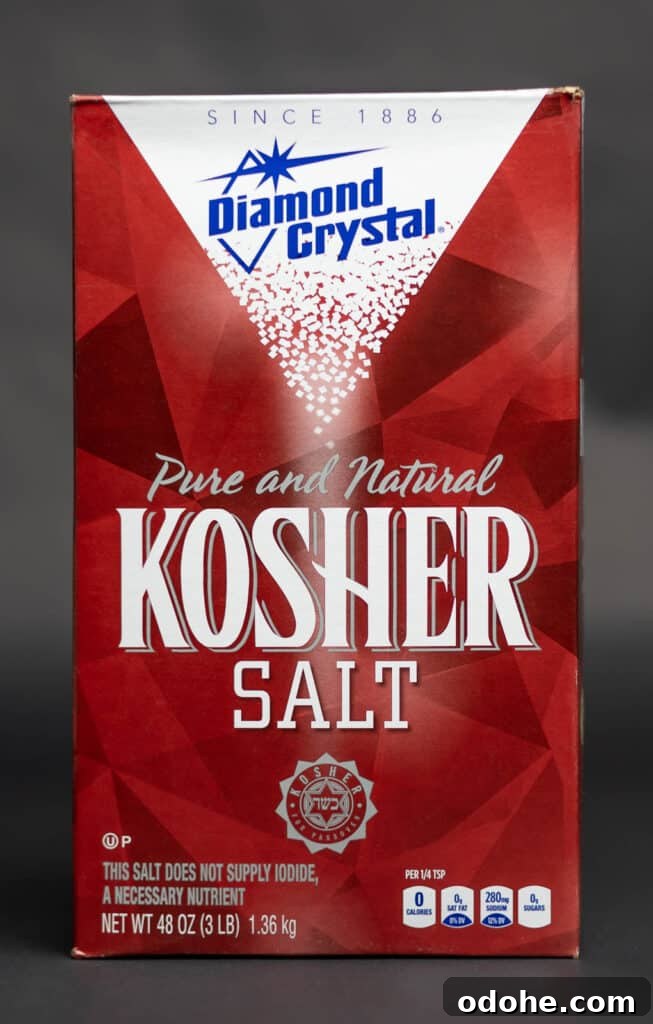
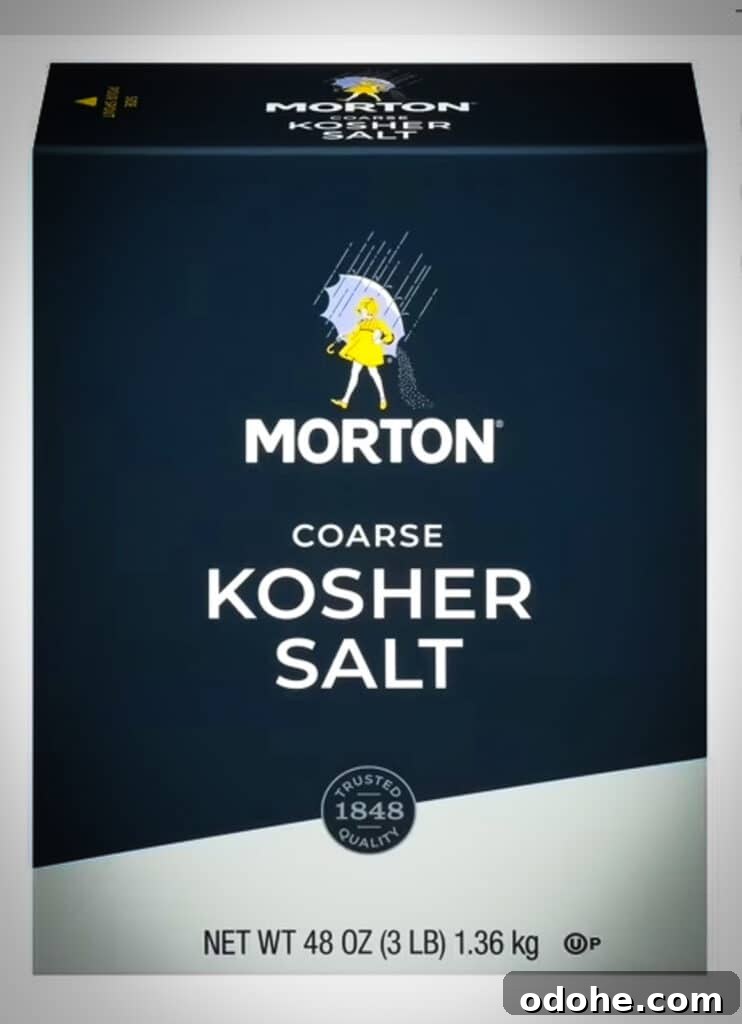
What’s the Difference Between Diamond Crystal and Morton’s Kosher Salt?
At first glance they look alike: both are coarse salts intended for cooking rather than finishing. The practical difference lies in crystal shape and density — how the salt flakes form and how they pack together.
Diamond Crystal produces larger, lighter flakes. Those airy flakes occupy more volume, so a tablespoon of Diamond Crystal weighs less than a tablespoon of a denser salt.
Morton’s kosher salt has tighter, more compact crystals. The flakes pack together more densely, so the same tablespoon contains more salt by weight. That means a measured tablespoon of Morton’s will deliver a stronger hit of salt than a measured tablespoon of Diamond Crystal.
Because of this, the two salts are not directly interchangeable in recipes without adjusting quantities. The difference in crystal volume versus weight is the simple explanation for why a recipe can end up saltier or blander depending on which brand you use.
Why Is Diamond Crystal Less Salty Than Morton’s?
It comes down to volume versus weight, not sodium content. Diamond Crystal isn’t chemically milder — its flakes are just larger and less dense. A tablespoon of Diamond Crystal contains less actual salt by weight because the flakes leave more air between them.
Morton’s denser flakes fill the same measuring spoon with more salt mass. That makes a direct volume comparison misleading: the same measuring spoon will give two different amounts of salt depending on crystal structure.
For cooks who season by hand, Diamond Crystal’s lighter flakes are often more forgiving. When sprinkling quickly over a steak, a mistaken pinch with Diamond Crystal is less likely to overshoot the target than with a denser salt. That matters for grilling, smoking, and any technique where seasoning is fast and done by feel.
Why I Use Diamond Crystal in My Recipes
My preference for Diamond Crystal is practical rather than tribal. Larger flakes spread out more evenly and are easier to distribute so every bite receives balanced seasoning. When I salt a steak with Diamond Crystal, the flakes cling, disperse, and dissolve into the surface as it cooks, producing even seasoning without concentrated salty spots.
If I tried to apply the same hand technique with Morton’s, the denser crystals would over-salt the surface. Coverage that looks perfect with Diamond Crystal would be too intense with Morton’s because of the greater mass of salt per pinch.
So I choose the salt that gives consistent coverage and control. That helps recipes be repeatable, especially for cooks following written instructions or working quickly over hot fire.
Can You Substitute Morton’s for Diamond Crystal?
Yes — but adjust the quantities. Because Morton’s is denser, you’ll need less of it to reach the same seasoning level. A common rule of thumb is to use about half as much Morton’s by volume when substituting for Diamond Crystal, though this varies with how much salt the recipe calls for and your personal taste.
When salting by hand, remember that visual coverage with Morton’s equals more salt than the same coverage with Diamond Crystal. Pull back a bit, taste as you go, and you’ll avoid oversalting.
A Quick Note on Salt in Recipes
If a recipe specifies Diamond Crystal but you only have Morton’s or a different kosher salt, reduce the amount slightly and adjust while tasting. Salt is meant to enhance flavors, not hide them. A small awareness of the salt brand and crystal type makes a big difference in achieving consistent, balanced results.
Frequently Asked Questions About Kosher Salt
Is Diamond Crystal kosher salt less salty than Morton’s?
Diamond Crystal isn’t lower in sodium per se, but its flakes are lighter and less dense. A tablespoon of Diamond Crystal contains less salt by weight than a tablespoon of Morton’s, which is why it tastes milder when measured by volume.
Can I use Morton’s kosher salt instead of Diamond Crystal?
Yes, but use less Morton’s. Reduce the amount and season to taste to avoid oversalting.
Why do many chefs prefer Diamond Crystal?
Chefs often prefer Diamond Crystal because its large flakes are easy to pinch and distribute evenly, offering better control for hand seasoning, especially on meats.
Does the brand of kosher salt really matter in recipes?
Yes. Different kosher salts have different crystal sizes and densities, so swapping brands without adjusting amounts can change how salty a dish turns out.